


At the turn of this century, a subsidiary of a modern colonialist project from the Middle East stumbled upon a new opportunity in Lagos. They would reclaim a huge portion of land from the sea and erect upon it an artificial city that would immediately condemn the Nigerian wealthy to madness. But they had a problem, one that not only threatened their profits but could render the entire project worthless. What will happen if this city floods? So they spent the next four years mapping out a solution.
In 2009, when all had been ironed out, and they had deposited millions of cubic metres of sand on some reclaimed land, they began to lay Accropodes, a kind of specially shaped concrete block, each weighing about five tonnes. Rumour has it that the project will need some 100,000 of them to succeed. If we can at least absorb the waves of the sea, we might have already won.
Even before the very first Accropode was placed on the floor, before the first plot of land was claimed from the sea, the government had already swooped in and branded itself a partner in this grand scheme, forever making sure that no one in history will ever have a conversation about it without mentioning its role. They called it the Great Wall of Lagos, an 8.5-kilometre-long sea barrier.

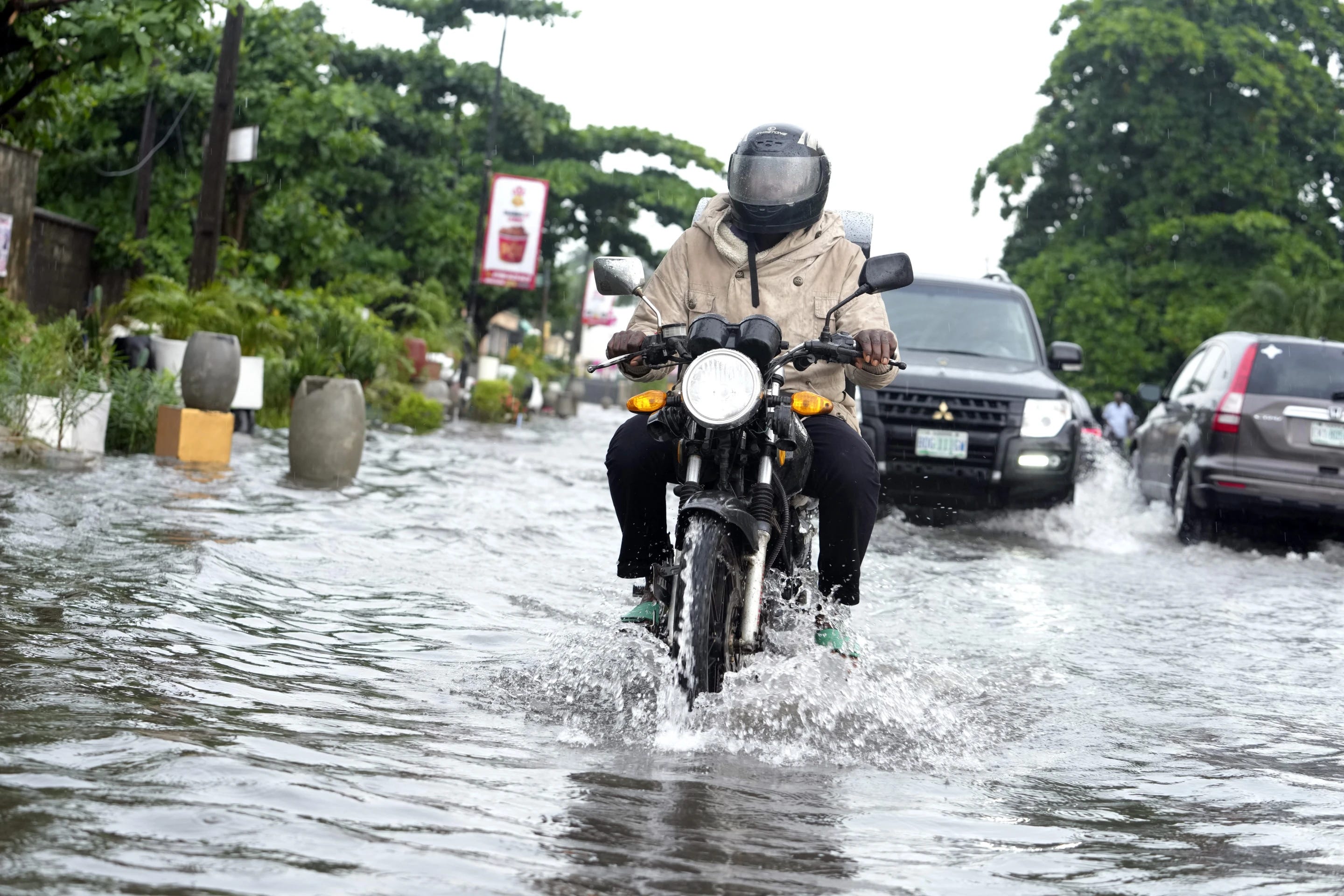
I once lived in Lekki, in one of the streets that didn’t flood when it rained, and would, on many days, walk to the office in the next street, which always flooded. The houses didn’t flood; they were built high enough above sea level. But the gate and streets were at knee level in the flood.
The underpaid staff who, like myself, worked in the street would take off our shoes and roll up the sleeves of our bottoms if we had to walk in. The flood might take sometimes two weeks or more to dry up, and once again we would stroll into the street unencumbered.
In the homes tucked away behind high walls, Nigeria’s two per cent and their families hide from prying eyes. Never once did they ever consider if they could, like my street, fix the drainage so it would not flood.
I don’t presume to say that the wealthy who dotted my street were any better. After all, the road to my street was always flooded, and everyone had to drive through the flood to get home. In this sense, whatever the residents of the street that housed my office were drunk on, we had also sipped.
It is the government’s duty to fix the drainage, or whatever it is that causes these floods. I think on this we can all agree. Where I think you might disagree with me is whether or not it is on the government to find a permanent solution.

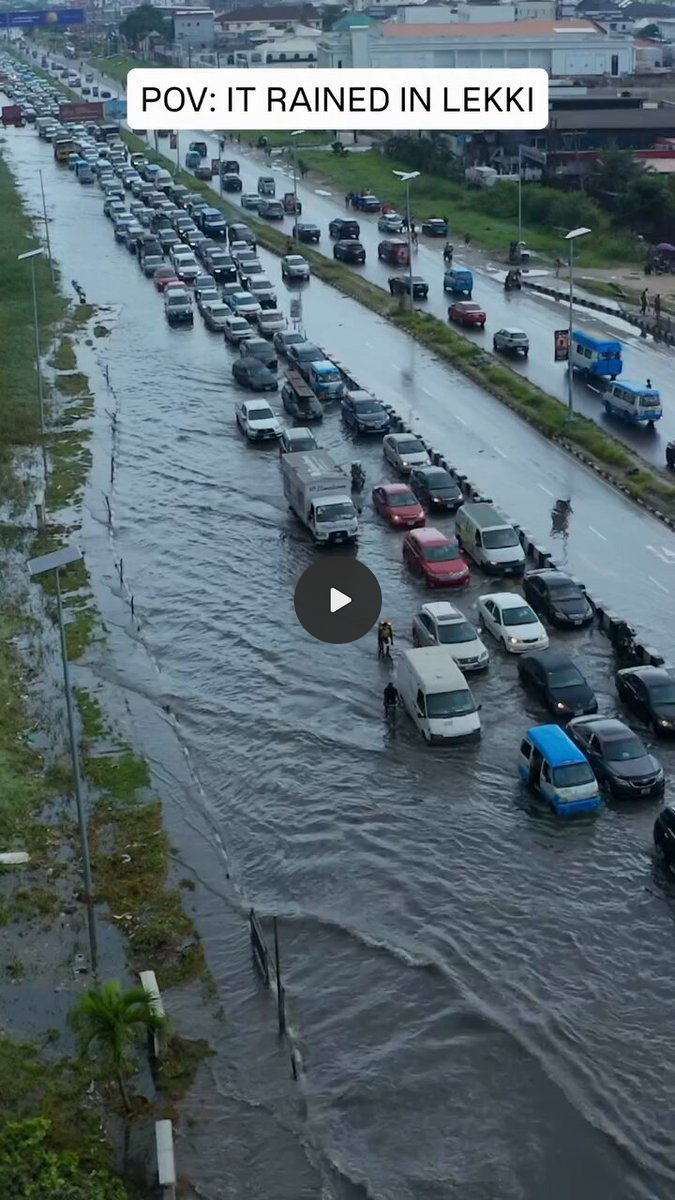
There are many reasons why I think that the residents of Lekki will continue to suffer like this. Chief among them is that they perhaps, by some mental sickness not yet known to man, have come to believe that their living conditions don’t at some point become their personal responsibility.
At what point does it become a tad bit unserious not to take the existential question, “Will my society survive?” seriously? When you foster a society that sees value in attacking divergent thinking and all forms of deviating opinions and, ultimately, all forms of public discourse, and then finally claim that topics like existential crisis and preservation of society are unimportant and, at best, the preoccupation of the self-important, you condemn yourself to a life of misery.
The reason why we must all think about the existential crisis afoot—Nigeria’s decay and untimely death from lack of care—is that even the current state of our lives is largely dependent on the arguments being made in the public sphere. Without even first having the conversation, we have already committed the cardinal sin.
How can the residents of one of the wealthiest enclaves in the country—many will argue in Sub-Saharan Africa—condemn themselves to a life of eternal suffering, choosing instead to spend all their accumulated riches on lavish parties and designer goods? This crowd likes to talk about lobbying the government, how this is essential for the accumulation of riches. What about, say, living in streets that are not flooded?
But also, the flooding itself is a symptom of the lies that society has told us, which is that the pursuit of individual selfish betterment from a dysfunctional system is what matters most.
In this context, the residents of Lekki’s decision not to fix their flooding problem, or at least commission research on solutions to it, becomes very much in keeping with the Lekki class. They simply do not see that they have other responsibilities, chief among them turning their country into a paradise.
For a society to thrive, its members must work to preserve that society. They must spend money in the markets of ideas and then elevate those ideas to the public consciousness. It is in this setting that comprehensive solutions will then begin to take shape, and the same wealthy will then begin to rebuild their homes.
This also means philanthropy must be productive. The rich must not just hand out money to causes that hinder the preservation of society. It is here that the handing out of food and cash gifts to strangers on the street becomes unproductive philanthropy, so bad, some will call it problematic philanthropy. It incentivises the problem.
I return now to existential crisis and responsibility. For it is here that the answer to Lekki lies. For Lekki to be good, for Lekki to survive, the preservation of society needs to be thought of as a priority. The performative, selfish, aloof comment, “this is not my headache,” needs to be crushed and, in its place, a new idea predicated on the persistent scrutiny of society’s direction and methods to pull it back on course should it ever deviate. In this sense, the situation of the flooding in Lekki becomes a national crisis that we all should be ashamed of, and therefore we all should fix.
The fixing of the flooding problem in Lekki by its residents, with or without the government, then becomes a moral imperative in defence of Lekki. In this context, that the flooding has gone on for this long becomes a deliberate choice by the residents of Lekki to condemn themselves to this kind of living condition.
Whether the Great Wall of Lagos will hold remains to be seen, but at least the residents of Eko Atlantic City do not come on the internet every year to decry the living conditions they have found themselves in. This is because, directly or indirectly, they fixed it themselves.
I think by now, if the government has any plans to fix the flooding problem in Lekki, it would have done so. But at last, we have decided tagging authorities is a better strategy.
One day, Lekki will flood, and all the houses will crumble, and everyone will ask, This had all been for what?

https://artisticrebelli0n.substack.com/p/the-unseriousness-of-nigeria?utm_source=share&utm_medium=android&r=3at9je
Wrote on this.