


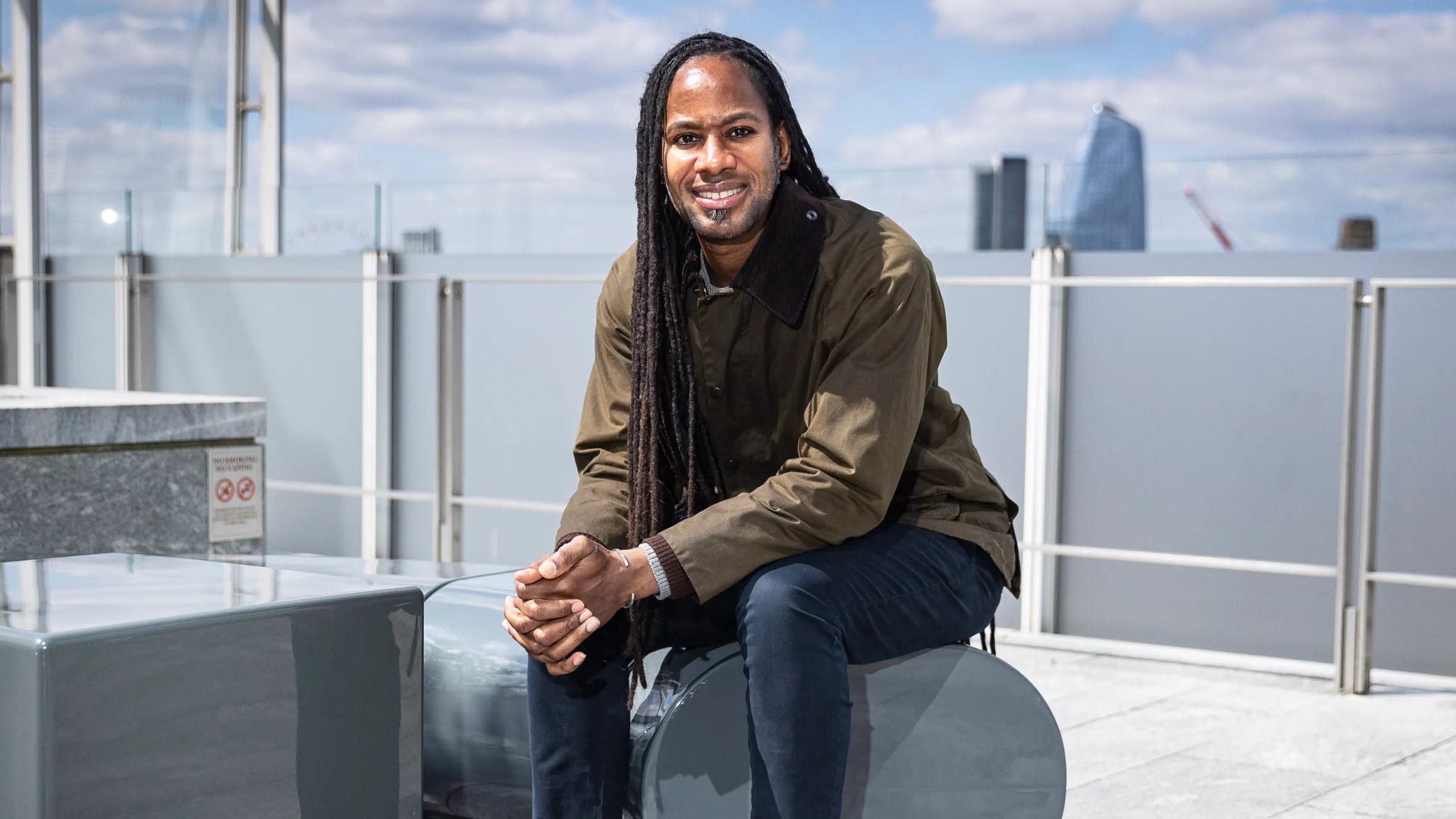
The Cambridge University professor at the centre of the plagiarism row, Jason Arday, was found dead by the police in his home in London on Friday. Arday claimed, among other things, that a book he authored about Black masculinity, Being Young, Black and Male: Challenging the Dominant Discourse, was published by Palgrave Macmillan. Palgrave said it didn’t publish the book but received the manuscript. He claimed to have held visiting professorships at the University of Glasgow, Ohio State University, and Nelson Mandela University. All three institutions now say he never worked with them in that capacity.
It was first reported by Nathan Cofnas, who has said, “Blacks would disappear from almost all high-profile positions outside of sports and entertainment,” in a meritocracy, that he plagiarised Paula Zwozdiak-Myers’ 2009 research in his PhD thesis. The news sent shockwaves around the world.
In the wake of his death, we have found ourselves in a unique position, wondering how we should have handled the news as a fabulist with a history of mental illness. Arday said he was autistic, non-verbal until he was 12, and only began to read and write when he turned 18. Critics of the racially charged right-wing media storm that ensued after Cofnas’ post have laid the blame at the feet of the media, who pursued the reporting with doggedness, and the right-wingers who denied Arday any compassion.
But this is also the kind of perspective that puts people like Arday in positions like this. We should not be calling for the bar to be further lowered by urging journalists not to investigate and report a news story, even if we might disagree with their methods. Cambridge University is not some obscure roadside institution. This is a prestigious eight-century-old institution, and Arday was in one of the most coveted jobs in academia.
Rather, we should see this as the dangers that can come from a system that abandons its standards. There are many Ardays out there, many of whom are not rewarded with professorships at Cambridge. If we begin to look into the stories that they have told—the stories that we all tell—there might still be time to save us from our undoing.
The problem before us is how we forgot who we are and allowed bad-faith right-wingers to hijack the narrative by helping them make their point.
Cambridge is guilty here. Every day across the world, job applicants more than embellish their resumes, claiming to have been part of projects that they didn’t even have footnote involvement in, and inflate their contributions in the projects they were a part of. The onus is on the system to discern this—by so doing, saving them. Arday should never have been a professor at Cambridge because the system should not have been interested in him in the first place. He didn’t have any fresh perspective on any of the issues researchers of sociology at universities across the world spend sleepless nights worrying about. His PhD thesis was heavily plagiarised. Based on this alone, his conclusions should have so bored the Cambridge panel that he would not have even been considered for the interview. If they had sought references from the universities on his CV, they would have discovered that he didn’t work there in the capacity that he claimed to have. But more than that, if they had thoroughly scrutinised his bibliography, they would have realised that Being Young, Black and Male was not a published book.

Per Great and Unfortunate Things, his memoir released this month by 37 Ink, an imprint of the publisher Simon & Schuster, Cambridge called to offer Arday the job only hours after he had sat for an interview with the panel. It was almost as if the decision had been made and the interview was merely a formality.
In this sense, the system held. Cambridge decided to shit on it by putting a troubled man in a high-profile position and then throwing him to the wolves by emphasising his race and age. “His experiences highlight the barriers faced by many under-represented groups across higher education and especially at leading universities. Cambridge has a responsibility to do everything it can to address this by creating academic spaces where everyone feels they belong,” Bhaskar Vira, the pro-vice-chancellor for education at the University of Cambridge, told the Guardian after Arday was made the youngest Black professor in Cambridge history at 37.
Nonetheless, we must not lose sight of what this is. The campaign against Arday was racially motivated by disgruntled former members of the establishment who refused to believe a Black man could ascend to the peak of global academia. Let’s be clear—Arday is a scapegoat. The rot in the system that carried him to a professorship at Cambridge is far greater than this one man. If the bar could be so lowered for a Black man, one can only begin to imagine if the white men who walk these streets of prestigious universities went through any formalities whatsoever before they got the role.
In all of this, Simon & Schuster must not be left off the hook. Its refusal to cancel or push the publishing date of Great and Unfortunate Things heightened the pressure on Arday even as Cambridge announced it was launching an investigation into the matter and Arday resigned from Cambridge. It felt perhaps to them like such an organic discussion around their author they could not pass it by. Why not strike when the knife is hot?
Arday said in an interview that Simon & Schuster offered him £1.4 million for the book, a number that was described by one industry leader to the Guardian as “mad.” In the same report, another publisher pegged the book’s advance in the ballpark of “£10,000, not £1.4 million.” Simon & Schuster declined to comment on this, perhaps because they knew Arday’s figure was not accurate. Is this evidence that they knew they had an author who was mentally troubled and might also be a fabulist?
Arday could have been living his life today away from prying eyes in a relatively unknown university, his application to Cambridge denied, his manuscript to 37 Ink rejected. It is the rot in the system that denied him this.

It’s a genuinely terrible and convoluted situation. On the one hand I don’t want to reduce the late Arday to merely a victim and rob him of his agency. On the other, it’s plain to see that the institution benefitted from parading him around before making him a pariah. Both things can be true.
In all honesty, I have not, nor do I assume I can, verify the many important pieces of information that would give me the clearest view. I don’t really keep up with academia and scholarship. That doesn’t change what this is: a tragedy. One that was easily avoidable and forever stained by stubborn racial hatred.
Well, who actually kiiled Jason Arday? That person is to blame.