



The first thing I did when I saw the video on TikTok, even before I searched for the link itself or read the caption, was to send it to a friend. StudyinGermany, an anonymous TikTok account, claimed it was affiliated with a programme called the Duales Studienstipendium or the Duales Studium Scholarship, which it said would “offer international students the opportunity to pursue a degree at our partner universities while combining their studies with paid, hands-on work at a company in Germany.”
aIt said it was funded by the Federal Institute for Vocational Education and Training, or Bundesinstitut für Berufsbildung (BIBB) of Germany. Successful applicants would apply for a student visa without a blocked account and would receive €1,300 per month as a stipend while they do internships at companies that align with their course of study.
To give itself the sheen of credibility, it adopted language that made it fit for purpose in the internet age: “Comment scholarship to receive the link or click the link in bio to apply now.” Over a thousand comments have been dropped in the post, which was first posted in May.
I didn’t see the need to drop a comment to generate the link. I would simply Google the program, and it would pop up. I googled. It didn’t, so after minutes on Google failing to find the link, I returned to TikTok and clicked the one in the bio.
Hosted on Vercel, a cloud hosting and deployment platform for web applications, the website dualesstudienstipendium.vercel.app should have been the first giveaway that it was a scam. Still, for many seeking the opportunity, even this was easy to ignore. For one, it wasn’t a .de website. It had no phone number or physical address, only an email. On the website, it said that some “4000 international students have been provided with the opportunity to pursue a dual-study bachelor’s or master’s degree programme at a partner university in Germany.”
It also has a list of partner schools offering programmes in Cyber Security, Logistics & Supply Chain Management, Marketing & Digital Communication. In total, it listed 11 programmes across multiple fields. “All bachelor’s and master’s programmes are dual-study integrated programmes with work placements,” it said.
I sent the link to that friend. He said he was going to find time to apply. Duales Studienstipendium said applications were going to end on June 30, only a few days away. We both work in tech, and we were about to be duped. The application portal was the giveaway. It required German translations for every document, except for the means of identification. Certificates, transcripts, and recommendation letters had to be translated into German.
It’s not uncommon for universities in non-English-speaking countries to request translations of certificates. But the recommendation letter request seemed odd. It eventually revealed its hand with the International Translation Service (ITS), a body that it said was the official means to translate the documents into German. In total, at least five translated documents were requested. It said on its website that each document would cost €7.
I told my friend this website could be a scam and that he should pause. I sent a message to the German Consulate in Lagos and an email to BIBB in Germany. I googled International Translation Service Germany and found no information on this official translation body. Not even a link to its website or a news report. I also didn’t find any LinkedIn profiles affiliated with the program. On its website, similar to the Duales Studienstipendium’s, it had no physical address or phone number. Just a .com email. At this point, I was confident it was a scam and tried to track people in the comments who were seeking enquiries about the scholarship.

The idea of japa, that Nigerians would migrate and all would be well, is inherently a scam. Xenophobic attacks in South Africa, anti-immigration protests in the UK, and the scapegoating of immigrants in the US are only a few pieces of evidence of this. Yet telling people that they could live better lives as immigrants, giving up on their homes and the land of their fathers to work obscene hours in a foreign country, has smuggled itself into the mainstream, becoming so fashionable that many have described it as “the Nigerian dream.” Every day, new threads and sharp opinions clamour for more favourable routes to exit our country.
Being an immigrant can be aspirational, but not in the context in which a broad slate of Nigerians have come to become one. We are not in a time of war, famine, or plague. In fact, we are supposed to be in a time of plenty, as purveyors of one of the most important resources at this point in human development, a youthful population in an oil-producing state. Yet this is the life that has befallen us, falling prey to dull scams on TikTok.
I don’t know how many people have fallen victim to the brains behind Duales Studienstipendium, but if Nigeria were even a tidbit better, the odds that experienced tech talent would have clicked on such a link without checking it properly would be slim. But the education japa pathway, where we apply for a student visa as a ruse to escape failing systems in Nigeria, has become commonplace. It is in this context that a fake German scholarship becomes attractive to us.
There is something else about the Duales Studienstipendium scam that I have been thinking about. The website is hosted on Vercel, which is based in California, US. When I checked the TikTok account’s registered location, it was in Nigeria.

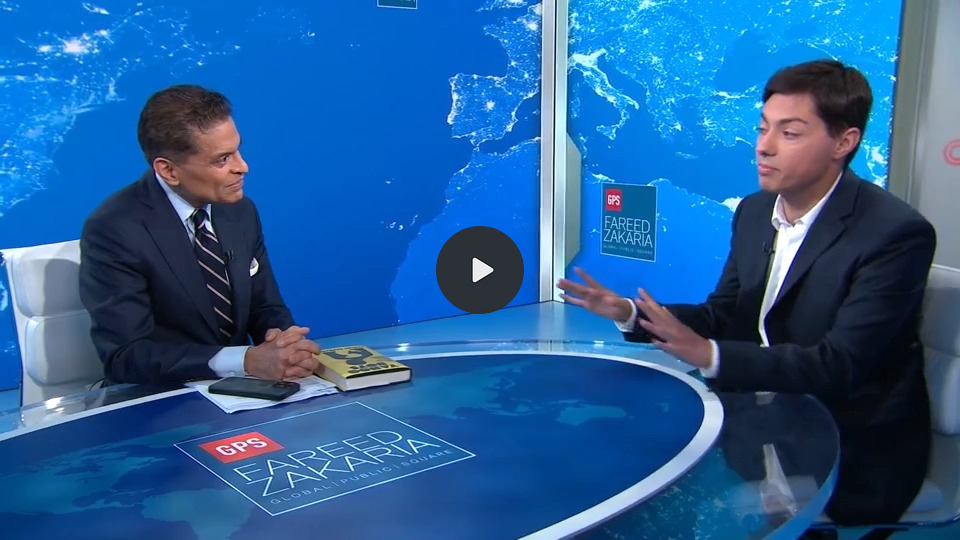
We continue to scoff at the threat that Yahoo Yahoo boys pose to us, celebrate them even, attack people that summarily cast doubt on untraceable wealth, attack people that document their activities. Throughout this month, the Spanish journalist Carlos Barragán has faced the ire of Nigerians for his book, The Yahoo Boys: Love, Deception, and the Real Lives of Nigeria’s Romance Scammers, which first appeared years ago as a sister article in The Activist magazine. The book, like the article, was inspired by an incident with his mother, who began a relationship with an American soldier he later discovered was a Nigerian romance scammer.
The Economist, The Wall Street Journal, and CNN have published glowing reviews about the book. It was chosen by Amazon Books editors as one of the Best Nonfiction and History Books of June 2026. The attacks have not stopped the rest of the world from calling out an obvious moral wrong or rationalising the focus Nigeria is getting for being a hotbed for scammers. That people of other nationalities also engage in scams doesn’t absolve us from confronting a culture that actively encourages it as part of “the hustle,” if not one of the ultimate hustles.
In an email, BIBB said that “There is no such programme funded by BIBB, and we firmly assume https://dualesstudienstipendium.vercel.app/ is a scam. BIBB is neither affiliated with https://www.internationaltranslationsservice.com/.” It added that it is “currently pursuing our legal interests and are striving to stop the proceedings with the means available to us.” It said students looking for “serious scholarships” should contact https://www.daad.de/en/. The German Consulate in Nigeria did not respond to my query.
Videos promoting Duales Studienstipendium have been shared to more than 2,000 accounts on TikTok.

I don't blame Nigerians trying to escape. We are in time of war, contrary to what you said, we are in time of an extreme war. 2200 Nigerians have been kidnapped this month of June 2026 alone... Education isn't great in Nigeria because people are scared of being taken. Jobs rarely pay and the cost of living isn't it. What upsets me about this, is the fact that people want scam fellow people, why???!!. Also most Nigerians are desperate, I just wish we were cautious too.