


A few weeks ago, I tried to count the content the actor Will Smith made on Instagram promoting his new Disney+ and National Geographic documentary, Pole to Pole With Will Smith. When I got to the 80th post, I stopped. Pole to Pole premiered in January on National Geographic. And then streamed on Disney+ and Hulu in the US. It is hard to make a conclusive declaration that it was a success. The metric for success is very different across platforms, but the chances of the project having a budget in the ballpark of $100 million are slim. Nonetheless, if you stumble on Smith’s page, you would do anything but wonder what his latest project was about.
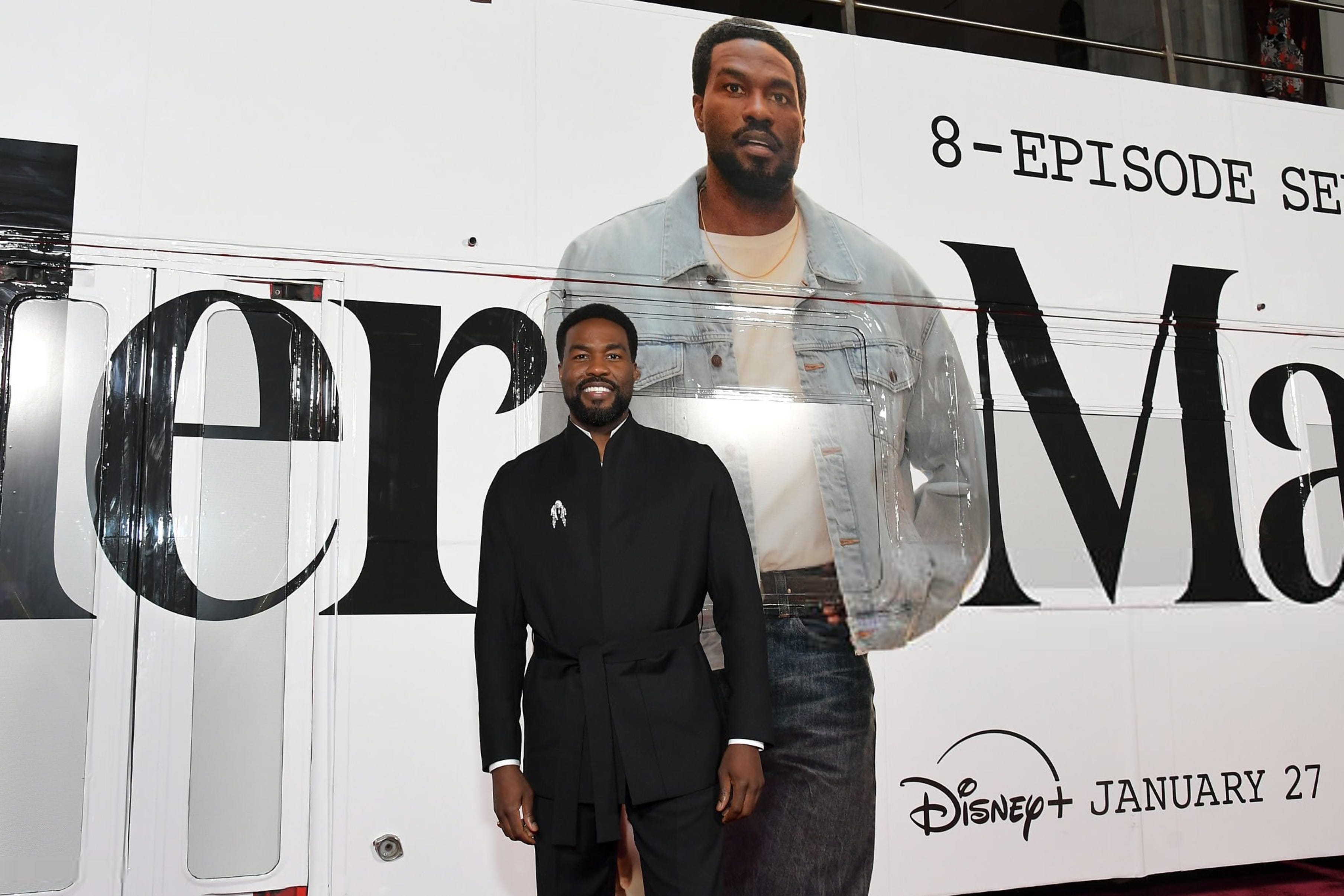
Enter Wonder Man, a rumoured $100 million-budget series starring Yahya Abdul-Mateen II as Simon Williams, which also premiered on Disney+ in January. The series, which Abdul-Mateen fronts as the lead, appeared briefly as #8 on Nielsen’s Top 10 Originals streaming chart for the week of January 26 to February 1, before it fell off. In July, Abdul-Mateen was nominated for an Emmy for Outstanding Lead Actor in a Comedy Series for the role. Weeks later, Disney cancelled Wonder Man. “That’s life, right? Everything will shake out,” Abdul-Mateen wrote on Instagram about the news. He posted about the show a total of four times: twice on his main feed and two reels. He accepted one collaborative post about the show from the Marvel Studios account.
In April, Man on Fire debuted on Netflix with Abdul-Mateen playing the lead John Creasy. This time, he is credited as a producer. Abdul-Mateen made only a single post about Man on Fire on his feed, ironically about himself on a billboard in Times Square. He accepted seven collaborative posts.
The stakes for Smith and Abdul-Mateen in the success of the projects they have fronted this year might seem worlds apart. But in an industry that runs on celebrity cachet, they are always the same—the performance of the show and the credibility of the lead joined at the hip.
Of course, Man on Fire and Wonder Man probably received a mediocre marketing budget by Hollywood standards. But also, the shows were not supposed to be big-budget projects. This doesn’t diminish the fact that they were nonetheless expected to perform as a bigger-budget production would.
The cancellation of Wonder Man has been viewed by fans of Abdul-Mateen as racially biased. A fan who goes by the moniker on Instagram “derrickdicaprio” (as in Leonardo DiCaprio) mused about the news: “Emmy-nominated, Black-led “Wonder Man” canceled?? Sounds about white.” And perhaps this is a fair way to look at it in a racialised country like America. But this is not how the market is going to look at this moment. “Abdul-Mateen has been given multiple opportunities to prove himself, and this is his performance. He is still a risky experiment,” is what someone might conclude.
It is futile to make comparisons with the big-budget films fronted by non-Black men, chief among them Spider-Man: Brand New Day with Tom Holland and Christopher Nolan’s The Odyssey with Matt Damon. These are the titles that are supposed to pay for the more experimental Wonder Man that Abdul-Mateen fronted. Their failures could literally lead to layoffs at these studios, which is why they will get all their love and attention. Instead, I will compare it with equally mid-range projects to hopefully illuminate why Abdul-Mateen’s situation is unique and demands a unique reaction from him.
Imperfect Women premiered in March with Kerry Washington and Elisabeth Moss as both producers and leads. Washington made at least 30 posts promoting the Apple TV series on Instagram. Apple TV notoriously barely does any meaningful marketing for its content. Moss is off the platform. Tom Clancy’s Jack Ryan: Ghost War premiered on Prime Video in May with John Krasinski as the lead. Krasinski made four posts on Instagram.
While Imperfect Women had an all-star cast including Joel Kinnaman and Kate Mara, actors whose celebrity cachet far outpaces Abdul-Mateen by a mile, Jack Ryan: Ghost War is the latest instalment of a popular film franchise with a loyal following that was adapted from a popular book franchise with a loyal following by a popular author with a loyal following. There was already so much familiarity with the story that it was going to do fairly well with a very meagre marketing budget.
There is another factor here that we also need to equally contend with. While Abdul-Mateen has starred in big-budget productions, he is not yet an A-list star. I say this not as a shade. For him, there are still miles and miles of work to be done before his name conveniently competes with, say, Michael B. Jordan. These stars need only do a little marketing for their droves of die-hard fans to flock to watch their new projects, having been in the industry for decades.
Abdul-Mateen is still in the process of cultivating that kind of audience, and already it seems like he would rather not devote any time to the tedious work it demands in the age of TikTok. His story is nothing like Mo’Nique v Lionsgate, the obvious example that has been raised in some corners of the internet. Mo’Nique was already an A-list celebrity hosting her own talk show and playing lead in a popular globally syndicated sitcom when she starred in Lee Daniels’ Precious. She had only agreed to do the film because she thought she was featuring in an independent project for a friend. Not a studio production. She was done grinding. Abdul-Mateen is still deep in it.
Whenever I discover an actor of colour whose performance I love, I first check what else they have done and then look at their Instagram. After Sagar Radia’s character in HBO’s Industry, Rishi Ramdani died, I was shocked that he had under 20k followers, but not surprised that almost none of the posts were original—BTS clips from set, press tour vlogs, etc. I found it to be too lacking in excitement. What a waste of opportunity to burnish one’s own credentials as a rising star. It felt like such a grave disservice not to seize the opportunity to bring more visibility to his personal brand by putting out more content.
Sometimes this is chalked up to creating a demand by reducing access. But this strategy typically works when there is demand in the first place, not when the industry is still observing if you belong to it.

Cue Tyriq Withers, who I first saw in Atlanta but who took over my feed last year while promoting Jordan Peele’s Him. The budget for Him was $27 million. Withers is not a producer on it but owned the low-budget project, carried it on his back while also using it to make a name for himself. Him made shy of $28 million at the box office. This year, Withers starred in Reminders of Him as the lead. The $25 million-budget film made $89 million at the box office. On Instagram, his social media is overflowing with content promoting the film.
Content is cringe. Putting yourself out there is very cringe, but there is no other way.
The writer Eloghosa Osunde recently posted videos about her 2025 book, Necessary Fiction, on Instagram, over a year after it was released. I wasn’t sure why she didn’t post them as part of the marketing for the book, but I found the videos renewed excitement about it. If I were on her marketing team, I would have boosted them.
I recently saw someone post about her summer read, One Leg On Earth, only to discover it was the latest book by Pemi Aguda. I wasn’t even aware Aguda had released a new book. Targeted marketing of a video of Aguda introducing and reading from the book would have fixed that and converted new readers. Aguda made only a single post about the book and accepted one collaboration from her Nigerian publishers, Masobe Books.
Many creatives tell me how hard they work to push their project, but when I pull up their Instagram, we end up agreeing that they might not have worked as hard as they thought, even though they did work hard in some cases. Mostly, they show me interviews they did in written format in a world where video is king. Their focus is just too far afield; they might not have been players to begin with. For today’s creatives, Instagram is the resume, and it should show your work. Otherwise, you better be the best thing since sliced bread, incapable of all human follies, some of which might be beyond your control.
As an editor, I occasionally see creatives become so exhausted by the rigour of collaborative work, so much so that they begin to choose halfway measures, rejecting the demands of excellence. I wonder sometimes if they realise that it’s their names the work will carry.
We live in a crushing capitalist society, and that sucks. But if you choose to live in denial of this, you risk being crushed by this society. For capitalism will only give you a few chances, and if you squander them at some point, it completely forgets you.
The question I think we need to ask ourselves in the wake of the cancellation of Wonder Man is: as a Black creative, how do I stay all over the feed and not become all over the place?
