


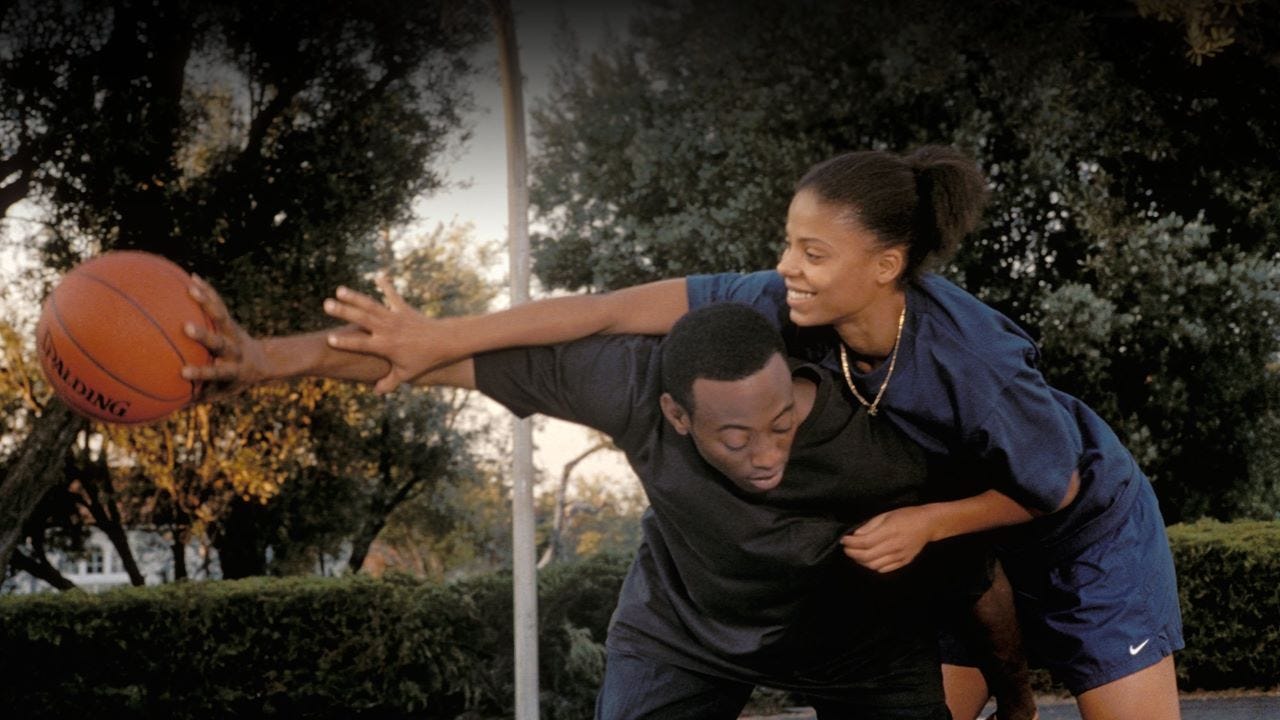
The day we had the debate was the most riotous day of my life in primary school. Boys are better than girls, the by-product of an argumentative essay class we had been introduced to. The debate was supposed to be practical, to show us how this unavoidable part of human existence was done.
There were two arms of the primary five classes, and both were helmed by men. The topic excited both of them. My teacher was a young, unmarried man who had made comments during a class on puberty about a female classmate’s body. “X will have big breasts and buttocks,” he said, his chest pushed out in a caricature of the female pupils he was referencing.
He was vibrating with enthusiasm. He was bullish, strict and cut-throat about this particular debate. The brightest boy in my class was going to defend the motion. He would be supported by the brightest girl, who was also the brightest student in class, as his co-debater.
Looking back, it felt like we had spent the whole term preparing for the debate, but it could have been only a few weeks. In the early days, my teacher worked with them and offered his take. Eventually, he pushed them out and wrote the entire points of the debate.
All of us gathered under the mango tree by the playground. The oldest of us could have been only 11. We were primary school pupils in what our parents, most of them in their late 20s and early 30s, had been told was the best school in the area.
And then the debate happened. The lead debater on the opposing side was also a boy. Light-skinned but not as bright as our guy, if we went by exam results. Then our guy said it. “Although a woman could work as a bricklayer, I have never seen a woman roofing a house.” Punchline. The opposition was finished. The whole school erupted in cheer. We had won. We could barely contain ourselves. Our teacher had told us that when he said that, we should cheer and clap. But witnessing him saying that did something to our psyche. It made it real. It made it the status quo. Women do not roof houses because my teacher had told us that. A woman’s place was off the roof.
When the results were announced, we had the highest score. But we had made so much ruckus that the judges decided to penalise us. So the opposition won.

Some of the other guys and I were slow to the class. But as we got to our floor, the noise became louder. The lead debater opposing the motion was being mobbed by boys from my class. He had been accused of not supporting the boys, even though he was a boy. The teachers were still in the playground, walking to class more slowly. The boy was already on the floor. I had never seen my classmates behave that way. The fight was expanding away from the boy and involving other members of the class. Now everyone was fighting.
Then the teachers came up. This behaviour was not encouraged. Everyone involved in the fight was punished. We quickly went back to our work. But as we moved on to daily life as a Nigerian child, something else had happened — something less physical, something psychological, an indoctrination of some sort, an initiation in the war of the sexes.
Modern-day psychologists caution us of the “repetition compulsion” theory, an idea that dates back to Beyond the Pleasure Principle, the 1920 book by the Austrian neurologist and the founder of psychoanalysis, Sigmund Freud.

Here, Freud argues that “the psyche repeats unresolved experiences in an unconscious attempt to master, understand, or gain control over them.”
In so many ways, that experience from my childhood — that initiation into this unending fight — presents the most perfect example of how repetition compulsion hinders us from finding any meaningful solution for the sexes to pursue nourishing lives as groups that cohabit, either in homes as members of a family, but more so as neighbours in society.
Throw children coming from this experience in a room together, and what you get are men and women looking to gain control of an experience from the past, that their psyche has continued to return to as the origins of their discontent. That is the only debate that matters. If that can be won, then equality has been gained.
The powerful man who is brought to his knees by a deceitful woman, a Jezebel, is one of the oldest cautionary tales known to man across societies. Yet this story is complemented by the meek woman who is taken advantage of by the cunning man.
The foundation of our relationships, as neighbours, as family members, as work colleagues, as members of opposite genders, is anchored on that idea — that seed of madness whispered all through our childhood over and over again — that the real enemy is the neighbour.
The soldiers of the men versus women war are men and women, but not always men versus women. Both men and women draw battle lines on the sand, announcing solidarity with either side. Like in my initiation ceremony, it was both boys and girls who opposed and supported the motion. And so the need for expulsion is paramount. Repetition compulsion makes it so that we lose our footing completely on the battlefield and instead begin to chase enemies where there are none. For this, we would rather burn it all to the ground.
It is why the argument that men cannot be feminists remains the dullest of arguments in favour of women’s rights, and also the most potent evidence that the war is not really about women’s rights as much as it is to score points on the playground in the men are better than women debates. Otherwise, of what use is extricating men from the feminist identity to gaining meaningful rights for women, like access to capital, ending FGM, banning child marriage, government-funded crisis centres for women at risk?
What better way to bar women from equality than to tell men that they can’t believe in equality?
Many times, I wonder in human history why there has been so much paranoia and suspicion about the other gender. Is this about the propensity for men to attack meek women or women to lead strong men to their downfall, or is this a failing of meaningful societal infrastructure, like judicial systems and security? Do women feel unsafe because men attack them, or do women feel unsafe because society is unsafe and predators target their victims carefully?
The problem with gender war, presenting individual women and men as somehow representations of all men and women and inflicting a castigation that is somehow supposed to be recompense for the bad deeds of all men and women — as opposed to taking a stab at the institutions that inhibit women and men from living their best lives in our society — is that it hinders real equality.
It completely hijacks the conversation about access to capital and education and reproductive rights and convinces us that calling out exes is better because that confirms how terrible the other gender is. Here we can win the arguments of our childhood on the playground. Here we are, heroes in the way that matters most to our inner child.
Here, everything else becomes an utter bore.

Chatgpt
As the new adults, we have the responsibility of changing the narrative. Both genders should be raised equally and given equal opportunities. Really, we should all be feminists.