


There are many professions that these days demand basic knowledge of writing. To work in them, you need to understand, at the barest minimum, how to string sentences together. Even though the leaders say understanding is only basic, people who come into these professions no sooner come to learn that if you want to excel, regardless of what you do, not only do you need to learn form, structure, and style, you need to become an artist and learn from the ancients.
We live in a world where writing has been commercialised; marketing copy, podcast scripts, social media captions all lean on the art form to function. We might never truly go back to the time of the ancients when grandfathers told grandsons stories of mythic creatures that left them spellbound under the moonlight. But writing has not stopped being an art form.
AI and its advocates have arrived at the gates, waging perhaps the most insidious assault on artists, demanding that it be flung open and, with it, all its conventions, aesthetics, style, and sensory pleasures. Everywhere you turn in today’s world, the written word is being bastardised in one form or another.
Many books that have been heralded as the best thing since sliced bread, for one reason or another, have gone on to face allegations that led the literary writing world, which in the first place elevated them, to sharply condemn them. Book sales have been declining; readers have tuned out. The over 100,000 people who, in 1867, paid to see Charles Dickens speak when he came to America have all died.
But it might be AI slop that will finally remind the industry that how it sustains itself is by having aesthetic standards and not stories that fit narratives.
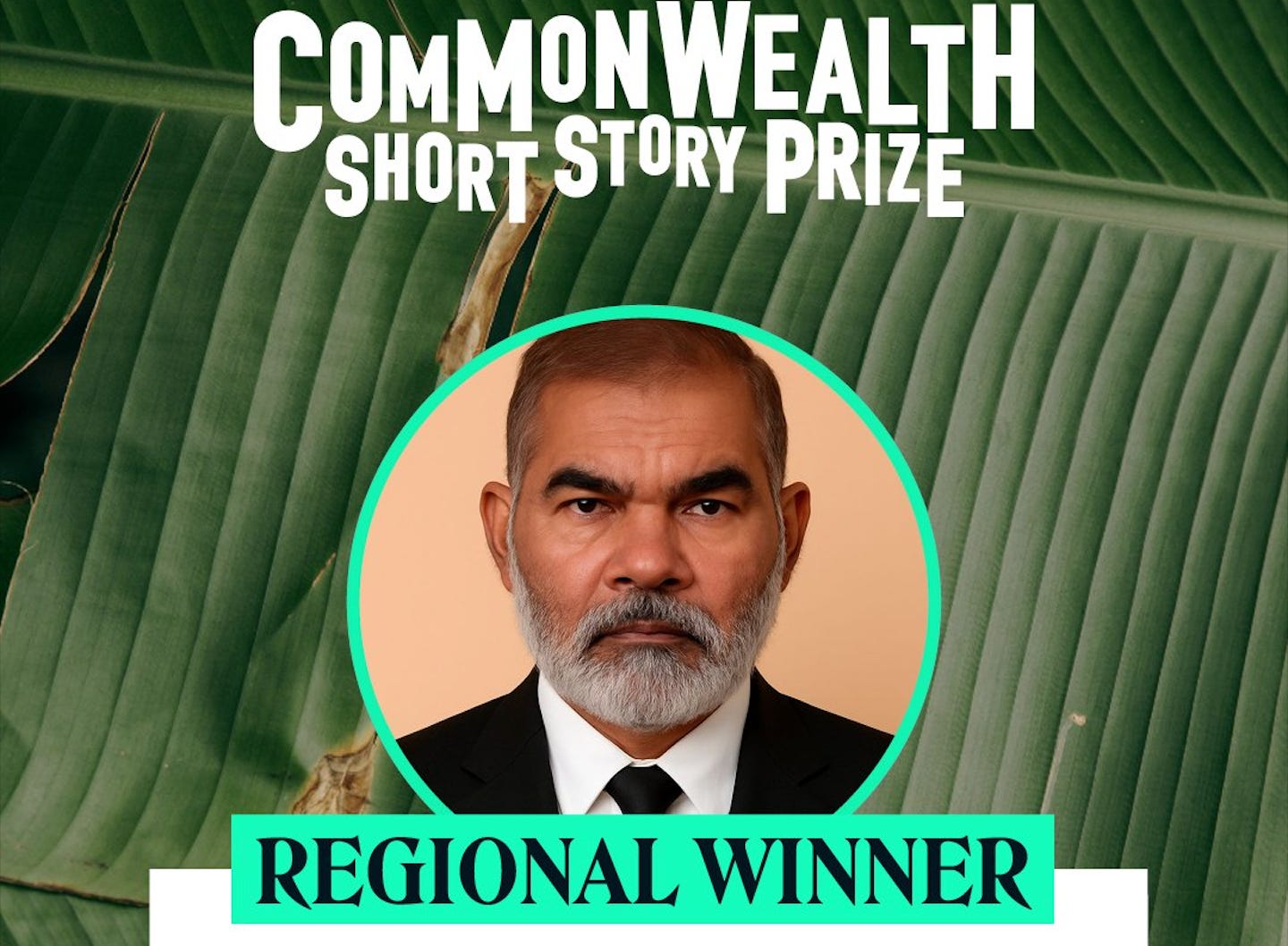
This week, Babel descended at the centre of the literary world after The Serpent in the Grove, a short story by Jamir Nazir, a writer from Trinidad and Tobago, won the Caribbean regional 2026 Commonwealth Short Story Prize, a highly prestigious writing award, and was flagged. Critics say the story was most likely enhanced with AI. Commonwealth said the “language is sublime—precise yet richly evocative—conjuring vivid, lush imagery with remarkable economy.”
A post from last year where Nazir said, “The key is to view AI not just as a replacement for human labor, but as a powerful tool to augment and enhance our abilities,” and his headshot posted by the Commonwealth, ironically in its announcement of the story as a regional winner, which many have said might have been run through AI, have further been highlighted as evidence that the writer might have used AI in his work.
Briefly, the story was pulled down from Granta, a platform that billed itself as a “home for new writing,” but came back up with a disclaimer that “Granta editors were not involved with these stories or their selection beyond copy-editing them upon receipt.” The Commonwealth said that it was “conducting a thorough, transparent review of the selection process.”

Faith in prestige platforms, including writing competitions like the Commonwealth Short Story Prize, MFA writing programs and literary magazines, has been waning within the industry. Many writers have critiqued the selection processes, citing the declining numbers of beneficiaries of these institutions who go on to become successful authors. Dwindling marketing budgets by publishing houses and a decline in reading interest in the age of TikTok have been blamed for this. But what I have always suspected was a major problem that the industry, for some reason, didn’t want to face head-on was that it had abandoned the old ways of bringing forth new writers. Aesthetics have been pushed to the back burner for stories with narrative arcs that fit.
Many of the stories have been great, vital, and important for the cultural moments we find ourselves in. But much of the writing has been bad, which, over time, has turned readers away to pursue other, more serious pursuits, where rejection of a work is feedback that the work is bad. We have abandoned aesthetics as a standard, which contributed to making the form rarefied art and, by so doing, pulled ourselves into the doldrums of narrative-driven storytelling. Characters read like Instagram bots, making decisions that present them as perfect card-carrying members of whatever politics the author intended, scrubbing them completely of human foibles.
For me, the incident with the Commonwealth Short Story Award is less that the work was written with AI, even though I struggle to understand the incentive of submitting a work enhanced with AI, should this have been the case. It is more about the tastelessness that has permeated the industry that ultimately drove this work to the top. The reason this story has become such a topic is that, for many, the writing was poor.
Many times I have raced to buy a new book that got glowing reviews, only to be sorely disappointed by the squandering of such great stories. Very little seems to be provocative.
One of the problems is also that the critics have dropped their scalpels, choosing instead to be a safe space where writers feel encouraged.
What I equally find telling in all of this is the writers, some public authors, who find this exercise in standard reordering to be a witch-hunt, the bellwether of an industry that could raise an impossible AI bar for every single work published in the coming years. For them, it is best we keep the peace. For them, what is more frightening is not the perceived tastelessness of the judges nor the quality of Nazir’s writing, but the many writers who might be accused of using AI to enhance their work. The perspective is itself part of the problem, especially in a time of immense AI slop and so many talented unpublished writers.
I work in tech, and I once bristled at a comment from an angel investor who said the reason businesses fail is because founders did not run them properly. It is a sweeping statement that I once disagreed with, but ultimately came to realise it was also a great way to see the world and tackle failure. Assume you went wrong somewhere in the production of the work, and that was the reason it didn’t succeed.
In January, after a colleague did a story on the re-emergence of hacker houses where tech talent go to create with like minds, I began to look for a version of this that would work for me in a specific way. This was before I discovered the fine art sculptor Fen de Villiers in the recent Doha Debates. It turns out this revolt against aesthetics in the work of art is not unique to the world of literary fiction.
De Villiers, who has spent more time thinking about a way out, offers this as a way forward for sculptors: “It will be a process of rebuilding tight-knit institutions that can nurture the required artistic talent and visionary genius to propel sculpture beyond the trappings of the mundane: an elite grouping of artists capable of getting into the aesthetic vocabulary of the past and then dreaming a fresh synthesis in our moment now. It will require time, dedication and honest aesthetic research and development.” I could not agree more about the writing world.

Isn't it blindingly obvious that businesses fail because they're badly run?