


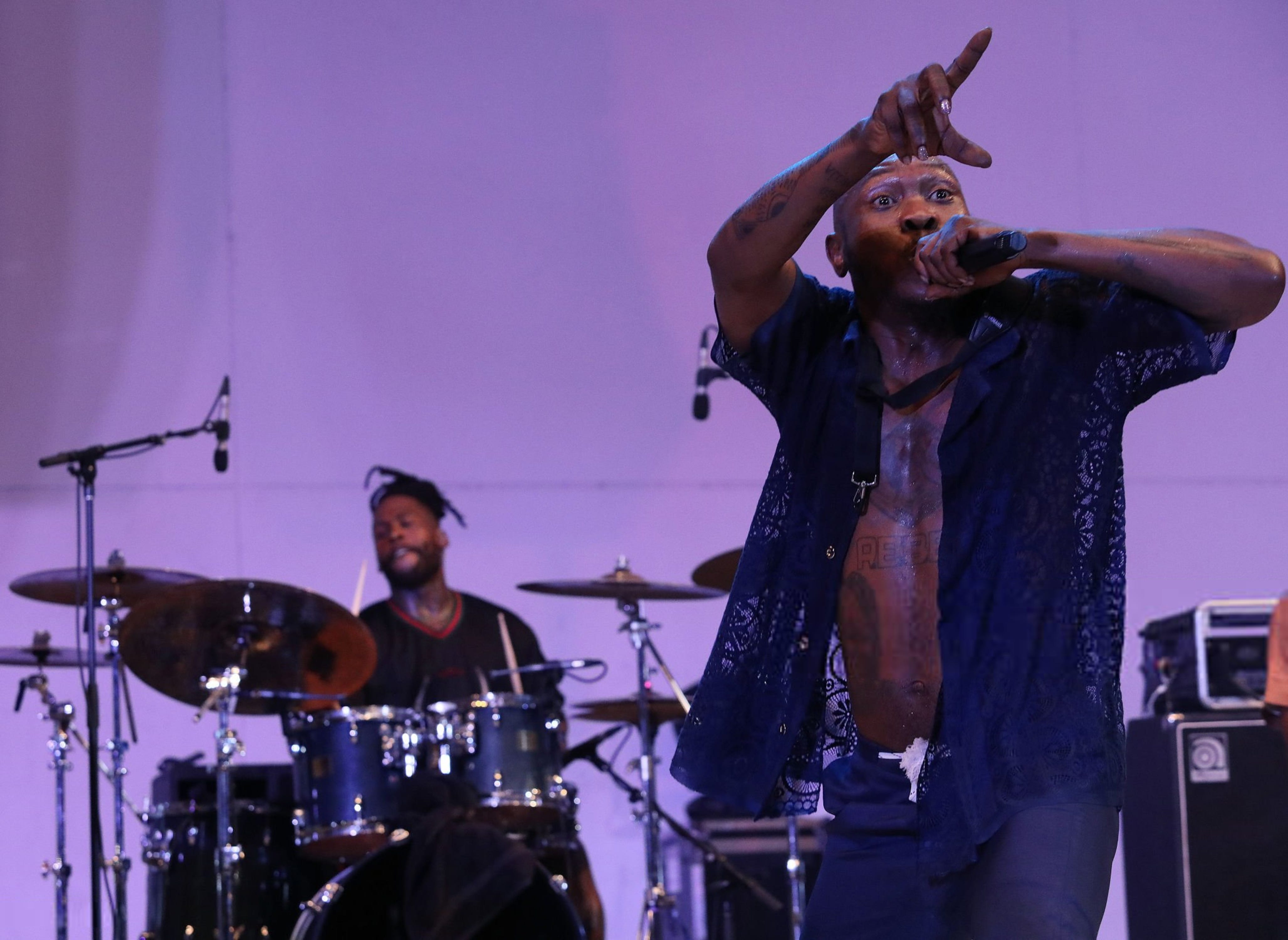
“Look at the young people. Look at the economy. When I was growing up, it was even worse.”
Seun Kuti was talking about why he chose music. In the background, a full band rehearsal could have been happening. His saxophone was dangling on his neck, its strap blending with a bronze necklace with a voluminous pendant that looked like a cross. But knowing him, it could have been the talisman for some ancient Afro deity.
He was taking the call on his phone. His PR team was trying to get him to a quieter place. “Let me remove my headphones,” he suggested. He attempted to take them off, and for a minute, the audio is better, but he quickly went back to wearing them.
“Young people should understand that the way to success is by building their skills. It doesn’t have to be music,” he said. “Many of us believe in hustle too much. We believe we can hustle our way. Yes, it works sometimes. But if you look at our society, so many people fall by the wayside. Hustling is not enough to build a future because most times it doesn’t pay. But with a real skill, I feel you can really build a successful future.”
He was in Brazil rehearsing for a performance. Last month, he performed at Felabration before travelling to the Bahamas and then Brazil for a tour. In a few days he would perform at the Bourbon Street Music Club in São Paulo.
But when he was a child, he didn’t think he would become a musician.
“To be honest, growing up, getting into high school, my dream was to become an economist,” he said. But he couldn’t stand that he would have to get out of bed early. “I really loved going to school. I love learning. But my only fear was waking up in the morning.”
His plans of being an economist were a pipe dream. Instead, he went to the Liverpool Institute for Performing Arts, where he studied music.
At the time, he was already a part of Egypt 80, his father, the Afrobeat godfather, Fela Aníkúlápó Kútì’s band, the single most raucous, unruly, yet iconic African band of the 20th century. In those days, he was one of several opening acts that tickled Fela’s fancy.
“We are not Egypt 80 anymore. We are now Egypt Crazy,” he teased. “We are mad people. I have renamed them Egypt Crazy.”
After his father died, Seun’s status was elevated from opening act to lead performer of Egypt 80.
“That taught me a lot of lessons in life. Positions are more about responsibilities than infallibility or veneration,” he said.
“Most of the people in our country in leadership positions form foolish leadership to fallibility. ‘I am a leader now, so everybody has to do what I want.’ The band taught me that leadership was not about respectability. That is a huge part of where I am today, where I am trying to go in my life.”
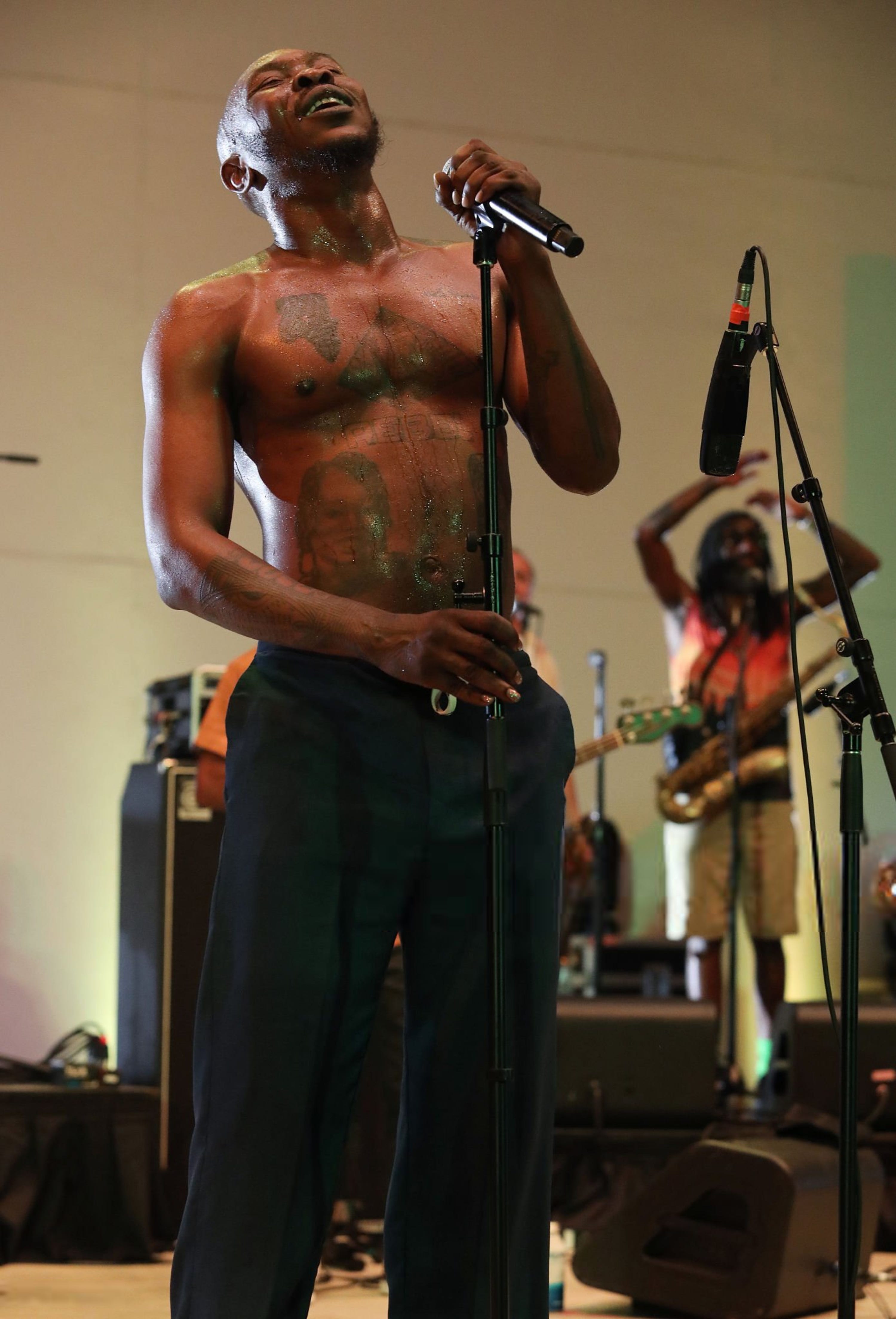
But he didn’t like that the framing of his ascension to the role was that he took over the band. “I don’t think anybody can take over the band. Most people forget I was already in the band since I was eight,” he said.
“When my father passed, what happened was that there was a continuation. It wasn’t an overthrow. What became different was that I was now the frontman, not just the opening act. I became the main act.”
After he became frontman of Egypt 80, he also inherited responsibilities he had never imagined — immediately becoming responsible for the livelihood of people who had only recently been his bandmates, comrades working for a living legend.
Seun puts all his cards on the table.
“I was Fela’s son. I was not lacking. I grew up in a life of luxury to a certain extent,” he said. “Understanding that many people in the band depended on me to maintain their lifestyle, their well-being, their children’s well-being was what made me learn to be a leader at a very young age.”
In 2008, he dropped his first album, Many Things, with Egypt 80.
As the son of Fela, there were expectations for the album. Music critics wanted him to produce music that was not Fela 2.0. Fans of Fela worried that he would attempt to occupy his father’s place in the zeitgeist.
“I remember the experiences in the studio,” he said of making the album. “But what stuck with me the most, I have to say, was making this project and saying that this is my music project. I couldn’t believe that Egypt 80 band was actually recording my own music — not Fela’s music, but Seun’s music.”
Yet almost two decades later, he still faces allegations of trying to be Fela. It is in this discourse that his Grammy nomination becomes utterly meaningless. In this discourse, he is not the child star who has catapulted himself to fame, touring the world with his band. In this discourse, he is Fela’s son — a bloody nepo baby.
I don’t want to talk to him about his father because in almost every interview any member of the Kuti family has ever done, Fela invariably comes up and becomes the focus. That must be exhausting for a guy trying to promote his new podcast, Bird’s Eye View.
“I already knew from working with Fela that my music was not Fela’s music. I worked with Fela for many years. I am one of the few people who can actually say I worked with Fela,” he said with conviction. It’s the kind of conviction that you need to witness for it to truly make sense.
He was a son, and a fan, and a bandmate, and he fell completely in awe of the dynamo that was Fela. What he is trying to communicate here is that every day he woke up to Fela. He performed with him. He opened for him. Whatever any musician today thinks that must have felt like, it was ten times better.
“Many people misconstrue the fact for their own personal reasons, for their own agenda to create a narrative about Seun. [My music] really was about destroying and kicking the iniquity out of people’s consciousness, because they thought death would take Fela away from the people. But for us who knew who Fela was, who knew him in the studio, we knew that we were not trying to make Fela’s music,” he said.
“The man is untouchable. And then just to buttress the point, I was also raised by Fela. People forget that I am his son — raised by this man. I’ve also worked in his band. So I know the concept of true artistry that is detached and removed from competition. True artistry is not competition. So there is no need to say this album was competing with Fela. We are not of that mindset.”
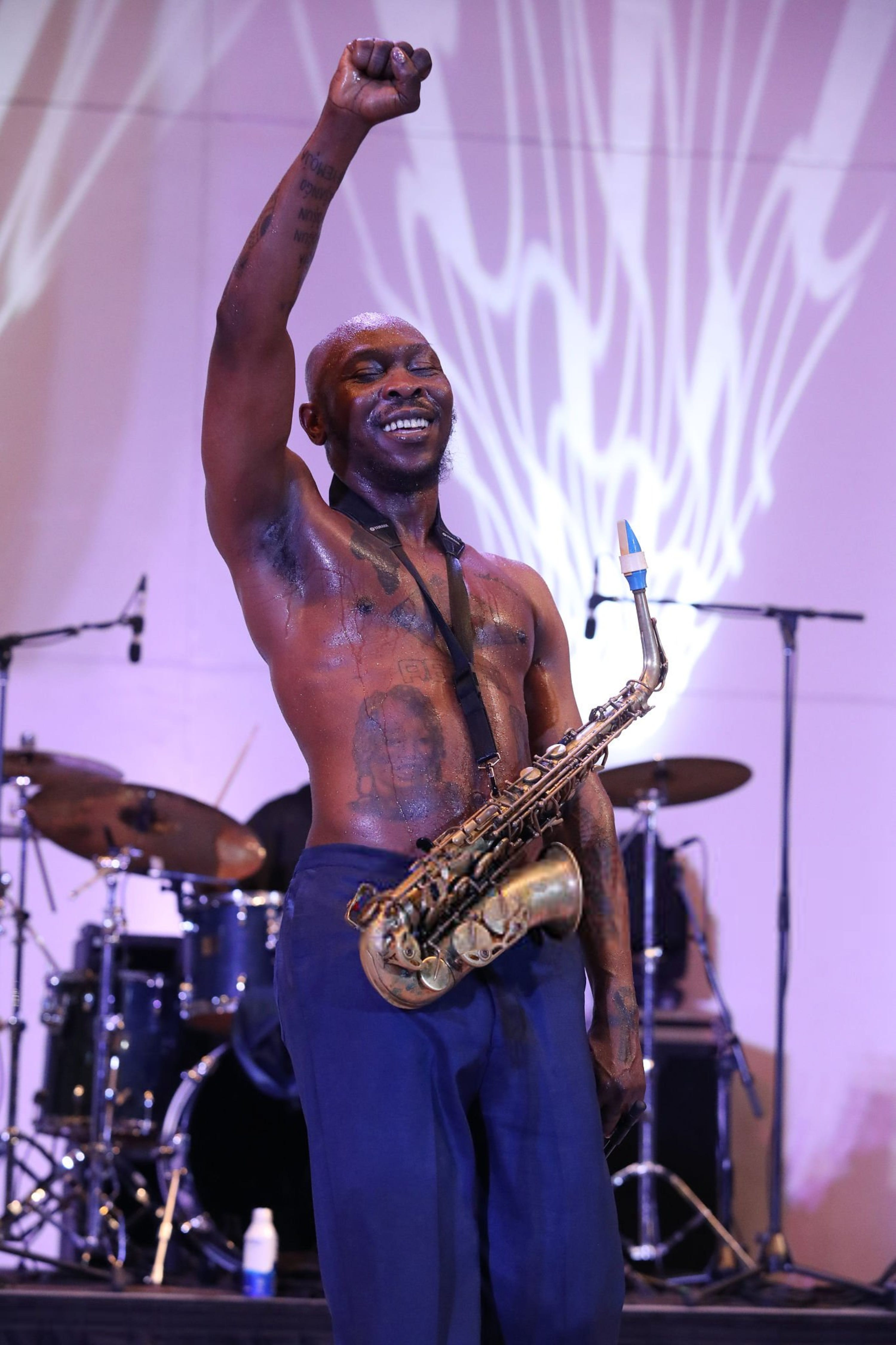
In the past few years, Seun Kuti has taken up a new sheen on social media — one that has made him a regular fixture on the controversial gossip blog, Gistlover. After the American president Donald Trump put a halt to aid to African countries, he called on Africans to “prepare for a hardening of the West.” After the derisive former president Muhammadu Buhari’s death in the UK was celebrated by critics on social media, he said that “natural death is not justice for crimes against our country and crimes against humanity.” “This was a man who died achieving everything he wanted to achieve on our back.”
But he baulks at the suggestion that he is controversial. “I don’t think I am ever controversial. I am not controversial. In fact, anything that would be controversial for my team, I would dead it before it happens. Controversy is not my goal,” he said.
“Social media is just my way of speaking to the people about what is necessary for us as Africans — for cooperating for liberation, not in competition with fellow citizens. I am not trying to outshine or be better than them. For me, we exist together to come out of our oppression.”
In partnership with OkayAfrica, he launched Bird’s Eye View, a podcast he co-hosts with the Pan-Africanist activist Bro Diallo.
“I have been doing my Bird’s Eye View from my home. Doing the podcast is a way of professionalising it. Doing it with my mentor Diallo Kenyatta was a way to bring that mindset, that bird’s eye view to the people, to elevate them to understand their own responsibility to themselves in this 21st century,” he said.
“We lack elders. There are inadequate amounts of elders to put their experience, their knowledge on the line to educate and elevate our young people to the position of national builders. That’s missing from the mainstream.”
On the podcast, the duo has derided the idea of “first Black in the service of empire,” which they argue “doesn’t really relate to African progress.” They have also pounced on Western imperialism and Africans who “try to appease the morals of our conquerors.”
Seun is talking about his goals for the podcast. But I am thinking about how casually, in the course of the interview, he had referred to his father as “Fela.” So I broke my own rule of not asking him about his father and asked if he ever thought it weird that he called him Fela.
“People always ask me this question. Everybody called Fela Fela. It’s just the truth. We were not allowed to say daddy or popsi. Nobody said anything but Fela. You must call him by his name,” he said.
Did that affect their relationship in any way?
“Not really,” he said. “He was still my dad. He acted like a dad when he needed to. He was a friend when he needed to. Calling him by his name did not demote him. It was a way to make us understand that people earned respect. Fela earned his respect. We respected him like a father and a boss because he was a boss. We respected him as a liberator because he was a liberator.”
I interrupted him with a follow-up question, thinking he was done speaking. He wasn’t — he had only paused to yawn. He looked visibly exhausted, so I decided to wrap up the interview with a question about his career over the years: Why does he think Egypt 80 has remained relevant all these years and is still touring?
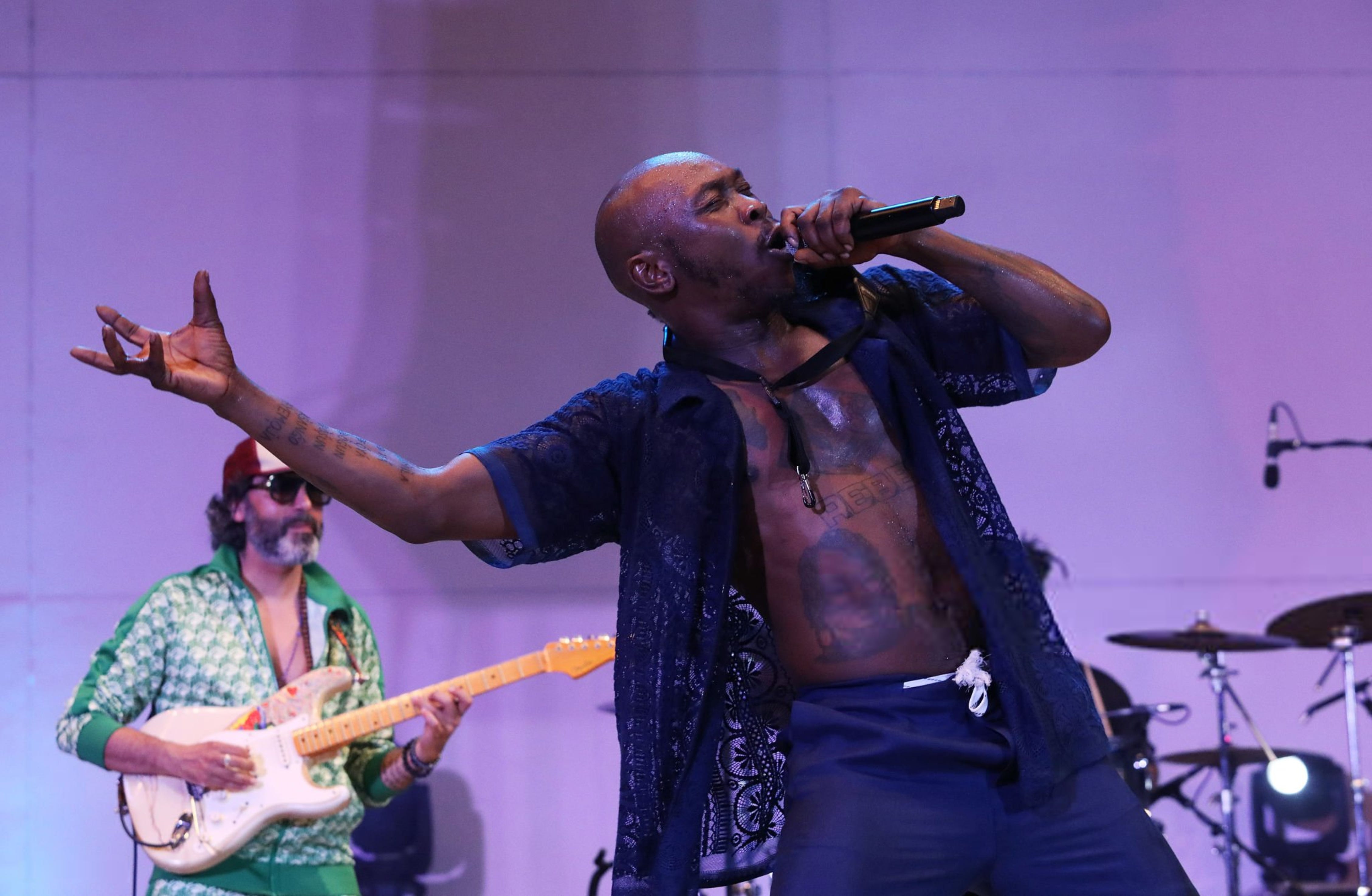
“I was talking to my manager — ‘How are we doing this shit?’ — and she said, ‘Seun, listen, you’re a bad motherfucker.’ And that is just the answer,” he said.
“I am a bad motherfucker.”
FOOTNOTE: This essay is part of the Afro Adulting #Freeelance issue. Also read other essays from the issue below:


Another great read, Dennis. You are killing it