


Many people have known this for many years and have lived their lives accordingly, with this knowledge, focusing on what they can control. I also came to the realisation a few years ago. It hurts to realise that the very reason all of us have been unable to live up to our full potential is that too many of us do not believe we deserve to. The problem of Nigeria, of Africa, is Africans. We do not believe in the shared humanity of other Africans. We have built a society based on conflicting narratives in which the truth is at best an inconvenience that a more powerful narrative with much more support can extinguish.
What am I saying with so many words? Check yourself and your contributions to the collapse of this society before going on the internet to play the good oppressed activist. Are you an oppressed activist fighting against your strongman oppressor, or are you, in fact, an oppressor offended that the ability to oppress has not been given to you? This is why I continue to ask us what society we want to live in.
If you’ve been reading the newsletter this year, you would have encountered various variations of this question. I am asking it today again because increasingly it seems the world we so clamour for is one in which strange men in strange uniforms who claim to be law enforcement, and maybe are, can abduct school children on their way home because they have said nonsense online that offended a big man, and then the family of this child will make statements begging and grovelling on the internet to the Nigerian rich and everyone feels good. Everyone makes time to come online to warn the poor and decry sentiment as a bad thing. Some of these people have even been the social warriors of yesteryear, fighting for freedom.
This is not new. It has been the modus operandi of the wealthy for decades in this country. On podcasts, they brag about how they arrest their drivers and other domestic staff. So when that famous finance baron did it, of course, I felt outraged at another way we show we are not really about that life of building our paradise. But a rich musician not just doing it but gaining so much support for doing it points to a cognitive dissonance too much to bear.
We talk a lot about Fela’s legacy, the voice of the people, the godfather of Afrobeats, remembered for his activism, a legend who fought for what he believed in. The musician and his wife, in question, have referenced Fela multiple times. Last year, I watched his wife perform covers of Fela’s songs at a private Global Citizen event in Lagos, in front of the uber-wealthy that now cheer her husband on.

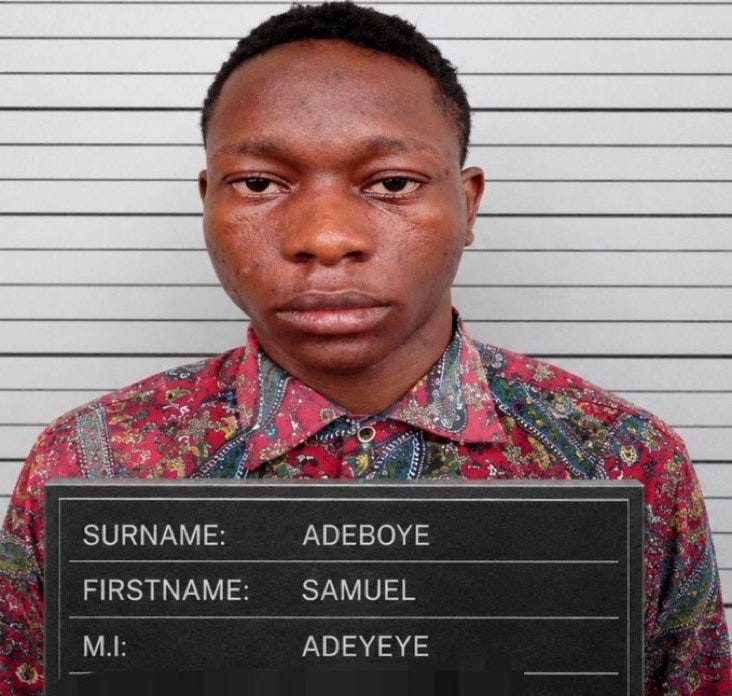
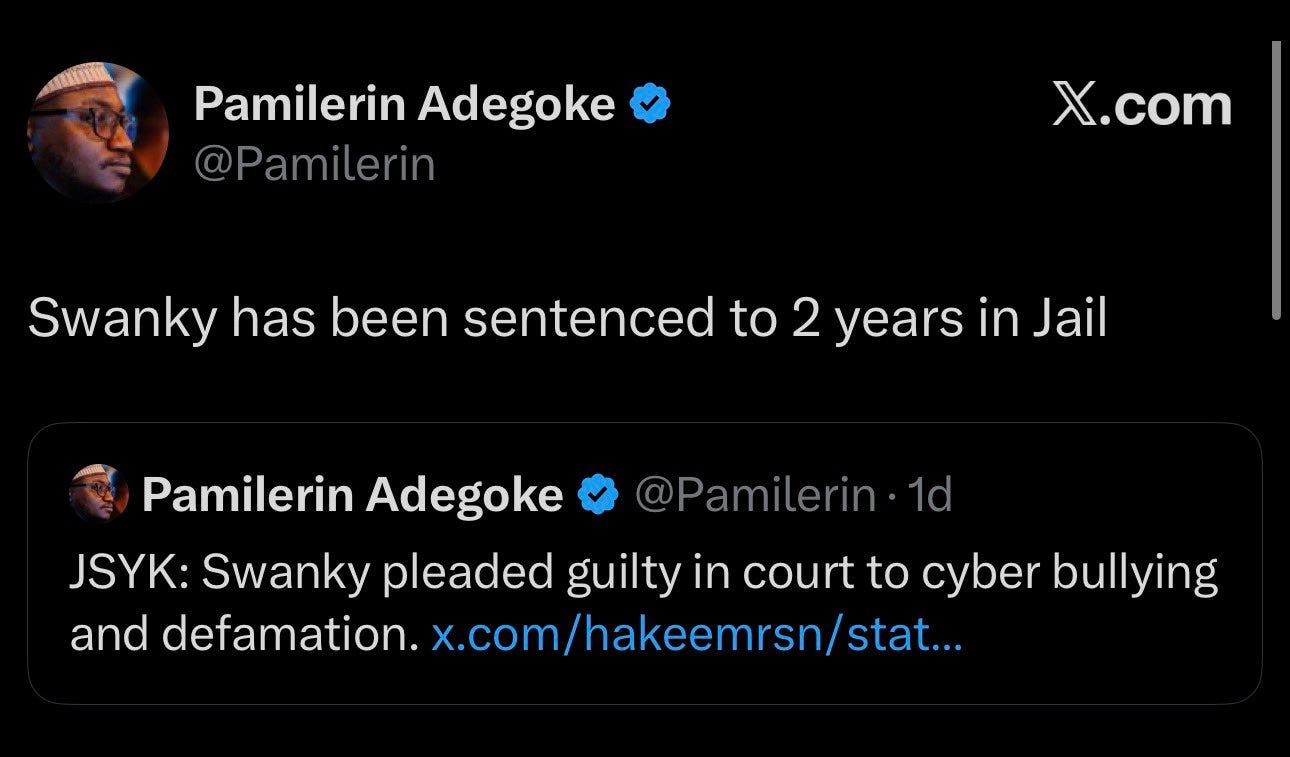
The moral verdict on whether or not the actions of the young content creator who said nonsense about a famous person’s family online, and the reactions of the famous person to what was said online, have been presented as still open. But the two-year prison sentence after arrest by the police for nonsense posted online will definitely make Fela their idol recoil in his grave.
Even more so because the only reason the musician did this was in fact because the creator was young and voiceless, albeit having bad character. You see, a few weeks ago, even more vile hate was spewed online at this same musician, but by a popular, equally wealthy and famous musician. If an arrest was made, it has not been made public. If he got the same two-year sentence, that also has not been made public.
There should be consequences for defamation, but should people be locked up for saying bad things, even telling lies about the rich and famous? Is that really what all the years of noise-making about oppression are leading to? Is the oppression we all have been screaming about really that the rich and famous are too oppressed to be loved and adored by the poor of society? Is this what #EndSARS was about?
We complain that children are not acting right, and then we demand that children of the poor who do not act right be disappeared. Yet we aggressively choose to be in circles of people who create environments where children don't act right. In any humane liberal society, this would be a social media moderation issue. Here in Nigeria and Africa, we make it an attack on the rich.
In a sense, we are teetering on the edge of an era in which the rich use law enforcement and the judiciary to gas the poor. There is deep-seated hatred for people with no money in this society. This same society that asked us to decry the unfair treatment of a politician (who also had arrested so-called haters on the internet), even though by law she was in the wrong, is now telling us to defend the arrest by someone else, even though he was also wrong. The difference between the two scenarios is that one was poor and the other was rich.
I started this rant talking about narratives because what we are witnessing is the narrative-as-truth culture we have created. You see, this musician and the people who support him know what the outrage over this arrest is. They know that this is a slippery slope that will come back to haunt them. They also know that they would prefer a Fela-kind of veneration to this type. They know they will be offended if their obituary reads “famous musician who locked up online trolls with no money,” but they double down because they insist on only existing in a bubble where they are morally upright, even though they know they reek of shamelessness.
In so many ways, when we march to the internet to demand a better society, we make a mockery of the good society that we say we seek. We talk about freedom while also seeking to extinguish the freedom of those we deem beneath us.
We do this by pretending not to be aware that there are those who deem us beneath them, and they are also watching from the corners waiting to disappear us too.

“But the two-year prison sentence after arrest by the police for nonsense posted online will definitely make Fela their idol recoil in his grave.”
Most texts written about Fela’s commune noted that there was a judicial system in Kalakuta Republic. Fela was the jurist; they had a cell for imprisoning offenders, and the law of First Touch applied in cases of physical assault.
The Kosokos took their grievance to the right place and received justice that is consistent with the dictates of the law.
I believe that the gentleman can appeal his case or seek legal aid. Recruit his fellow banger boys to raise funds if necessary.
Yes, I agree that the rich can disappear the poor, but this is just not the case here.
He committed a crime an average Nigerian should be jailed for. Poor or not. It was a crime. Let us address the issue before the rhetorics.