


This week I offer a slight break in transmission from the usual content about maxxing Afro living to a review of Pillion, a movie I do not highly recommend but found interesting, as I always am whenever I find someone choosing to stay in a demeaning relationship.
There are many ways that society has failed us as it pushes us to the very brink, pursuing ideas that it has told us matter the most.
In Harry Lighton’s Pillion, he offers a fresh, compelling case for going against this.
In the age of TikTok, where countless videos insist that not everyone is attractive, reinforcing so-called anti-woke ideas of the sexy body, banishing the reasons for which people choose to pursue meaningful romantic relationships in the first place—for love and companionship—and telling us only people for whom “fitness is a lifestyle” would be loved and, in the meanest case, deserve to be loved, we watch Pillion and immediately are ashamed of ourselves. The joke had been on us.
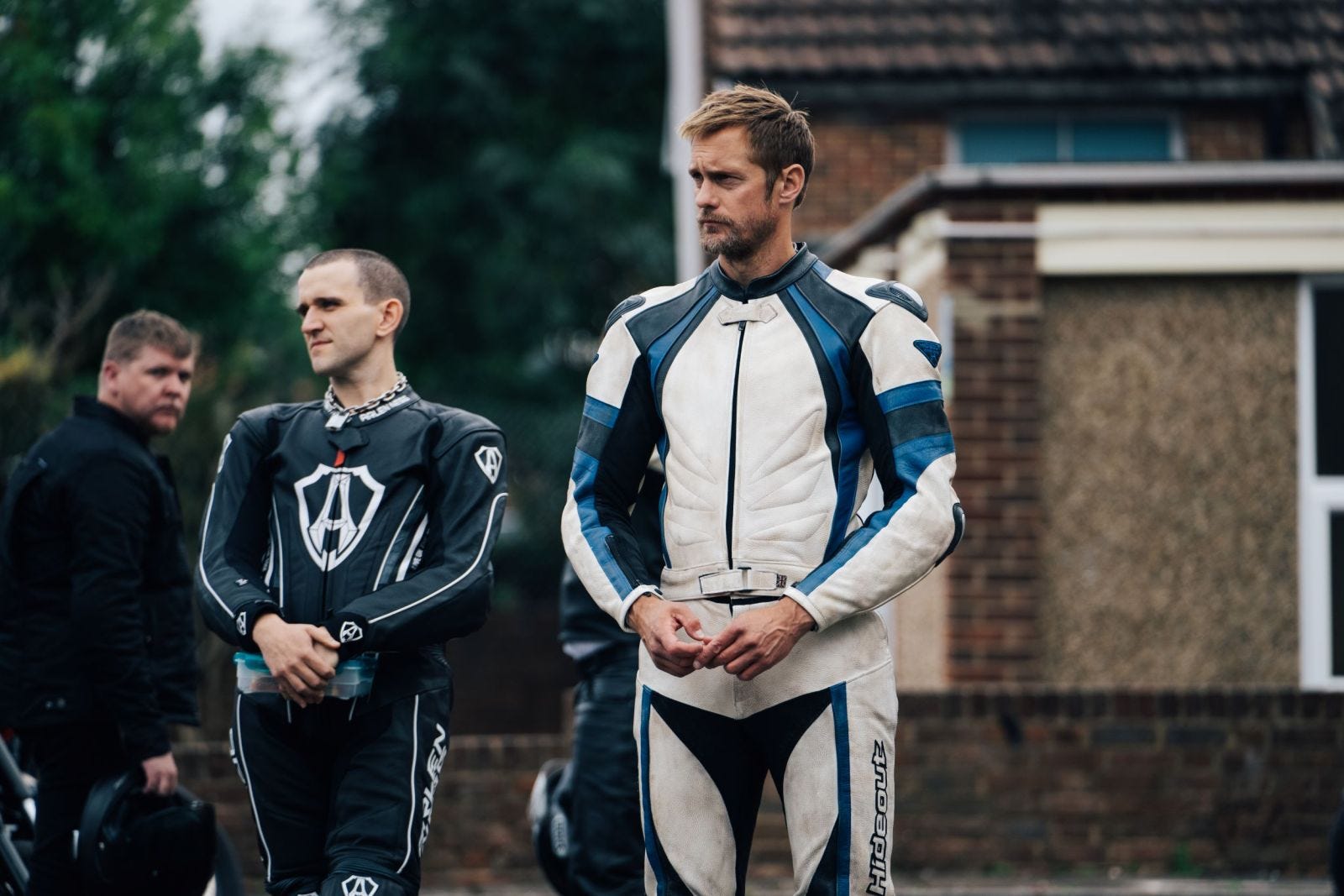
Colin (Harry Melling) lives a happy life with his family. So mundane and thrill-seeking, he falls endlessly in love with a biker, Ray (Alexander Skarsgård), who himself looks like the fitness Instagram bro. And so a submissive-dominant relationship ensues. Colin is made by Ray to sleep on the floor, eat while standing, shave his hair. In one scene, after Ray had all but ignored his birthday, Colin is eventually made to wear only a filthy apron in the forest surrounded by middle-aged hippies, all of them bikers, all of them in sub-dom relationships.
Ray is very handsome; everyone talks about how good-looking he is, no doubt from years of maxxing. Even his height is just right. The story that society has told us is that this is who we want to look like. As men, this is how we should want to look. Fitness bros have enforced this on social media, telling young men that those who don’t look like this have already been chopped… from finding mates.
It is in this context that Colin begins to believe he is unworthy, undeserving, and finds himself completely infatuated by Ray. In his present, Colin is a puddle of nothingness. There is no kissing in this relationship, and the sex is worse than bad.
Yet in all of this, I continue to ask myself, amusing myself, if this is a love story. And if it is, for whom? Those Instagram bros hawking “10 Easy Ways to Be a More Attractive Man,” or for all of us who believe we are undeserving of love because we skipped leg day for most of 2025?
Is this what becomes of us? Do we fall in love with one of these people and shave our heads because they prefer us like that, because we are somehow supposed to be well aware of how unworthy we are?
In so many ways, this is a new kind of The Taming of the Shrew story. In that sense, maybe this is, after all, a love story.
What Hollywood has always offered us in that canon is the good guy-turn-bad narrative. But this time it is different. In Pillion, the bad guy turns good, and the good guy comes to understand power and boundaries. After Colin is pushed to the brink and begins to reconsider the possibilities of his relationship with Ray, he demands to have a day off from this loveless arrangement. Ray initially denies him this, but later agrees to it. As they spend the day off, they eat Thai noodles on the streets, watch a movie at the cinema, sing in front of total strangers, and make out in a park. For a brief moment, their relationship becomes loving and sweet. Not because Ray is now a reigning champ of a pie-eating contest or because Colin is some kind of woke mythical goose, but because two people saw each other, went out, got to know each other, and fell in love.
The failure of the argument that you need to look like Ray, otherwise you are a sad specimen who would be hunted by your tiny arms and scrawny body and never find love — as we see on social media in those before-and-after videos — is that Ray spends odd hours in the gym, can fit into a leather suit, and yet seems to be the saddest in every room he enters, even as he glides through the world like he owns the place. It turns out a good, happy life is not made by burpees, even if some burpees might be nice.
Our collective failure is not so dissimilar to that of Colin, which is that we too believed them and stopped living. But like Colin, we all would look back when we meet the right person for us, who would love and appreciate us, whom we would love for the bond and connection, and maybe tell ourselves, “Never again.”
There is a lesson in Pillion for parents as well, and our roles in the romantic lives of our children. We are not passive observers. After a lot of suggesting and pleading with Ray, he finally agrees to have lunch with Colin’s family. Except he is unable to pretend to be a loving boyfriend for lunch and clashes with his mother, who tells him she hates the way he speaks to her son. If only more of us would be like Colin’s mother, sensing danger and pursuing it head-on. But also, if only protective parents were not so maligned in the media.
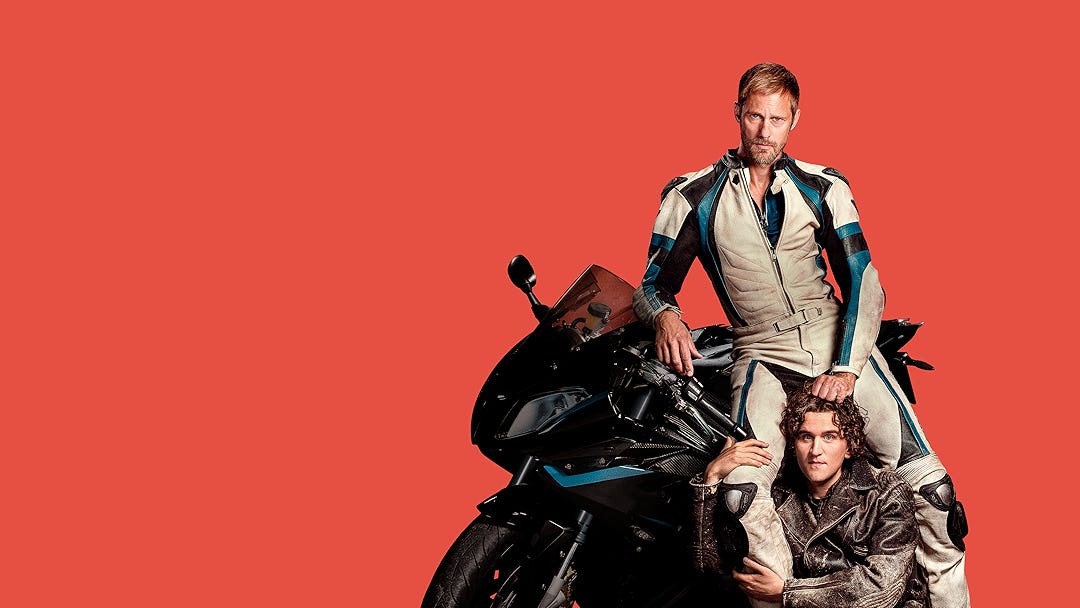
But there is another lesson here for all men: however we present, we are all fragile beings—fragile, I say, just like Ray and Colin.
Pillion is a tender love story, but maybe not in the romantic way. In that department, I’m not sure Ray is capable of showing love to people who would love him so much. But in the way that we are all tender beings, and if we look deeply at each other, we would see that we all cut and bleed. Life is already hard; it would be nice if it were not our lovers that made it harder.
Nice —