


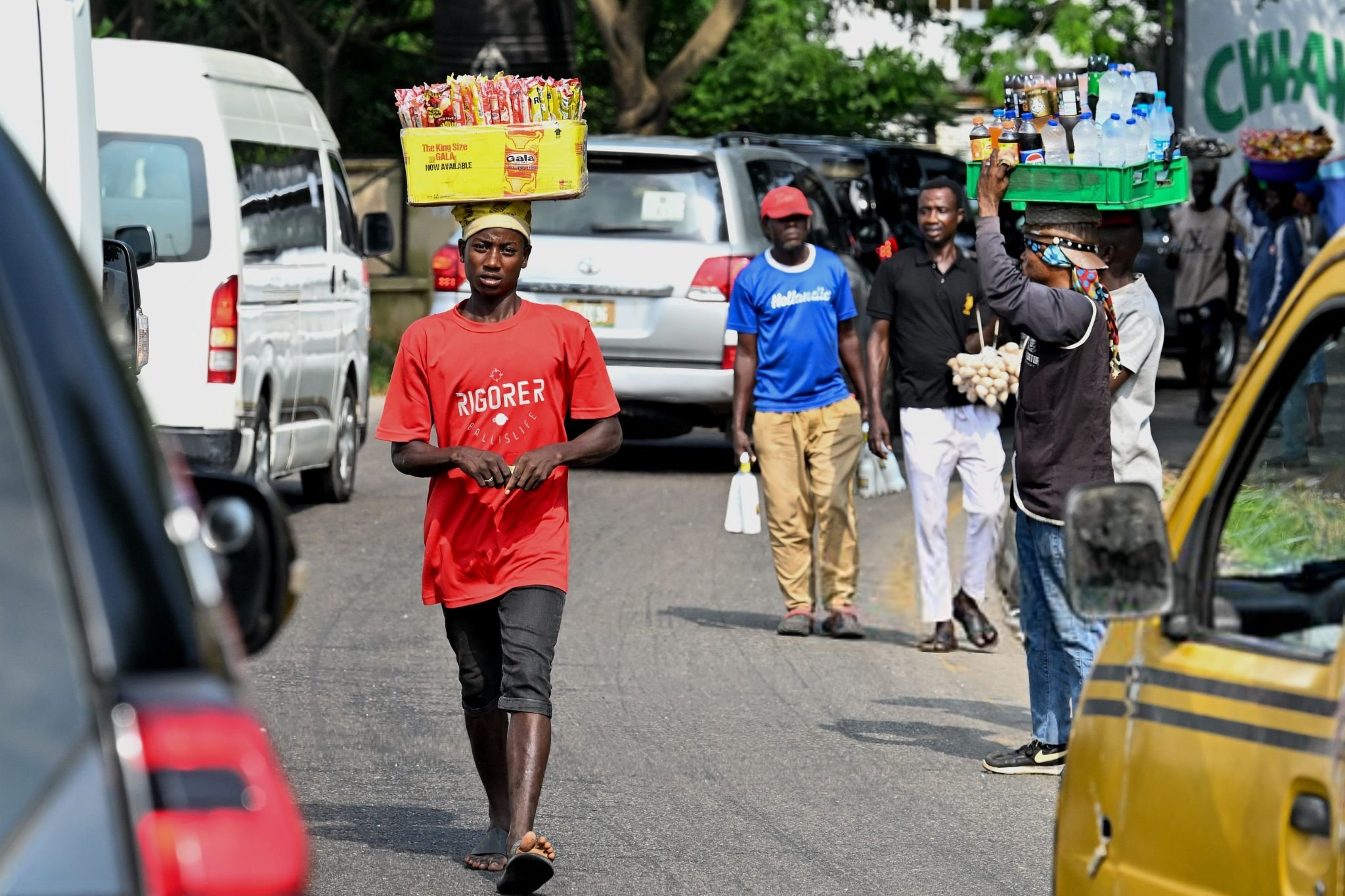
Nigeria’s wealthy have revived a new hindrance to their dream of building a megacity: danfo buses. The danfo buses that they only recently celebrated as the spirit of Lagos, plastered on T-shirts and as graffiti in artsy spaces across the city, have alas become too annoying.
The Instagram account lagos.updates, which also has a yellow danfo bus on its website, has made multiple videos calling for a ban on danfo buses for being too “unsafe” for a modern city. “Transportation is a very important factor in Lagos and should be treated with care. The Yellow Luxury buses need to go,” he said in one post. This is not the first time a ban on danfo buses in Lagos has been suggested, even though the city does not have enough public transport to meet demand.
His argument for making sure drivers are not rendered jobless with the ban is, at best, the dullest economic solution ever thought of in the history of Kebiyesi intellectuals offering takes on the internet. He makes no caveats for conductors.
For posterity’s sake, I will share it. He has called for danfos to be replaced with luxury buses that will be financed with low-interest loans. It is a rich solution for a group already deep in loans, whose average monthly income is below ₦50,000 and who are mostly breadwinners not just of their immediate households but, for many, their extended families. Some have probably not had a three-square meal in years, even as they work round the clock every day, including weekends. Data compiled by Expert Listing shows that the average family of four needs roughly ₦1.8 million to get by in Lagos. This group has no current economic prospect of retiring, let alone retiring in dignity.
It is, at best, one of many invented hindrances to the grand vision of making Lagos a megacity—from the group that also brought you bans on street hawkers and okadas, border closures, and many “tried-and-tested” economic solutions—that will ultimately fail.
It is particularly ridiculous because, on its very surface, it denies the existence of the underlying factor that has brought us here in the first place. The Nigerian economy is too weak and, because of that, we are a poor country. By reframing the dialogue through the lens of safety and security concerns, we have already gone too far off course. Solving the problem that we claim to have highlighted would be nearly impossible.
But isn’t it a rather convenient argument for a rich person who doesn’t use danfos but wants to replace them specifically with “luxury” buses to have, particularly because it conveniently denies the overwhelming concentration of wealth in the hands of a select few that you somehow also happen to belong to, or are at least in proximity to?
Arguments like this seem to have broad appeal on social media, where the wealthy convene and virtue-signal their investedness in uplifting their people, even though they sometimes claim to have no dog in the fight because their families largely live abroad. But, of course, only until the union of Tommy Robinson and Kemi Badenoch sends them back home. It is a morally righteous perspective to support on the internet, because its goal is to scrub the evidence of Nigeria being a poor country off the internet—to save face from the shame of poverty.
I used to work at a website popular with this group, and whenever we posted love stories of people from low-income backgrounds, we received a flurry of backlash from readers who were offended by the content. One such love story was Peller and Jarvis, the young couple whose striking romance began on TikTok and has captivated the public ever since. It is a quintessential modern love story: strangers meeting on the internet and falling head over heels in love with each other. Peller is working class, and working class is evidence of our poverty, and our poverty on the internet will destroy the sheen of affluence we would otherwise like to project to the world. Peller is the evidence of our shame, which is that we are too damn poor and, as a result, many of us are not university-educated.
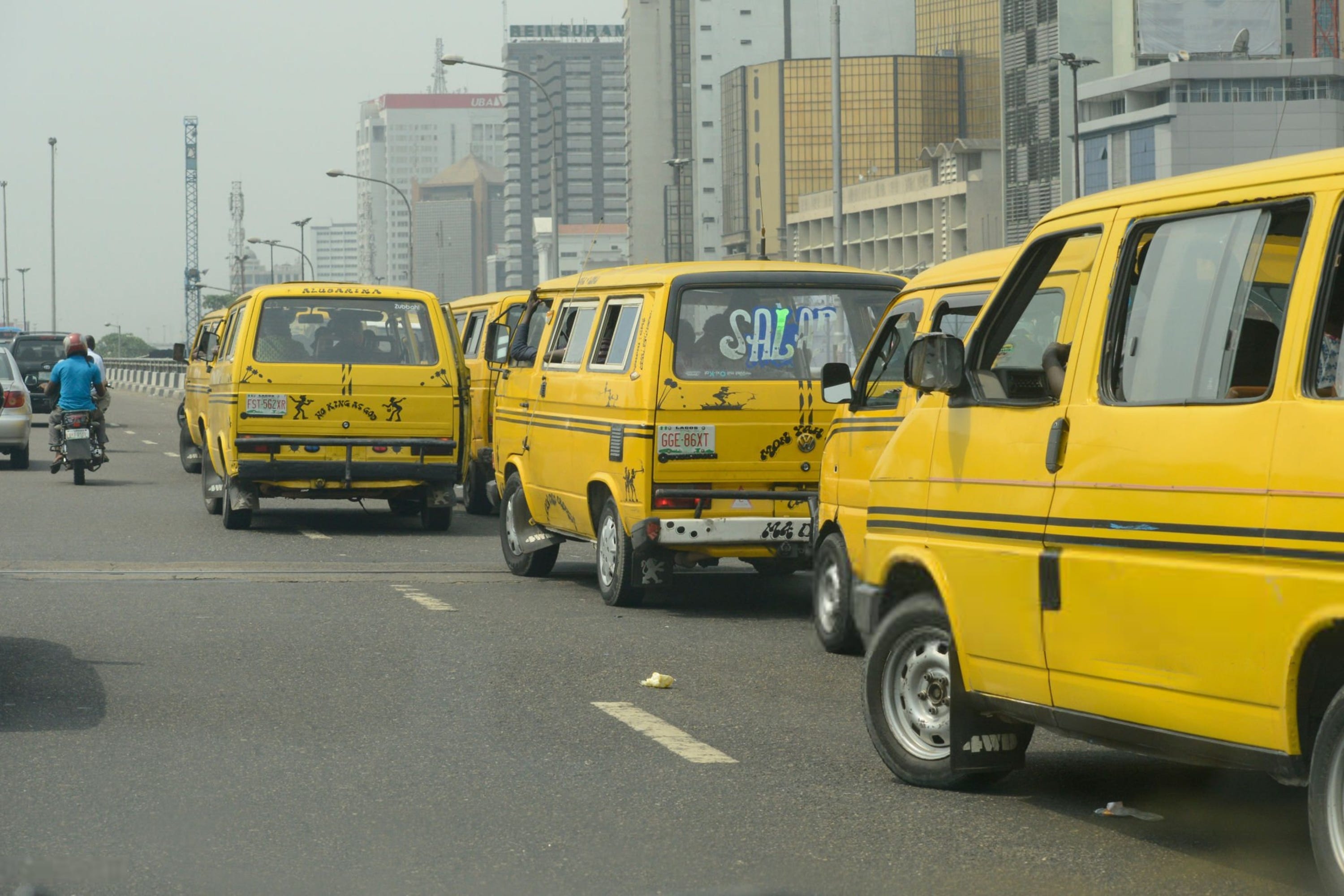

It is not that making Lagos a beautiful megacity is inherently a bad idea. I have argued over and over again for us to build a paradise in the region for not just people in Lagos or Nigeria, but for all Africans. Beautiful cities have a long history of being a driver of economic growth, like Paris and the Nordic cities. They are certainly not global economic giants, but people continue to run to them as second homes and destinations for celebrating milestones because of their beauty. But there is a key distinction between those cities and Lagos: they do not exist within the borders of a poor country.
Nollywood and the media have not told the true stories about Lagos, and this is part of the concerted effort to hide our shame. Lagos is far from what we see in films and the media. Lagos is a city seething with homelessness: people living on the streets, people living in shops, people living in mosques, people living with cousins and friends. There is a mounting level of homelessness that many people living in Lagos will not believe exists side by side their waterfront homes. The reality of life in Lagos is more akin to Mira Nair’s depiction of Kampala in Queen of Katwe than to the romanticisation of highbrow parts of the city in new-age Nollywood.
It is not that this group of wealthy Nigerians is actively looking to bundle every poor person in a factory and gas them in the Auschwitzian tradition. Many just look around them and see a home that looks nothing like the exotic cities they “vacay” in with their families. But by pushing for these ideas, they are, in effect, condemning the poor to even more levels of poverty and not uplifting them, however they might choose to see it.
Many of the groups—the okada riders, danfo bus drivers and conductors, street hawkers—are already living with mounting debt, so much so that if we had a credit score system, they would have been long blacklisted. The current arrangement is one of the best business strategies for them in this economy. The street hawker doesn’t have to incur costs beyond producing the products she sells.
She doesn’t have to pay shop rent, electricity bills, or extra taxes; buy new materials for her shop; or, in some cases, pay to transport herself and her young children to the location—thereby saving money that she might use to service her loans and keep her account officer off her back.
Street hawking is a better way to run her business because it keeps a larger profit margin. Her situation is similar to that of the bus driver and the okada rider. They are, at best, victims of foundational problems in their societies and not the culprits, as these screamers about safety and security concerns have framed them as.
People who do what she does in wealthier countries can own a home and travel on holidays to nearby countries while working not even half as hard as she needs to. There is no extra work she might take on that will significantly change her experience of the city, because she is already maxed out for her class; unless she is given a new class, i.e., made a special advisor to the governor, or all her debt is wiped away, and her tiny business is injected with fresh capital enough to remodel it into a Fortune 500 company. The most realistic way out of her predicament is that her child, fresh with hope and no debt, becomes one of the exceptionally talented and lucky people who get a university degree and land a job at a choice firm. As much as we would like to deny this, for many, it’s the reality.
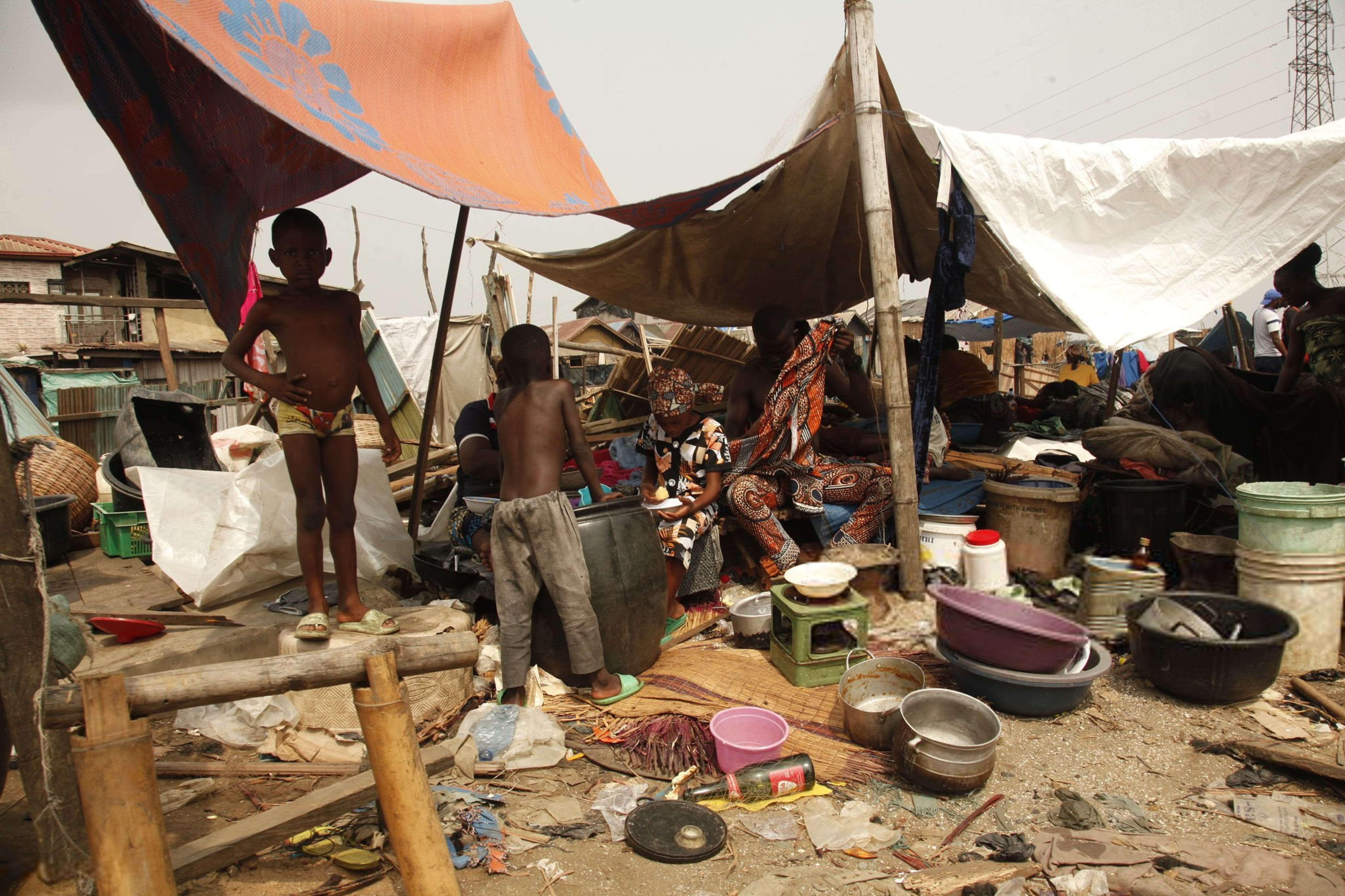
Artificially removing evidence of poverty from the streets, even in the name of security and safety concerns, will never deliver the megacity we so crave. The economy is a tangible reality whose strengths and weaknesses shape the direction of all our lives. If you’ve ever believed in the concept of a universal truth, take this one as gospel.
Ultimately, we are the sum total of the economy upon which we operate.
