


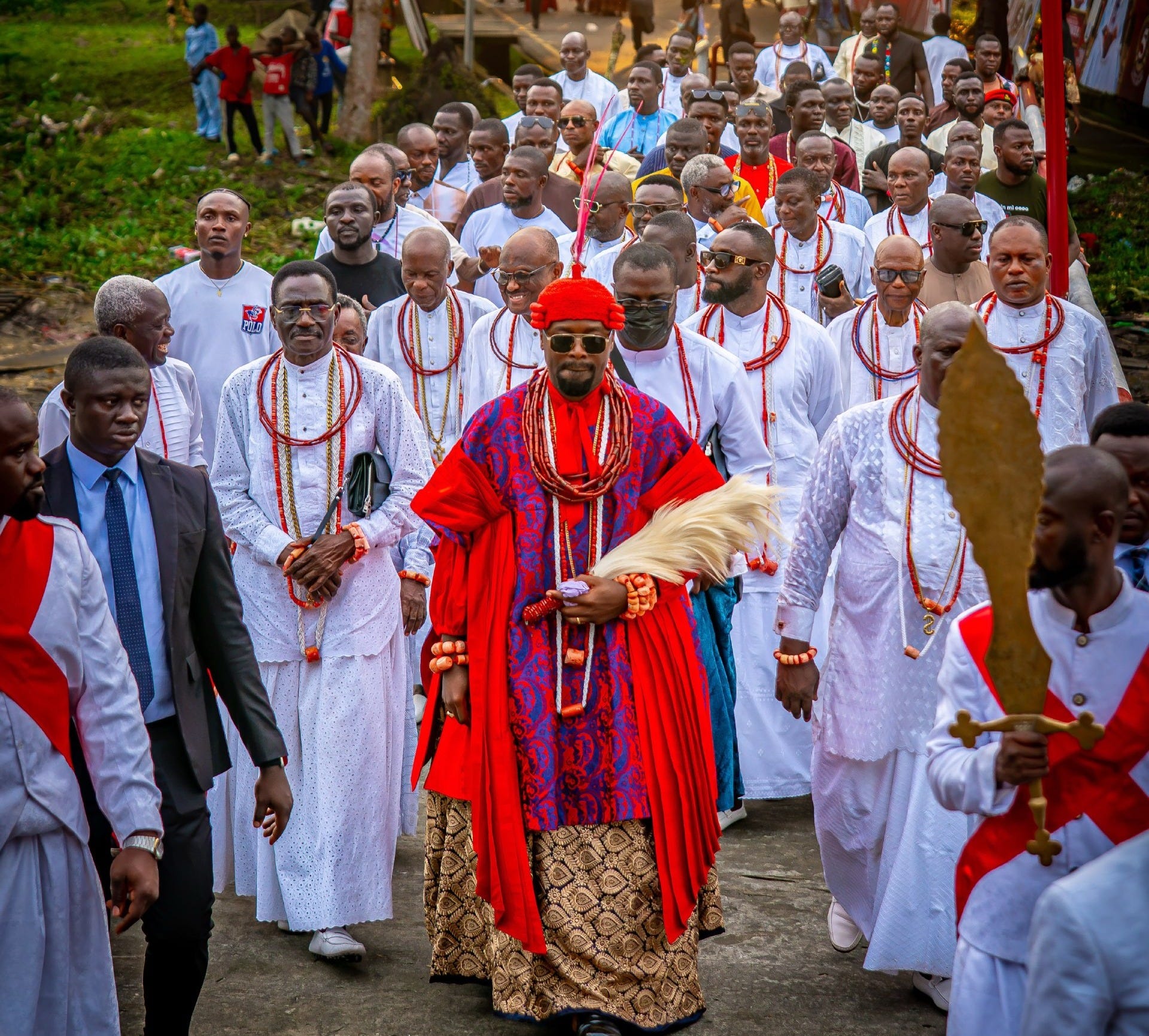
The simple answer to whether the Olu of Warri is also the King of Warri is that, technically, he already has his own title, Olu of Warri, and doesn’t need a second one invented for him. But colonialisation and our obsession with the West in its wake have created a world in which this obvious, clear distinction between a king and an Olu is received as an affront to the reign of Ogiame Atuwatse III, the current traditional leader of the portion of Delta State now known as Warri.
Part of the problem is that inner-circle members of the current Olu’s court have consistently interchanged his title “Olu” with “king,” and his wife, Olori Ivie Atuwatse III, has described herself multiple times, ignorantly, as “queen.” She is not a queen. In fact, for many years, the wives of the monarchs in some precolonial portions of the country didn’t have any designated office, but respect demanded that they not be referred to by their first name, especially by those beneath their station.
Many have cited the Iyoba title, from the old Benin Kingdom, as evidence of a long history of “the queen” as a sort of co-ruler, as one might have in the West. But not only does the office date to just a few centuries ago; on its face, the argument is also silly. The existence of the Iyoba in itself counters the idea of a queen consort or co-ruler.
This is the result of another misrepresentation of the Oba’s office as king. The closest thing to the Oba in modern English parlance would be an emperor and a pope, combined in one. He is the living embodiment of the tradition, the supreme spiritual authority, and the head of state in one. As such, his heir could be any of the male offspring he chooses; it could be the son of his wife or of a concubine. He could be anyone, and the person’s mother would become Iyoba, the Oba’s mother, and not queen mother, as we falsely interpret it today. They are different because, before this role of Iyoba, she was not titled, or else in the case where her husband had bestowed a chieftaincy on her. Obas, most recently Oba Ewuare II, bestowed chieftaincy titles on some of their wives. Without that, they were not titled, although they still had some privileges as wives of the Oba. The Obas could do this because they were the tradition, and the tradition was them.
The Olu of Warri was seen as a spiritual leader and not the supreme spiritual authority, as the Oba of Benin was. In fact, historians describe the office of the first Olu of Warri, Ginuwa, the eldest son of an Oba, as the “leader of the Itsekiri people,” a sharp distinction from “ruler.” His title is Ogiame, lord of the water or riverland, as we now describe it. “Ogi” is from the Edo chieftaincy title, Ogie, which is used to describe a chief. In his role, he was not a supreme leader but a colonising power who had come to conquer Iwere, the riverland the Omajaja occupied, as an offshoot of the Benin Kingdom.


Historians have long described the title Olu of Warri as the “paramount chief of the Itsekiri.” He led with the Otoloyes, who were chiefs from Benin who moved to Iwere with him. But the Otoloye chieftaincy title over time became open to people with money and influence. This kind of metamorphosis was common at the time.
What historians now call the Ijaw Canoe Houses of the eastern Niger Delta area were offshoots of that kind of arrangement. They also similarly had a ruler: the most senior member from their time in Benin, who led the houses that built the pirate economies that dominated the slave trade. Among the Kalabaris, heads of the canoe houses were called Alabo; they were chiefs who had a huge say in the state of affairs of the society, making sure not all the power rested with the Amanyanabo, the ruler.
In the Oba’s household, the linguistic descriptions for the most senior wife or head of his harem were constantly changing with the Oba. From Oba Eweka I to Ozolua, she was called Enahen. After Ozolua, she was called Oka-Erie.
However, for many centuries, the title Oloi or Olori, roughly meaning “the one selected to possess or take custody,” was used to address the wives of the Oba. It was a way to respect the Oba’s wives and not an attempt to imply that they were “queens.” It is the way an English person might use “my liege.” This is a mere honorific. It was, after all, a culture where referring to people by their first name carried so much weight. It was disrespectful, and to this day, in some circles, it is still seen as irreverent for someone below station to call them by their first name. When Ginuwa moved to Iwere, his wives adopted a similar description, but only in veneration, not as co-rulers.
King and queen are in themselves titles. They are not English translations of traditional rulers, the way God might be the supreme being to many. Neither are they direct descriptions. Oba of Benin and Olu of Warri are already English renditions of the titles. They don’t need to be retranslated. Would we now call them emperor, empire, duke, sultan, or even prince in a bid to claim these titles do not matter?
It is important that these distinctions are maintained because this is how we preserve our culture. A lot has been lost already in the translation of our cultures into English. We must not allow colonial white supremacy to push us to abandon our history and desecrate old systems of government.
Many Nigerian societies never adopted a full monarchical system of government. There is a long history of outsiders coming into new societies and assuming the role of the head of state. This is because they were close to parliamentary systems, each ruling house casting a vote on who the next ruler would be and then checking the powers of that ruler. In all these systems, there were councils that presided over the governing affairs. From the Old Oyo Empire to the agrarian Igbo societies, political authority was not vested entirely in one person.
The systems of government that we now, even aggressively, seek to erode were similar to many systems of government in ancient Greece and Venice that are now called early forms of democracy.
The Obas of Benin wielded power beyond compare; the suggestion that they had a co-ruler, which kings and queens typically do, is in itself insulting to the power that they wielded. These days, we go even further down the line and invent titles like princess and prince, offices that did not even exist.
Many Yoruba societies opted instead for ruling families, not even royal families—houses that produced the head of government. These people occupied political offices that they came to through high-powered manoeuvring and politicking. Many were not even spiritual leaders. Some came to power by coups. Inventing the title of princess and prince is an erasure of the political advancement and organisation of these societies. Their children were their children, privileged and rich. Some could be chief. But they were not heirs apparent to the throne.
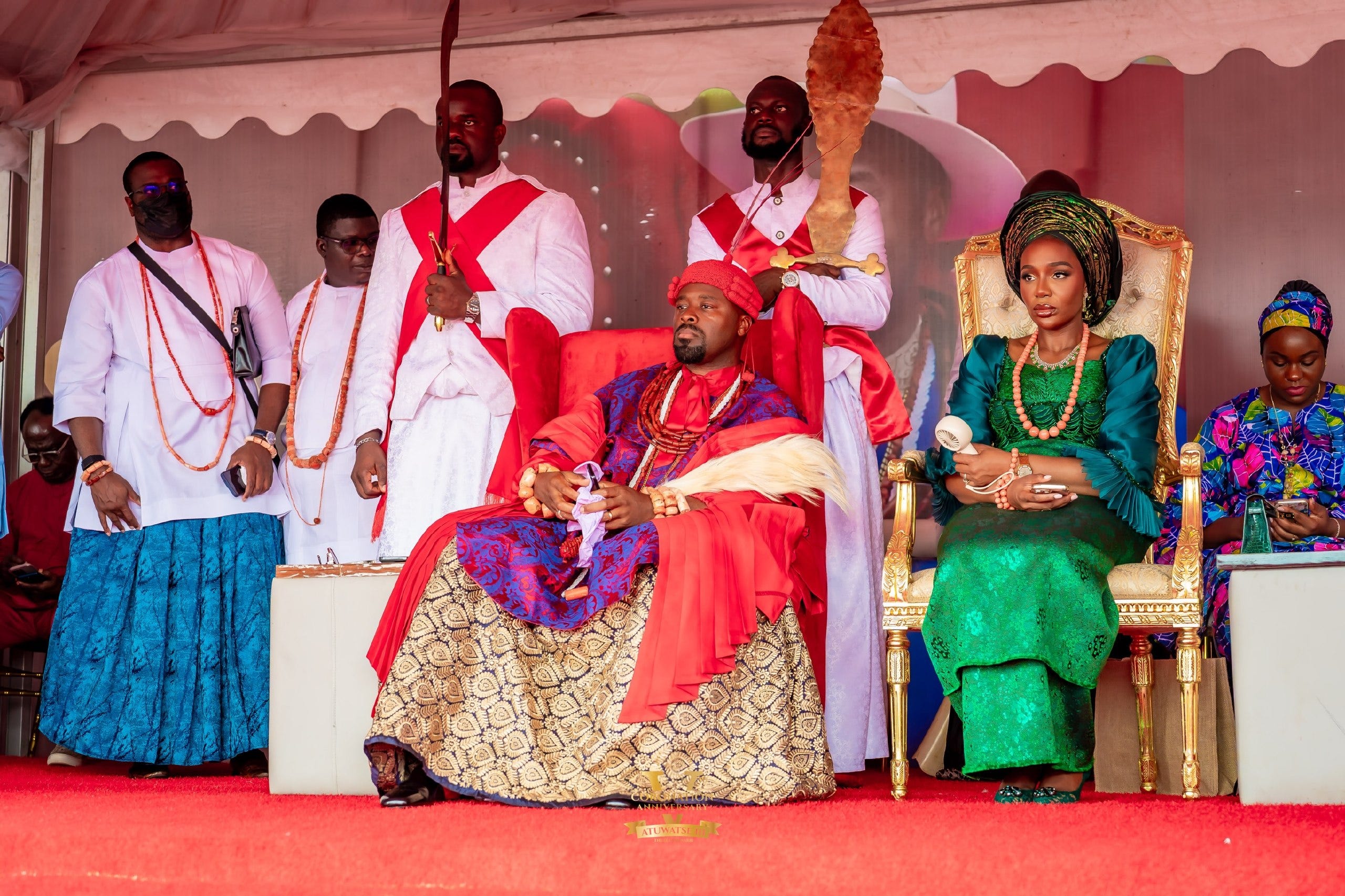
Princess or prince will connote royalty in the Western form, where a single family rules. But because we had our own governments with democratic features, that was not the case.
When we begin to call ourselves queen and king, this is also the history that we risk forgetting.

References
Bradbury, R. E. (1957). The Benin Kingdom and the Edo-speaking Peoples of South-western Nigeria. London: Oxford University Press for the International African Institute.
Egbokhare, Francis Oisaghaede. (2011). The Sound of Meaning: An Inaugural Lecture. Ibadan: Ibadan University Press.
Egharevba, Jacob U. (1952). The City of Benin. Benin City.
Francis, Paul, with J. A. Akinwumi, P. Ngwu, S. A. Nkom, J. Odihi, J. A. Olomajeye, F. Okunmadewa, and D. J. Shehu. (1996). State, Community and Local Development in Nigeria. Washington, DC: The World Bank.
Immigration and Refugee Board of Canada. (2002). The Oba of Benin: Rituals and Practices (Sacrifices); the Palace of Egua Edaiken and Whether or Not Chief Iserhienrhien Edorisagbon Was Ogunoba (King’s Sorcerer) of Benin Kingdom. Response to Information Request NGA38403.E.
The New Encyclopedia Britannica. (1989). “Benin.” Micropædia, Vol. 2.
Other sources
Case Western Reserve University, The Alumni Association. (2021). “From the Soccer Field to the Throne.” September 14, 2021.
Smithsonian Institution, National Museum of African Art. Barbara Blackmun Collection.
Quite an enlightening one. 👏🏽👏🏽👏🏽