There is a story that people of Delta State like to tell themselves about the state of affairs. Like in most parts of Nigeria, the leadership is incompetent. This is true for almost every state in the country, but states like Delta and Rivers are in a particularly dire position, in which playing the victim is rather too dull a response.
Countless reports, from The New York Times to your favourite YouTubers, have exposed how oil spillage has destroyed farmlands and polluted the water, condemning many into a life of poverty. This is a failure of the state, but this is also a failure of the people who produce these reports and the members of these communities.
A recent example is a video by Steven Ndukwu. The YouTuber visited one of the creeks in the remote regions of Delta State and interviewed residents who lamented their poor living conditions. His camera captures the relatively luxurious lives the staff of oil companies live side by side with the poor living conditions of members of these communities. Some of the community leaders interviewed by Ndukwu have come to similar conclusions, which is that the oil companies have most likely paid for the restoration of the land, but the funds somehow didn’t get to them, and so the oil companies and elected officials are equal oppressors.
When I first watched this video months ago, my first thought was: why did they vote in these politicians who didn’t have their interests at heart, and then turn to do interviews where they play the victim? Getting the president to focus on a single community might be tough, but isn’t it easier for them to decide among themselves who they, for instance, wanted to represent them in the House of Representatives? By asking them no prodding questions, the documentary robs them of any agency.
The community that was the subject of Ndukwu’s video is in Warri North Local Government Area. The community has been destroyed by years of oil spillage, careless drilling, vandalism, and bunkering. A man named Thomas Ereyitomi represents them in Abuja. If there is anyone to blame for the problem of the community, it is Ereyitomi.
Before he became a House of Representatives member, he was the Chairman of the Community Development Committee for Ogidigben community from 2005 to 2014. And then the Commissioner of the Delta State Oil Producing Areas Development Commission (DESOPADEC) from 2015 to 2018. Since 2019, he has been representing Warri North, Warri South and Warri South West, or just Warri Federal Constituency, in the House of Representatives. He is in the PDP. In a normal scenario, no one is more qualified to fight for the people of this community than Ereyitomi. He comes into this role with more than a decade of experience on the subject matter. He is, by any metric, supposed to be an expert on rebuilding his community, having spent years doing community development work.
But this is what Ereyitomi spends his time doing. His most recent post on Instagram was in December, where he wished members of his constituency a Merry Christmas days before, on the 23rd. He regularly posts pictures of himself at parties, a wrapper firmly tied to his waist and beads not out of place. A favourite pastime of his is celebrating his children and other politicians on their birthdays, most recently his son, Bawo Ereyitomi. Bawo went to the University of Aberdeen in Scotland and has shuffled between living abroad and Nigeria. The then Speaker, Femi Gbajabiamila—now Chief of Staff to President Bola Tinubu—was at his wedding in 2019. He loves expensive toys like Bentleys and Range Rovers and regularly posts pictures of himself in them.
Ereyitomi has made no post about the dire condition of his own constituency. His current oldest post was made in 2020.
In 2022, he travelled with the Olu of Warri, Ogiame Atuwatse III, on a courtesy visit to the Emir of Kano, Aminu Ado Bayero. In an interview with Ndukwu in the documentary, the Olu of Warri lamented “how much has been destroyed because of oil” in the Niger Delta. I wonder if he raised similar concerns with the person who was supposed to represent the people, Ereyitomi, during that trip.
For a group that prides itself on never coming last, coming last seems to be its lot.
When we talk about situations like these, we begin to throw our hands in the air and ask, well, who would we vote for? You can’t have someone like Ngozi Okonjo-Iweala from your state and still be asking this kind of question. It is not just because of her stellar experience as a leading economist on the global stage but also because of her character as a leader that I think she will make a better governor than Sheriff Oborevwori.

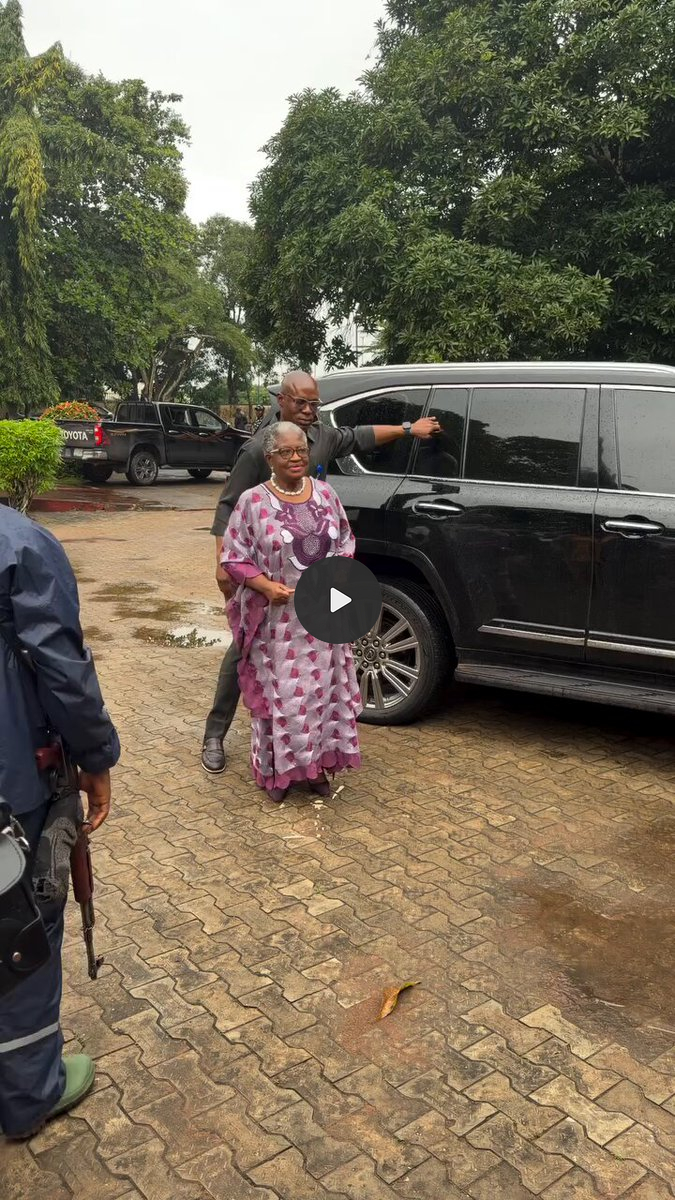
Of course, Okonjo-Iweala is not from Warri, the subject of Ndukwu’s documentary. But she can be a leader who will do the work of rebuilding and planning Delta in a meaningful way. She seems like a woman guided by principles, someone who still has shame. She is smart, has global leadership experience, but more importantly has experience dealing with Nigerian bureaucracy as Finance Minister. I do not agree with her on everything. She was a staunch advocate for removing the fuel subsidy but has pushed for fisheries subsidies as Director-General of the World Trade Organisation. But I rarely agree with global economists on anything.
I didn’t bring up illiteracy or poverty in this suggestion because illiteracy and poverty are not motivating factors the way we like to think of them. If anything, the disgruntlement from illiteracy and poverty is the reason we should desperately look for sound leaders. I also didn’t bother entertaining the argument about elections being rigged because, largely, it’s impossible for the governor to sit in his luxury condominium and rig all the elections, even if he wanted to. The real question is why we are not gathering ourselves together as a community, looking inward and choosing one of us to lead the way we do when people die, and we need to punish the widow, or when we need black tax?
It is embarrassing to have such an astute thinker from a state and be running helter-skelter for leaders, doing interviews claiming to be helpless.
The messiah is a myth. But if it were real, then we are living in the golden age of messiahs. We are the messiah. We are the ones that were promised. We are the ones that we have been waiting for. No one else is coming to save us. If Deltans want their communities fixed, they have to take the community itself seriously enough.