


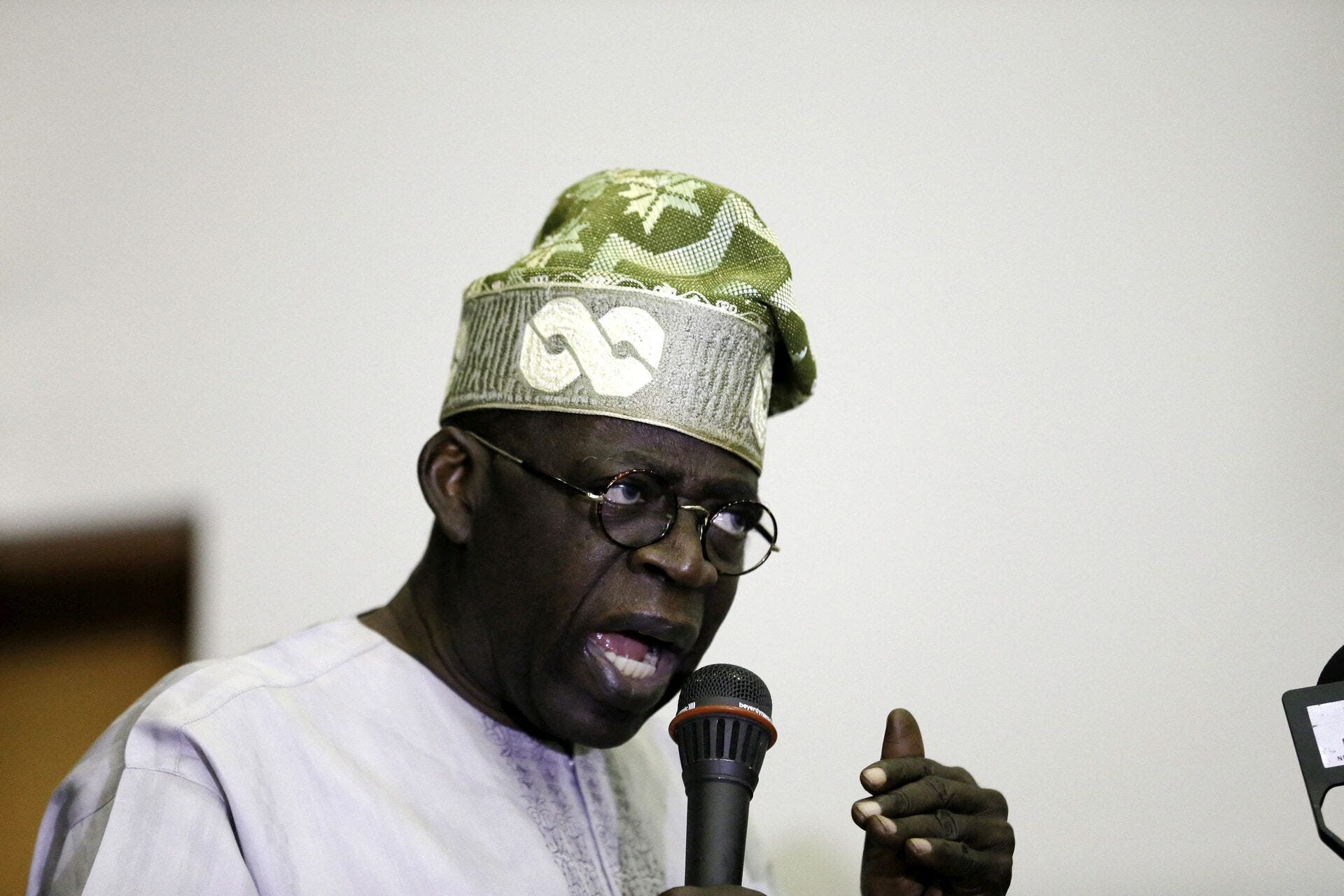
There is a scene that I continue to return to when I think of the Nigerian president, Bola Tinubu, his wife, the First Lady, ‘Remi Tinubu, his son, Seyi Tinubu, the members of his cabinet, and the sharp decline of the country since he took office — the devaluation of the naira, the housing crisis, the medical crisis, the insecurity crisis, etc.
In May, at the African CEO Forum, the journalist Zeinab Badawi asked Tinubu, “If Europe’s got the euros, when will Africa get the afros?”
“Look around the entire continent. 54 countries. There is none of us without a particular commodity available in the country or the other. Why not start an exchange commodity platform where we can trade with one another?” Tinubu said.
“Why don’t you start the commodity exchange you’re talking about?” Badawi asked him as a follow-up. His response was a shrug. It had not occurred to him that he was in the position to solve this pressing problem that his people, including himself, were facing. The audience, some of the most connected and wealthiest Africans in the world, erupted not in outrage, not in shock, but in laughter.
When Tinubu and those in his inner circle display their seeming lack of concern for the dire state of affairs — his wife telling the public, “To start Akara business doesn’t take a lot of money,” his daughter-in-law, Layal Jade Tinubu’s extremely tasteless lavishness, Tinubu’s own comments that “Before I was born there was hunger and I have no control of the population development of Nigeria” — a corrupt fascist who has taken the resources of the people all for himself becomes the most common critique of him.
It is easy to see why this is so. The body that organises elections, INEC, has little to no public trust. Many young people have been so put off by the electoral process — its tediousness, deliberately so — that they have largely abandoned their civic duty, choosing apathy where it matters most while lamenting the administration's woes on social media.
In all of this, many distrust Tinubu, who, long before he came into power, had cultivated a reputation as a ruthless political godfather, evident from former Lagos governor Akinwunmi Ambode’s defeat at the APC primary after an alleged fallout with the president, and the treatment of former CBN governor Godwin Emefiele. People treat him like they might a military dictator, constantly watching what they say in public. I don’t mean to say this apprehension is unfounded. Many Nigerian politicians have no regard for democratic institutions. In a sense, by default, they are all neofascist, and that will be putting it mildly.
But in this context of President Tinubu as the ruthless godfather, another reputation rears its head. Tinubu, an intelligent operator adept at the game of politics. An ogbologbo con. The people who tout this reputation offer his ascent to the presidency, the alleged manipulation of the inflation and interest rate numbers, and the IMF’s thinly veiled endorsements of his policies as evidence of this. A former colleague once told me of the president, “He is doing everything by the books and working the numbers. There is no trace in the record that the economy is getting worse.”
This week, the EFCC, the agency whose duty it is to investigate and prosecute economic and financial crimes, obtained a court order to freeze the account of the Osun State Government only days before the gubernatorial elections. In 2024, the journalist Daniel Ojukwu was arrested after he published a story alleging that ₦147 million in government funds allocated for the construction of a school was paid into a restaurant’s bank account. Last year, Osato Edobor, a student at the Delta State College of Nursing Sciences, was queried after she posted a sarcastic version of a song intended to toady up to the First Lady. In February, the opposition populist leader Peter Obi survived an assassination attack during a visit to Edo, where thugs ambushed his entourage and opened fire on them. In 2024, the writer, Dele Farotimi, was arrested after his book, Nigeria and Its Criminal Justice System, was released.

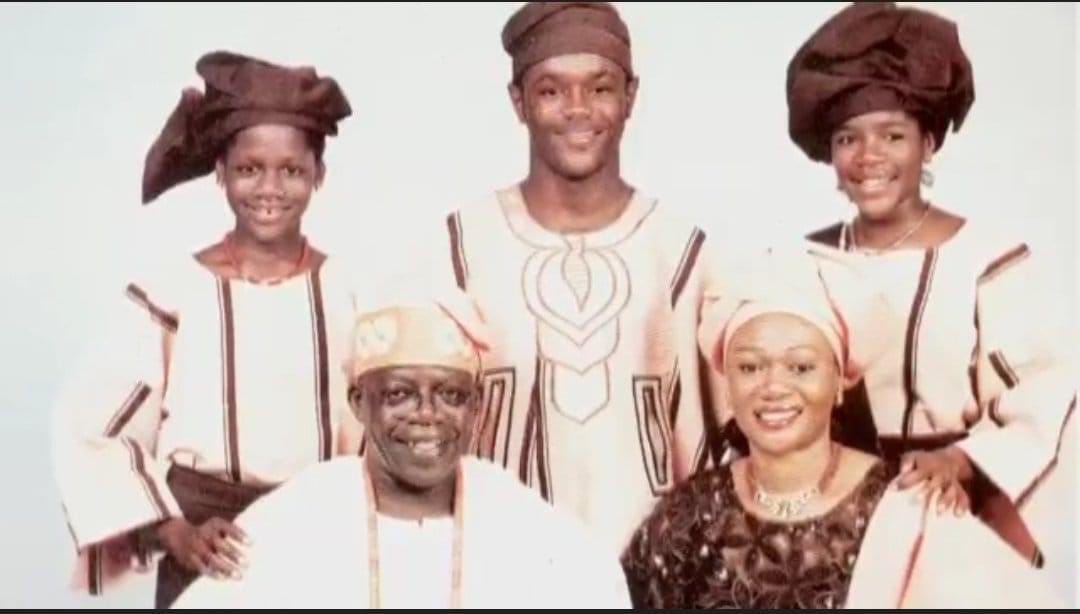
Tinubu released a statement saying he was “deeply embarrassed” by the EFCC’s court order and claimed not to have been involved in the decision-making. He said he had asked the EFCC to unfreeze the Osun State account. It was Adejoke Orelope-Adefulire, a former Senior Special Assistant to the President, who was the subject of the Ojukwu report. Edobor’s query by her school was withdrawn after the Delta State Commissioner for Health intervened. After Obi’s assassination attempt, the Edo governor condemned the attacks and claimed not to have sanctioned it. Farotimi’s arrest came after a complaint by the billionaire Afe Babalola.
The former governor of Kaduna State, Nasir el-Rufai, claimed that Nuhu Ribadu, National Security Adviser to the president, had ordered his arrest at the airport in February. El-Rufai later claimed in an interview that he had tapped Ribadu’s phone. The DSS later charged El-Rufai for unlawfully intercepting Ribadu’s phone.
Multiple instances like this, where seemingly anti-democratic actions are carried out by the government only for further scrutiny to show that the president was not directly involved, have permeated Tinubu’s reign. But stacked against previous administrations, by a mile, it is harder to pin them directly on him.
As president, multiple high-profile arrests of opposition figures and critics, including Omoyele Sowore and Olawale Bakare, were so flagrant that it would be impossible for Muhammadu Buhari to distance himself. Aminu Adamu Mohammed, a student at Federal University Dutse, was arrested in November 2022 for a post that claimed then-First Lady Aisha Buhari had “fed fat on the money of the poor,” a standard criticism of the establishment elite. And, of course, the EndSARS massacre was carried out under Buhari’s watch.
Multiple accounts have claimed that the former president, Olusegun Obasanjo, sought to amend the constitution to make way for a third term. Under the presidency of Goodluck Jonathan, arrests of journalists over reports that directly involved the president were common — in 2011 of The Nation newspaper journalists and in 2013 of a Leadership newspaper journalist. The presidency denied direct involvement in these arrests. But what makes it different from the Tinubu administration arrests is that the president was not the direct subject of the criticism or report, even if, in some cases, the main subject was someone in his immediate circle.
All of this may be evidence of what that former colleague said to me about Tinubu and his ability to cover his tracks. But I choose to see them as something else.
The president cut his teeth in Lagos politics rife with bribery and corruption. In this city, money is the name of the game. As president, Tinubu has embodied this, throwing money at his critics, gifting judges new homes, buying buses for women leaders, making donations to communities reeling from insecurity. In his world, every problem is political and can be fixed with his brand of politics. Bribing local leaders in Lagos might create the perfect Potemkin village. An attempt to bribe the entire country might end up exposing new levels of incompetence.
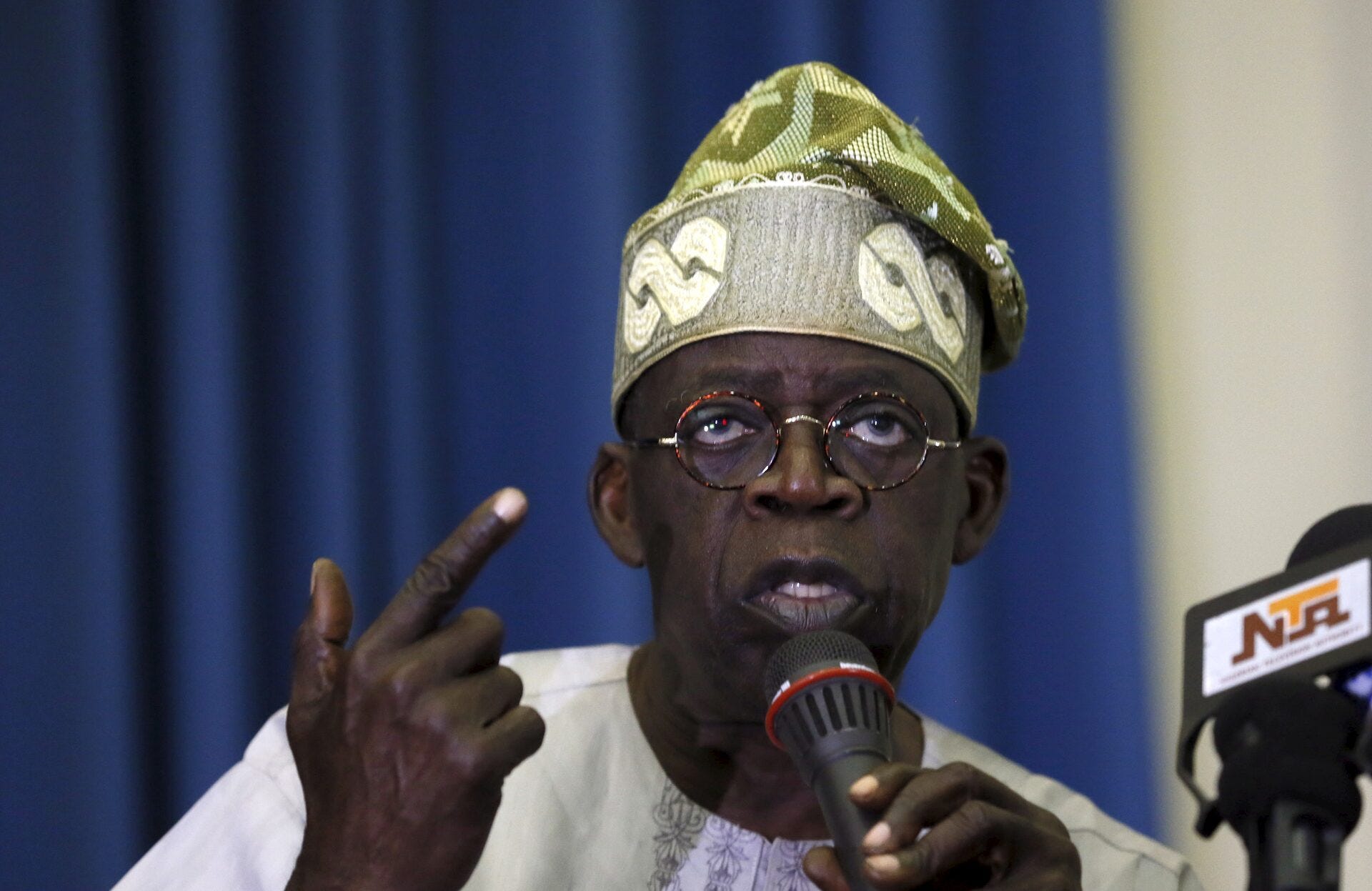
Tinubu is completely out of his depth, uniquely incapable of offering any creative solution to the problems ailing the country.
Incompetence has never been this transparent.
