



Nestled at the centre of a new wave of false optimalist environments that have hijacked bird’s-eye views of success, it is almost impossible to carry out meaningful and honest analysis of events of failure.
The argument of the believers of the false optimalism movement is that if anything fails—say, for instance, you lose a job or you get pushed out by your board from your company—it can only be because you have not done something right, you have not performed optimally. In this cult, there is no room for all-too-familiar human vices like jealousy, bias, misguidedness, etc., on the path of leadership.
Their demand is that, at the sight of this kind of failure, you are supposed to seek out the markers of your scorecard and demand to know why you have been scored poorly, because only then can you optimise better given another opportunity. You have to know what mistake you have made that made the management or board come to the decision they have made.
In the past few years, members of this religion have dominated the circle I have found myself in, giving me more than enough raw data to understand its teachings. I use the words cult and religion to emphasise my thinking around this philosophy because it concludes rather too crassly that only one side of a decision can be right, without looking at more empirical data that would easily help them see that there is a lot to hide on the other side.
Take, for instance, a scenario in which an employee is fired. Is an independent party observing to weigh the entire situation from both sides—the management and the talent—or does one simply just look at the KPIs or simply the goals of the company juxtaposed with the talent’s performance?
These false optimalists argue that only the state of the company in relation to the talent’s performance should be considered. So even if the employee has met their KPIs, if the department manned by the talent is not where the company’s five-year growth plans are, then said talent is ripe to be chopped.
This religion has failed at the ultimate ethos of corporate optimisation: productivity. By rejecting a bird’s-eye view of all the facts, it is unable to make meaningful decisions and so fails at what it aims to do—draw the most productive conclusions.

A viral tweet by the dynamo designer Chukwu Adaeze Victoria, lamenting the rise of AI and members of this religion that have dominated corporate Nigeria, has ignited a new debate about productivity in the workplace.
As she bemoaned her creativity being stifled on the job, critics said that she should have offered her best, taking feedback that she could prove was from AI and implementing it, as opposed to choosing that she has come to her wits’ end and could go no further in the foolery she had been subjected to.
The argument posed is that the management had run the talent’s work through AI, specifically seeking loopholes, and had now shared the recommendations from AI with them. There is no need to argue with that manager, because they have shown a lack of seriousness. The counter-argument is that the talent should have optimised for it, so AI would not be telling them it was lacking. That AI has picked it up is a failure. The false optimalist then comes in and says: Here is feedback on lapses. It doesn’t matter that it is AI. It should have been accounted for, so this is incompetence.
Is this what it means to be productive in today’s world?
The Afro Adulting Productivity Issue aims to recenter common sense in the debate around productivity.

We would begin this week by looking to the ancient Nok people in modern Kaduna and parts of Niger State, who by 1000 BCE discovered iron smelting and built their civilisation around it. Perhaps in Nigerian history, there have only been a few productive groups like the Nok communities. How did they build their terracotta empire, and what lessons can we learn from them as we go forth? The first essay of this issue would offer some answers.

Then we would speak with the savvy media operator Timi Odueso, now Head of Editorial and Growth at Tech Safari. What has he learnt in his career working in fast-paced environments while also being productive? He would share his secrets with us.
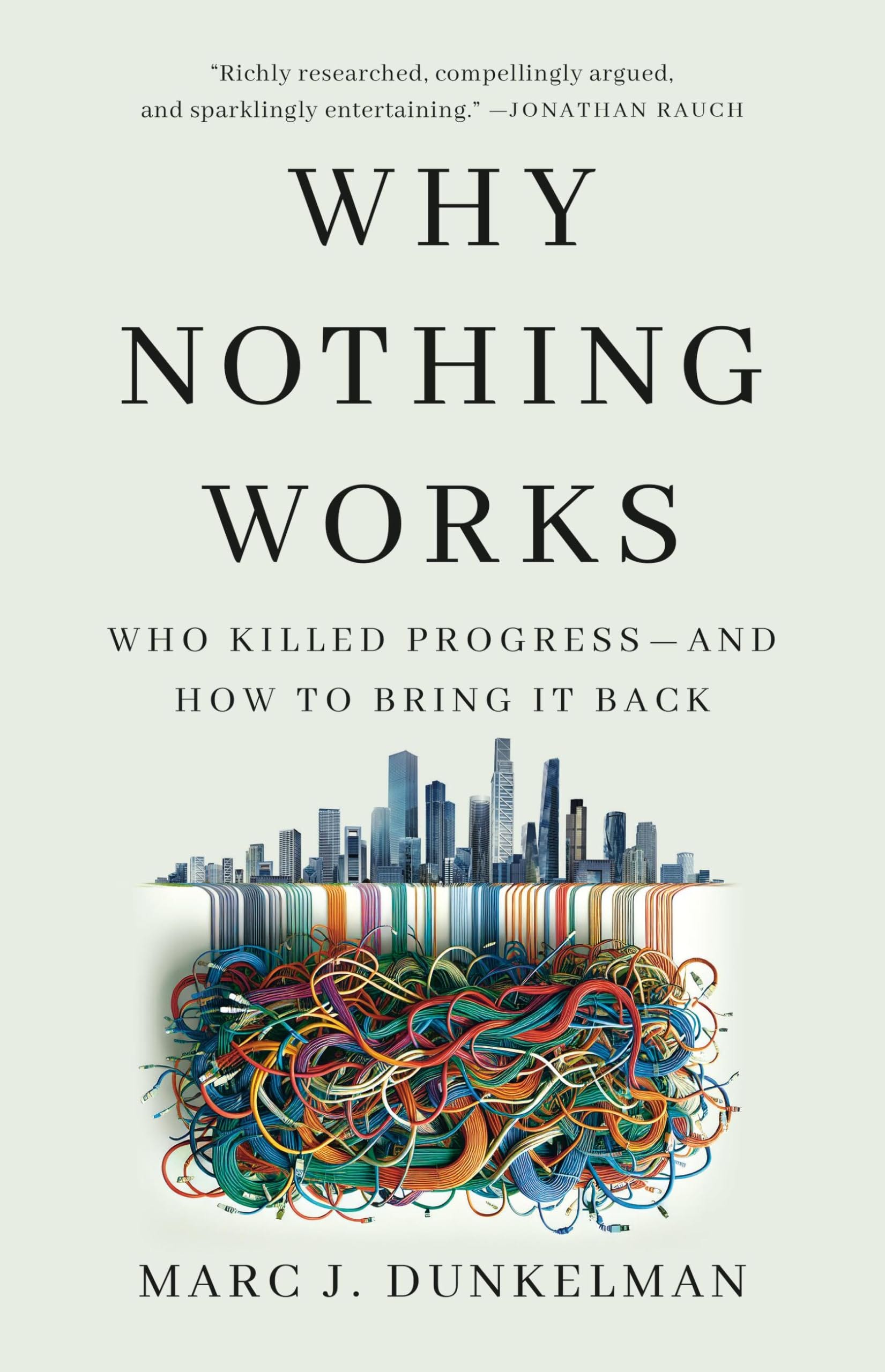
Then we would close this week, looking at Marc Dunkelman’s excellent new book, Why Nothing Works: Who Killed Progress―and How to Bring It Back. Who else to guide us through meaningful, common-sense-backed productivity than the guy who wrote a book eschewing the obstacles that inhibit progress?
Talk soon,
Dennis.
This hits a nerve. I’ve seen teams optimise people to death while ignoring the politics, incentives, and quiet biases shaping the whole mess. You can’t fix output when the environment itself is warped. Appreciate you calling that out. 🙏