


Friends,
I had planned on closing out the #Freelance issue last week with a piece on Fela Kuti based on the podcast by Higher Ground, Fela Kuti: Fear No Man, and I think a lot of you were expecting that. But I had to shift focus to work on a new, more expansive issue — The Life You Want — that I think meets the needs of young men at this very time.

If you have been following the news, you would have seen the reports about Paystack co-founder Ezra Olubi’s series of beyond-harmful old tweets about minors and women, and also allegations about how he treated domestic staff.
I don’t know Ezra personally, but I am beyond furious at him and the people who surrounded him and created the buffer that told him that behaviour was acceptable. As men, and in Ezra’s case, as a powerful man, the way we treat people matters.

I have been speaking to people who worked with him at Paystack, and everyone I spoke to only talked about how kind he was to them. These are people that I would speak to about stories like this, even if it hadn’t happened at Paystack, and I am inclined to believe they have no reason to lie to me.
It is hard to reconcile the man who made those tweets and the person they said they worked with. But this issue is not about Ezra and whatever his predilections are when no one is watching.
However, one thing to take away from the ordeal is that many of the people who got swept by the storm and were consumed or hurt by it desperately wanted to be perceived in a different light — in a better light — at least to the public, regardless of whether or not they feel remorseful about what they said or did.
Ezra’s misogynistic and pedophilic rants in particular speak to a theme that has become far too familiar in our society. I think we can all say misogyny is bad and pedophilia is bad. These are objective statements that, as a society, we should all stand by.
Many of us have said awful things, and many of us have done awful things. We have been unfair, we have bullied, we have lost our temper, and we have been consumed by our humanity for the worse.
Social media can be an awful place because, in times like these, the consequence of our actions is magnified in multiple folds. When this happens, we want to retreat because there is so much shame. It can be Andersenian. But the existence of shame itself is a good thing. It shows that the very fibre of our spirit is in revolt against what we have done.

If this is you, I have good news. It is never too late to let go of that life and begin to live the life that you want. I am not sure what kind of life you want to live, but I know the life that I want to live. I want to be fundamentally a good person. I want to be kind. I want everyone to have access to opportunities. I want to be fair. I want people who work at it to be happy. I don’t want to be surrounded by bullies or people whose aim is to pull others down. I want people that I love to know that I care for them.
These are things that, to achieve them, I know I have to work hard at it, and so I try my very best to be this to everyone.
Masculinity is a performance dictated by society. For us to give ourselves permission to live the life we want, we have to first stare society in the face and choose what makes the most sense for ourselves.
We would begin The Life You Want issue with an essay on “Escaping the Toxic Masculinity Myth,” which will drop tomorrow, Monday.
What does it mean to be a Nigerian man? At the core of how I answer this question in a way that I find hard to disagree with is a person who protects — who we can run to for protection. We exist in the thick of a gender war that has told us women are the enemy, that they must be cheated and deceived. But the Nigerian man has had a long history of being a protector. In an essay, we would look at why that was meaningful to our forebearers.
I’m also working on two lists that will be published this week: “20 Books Every Young Nigerian Man Should Read” and “20 Podcasts That Will Change Your Outlook on Life.”
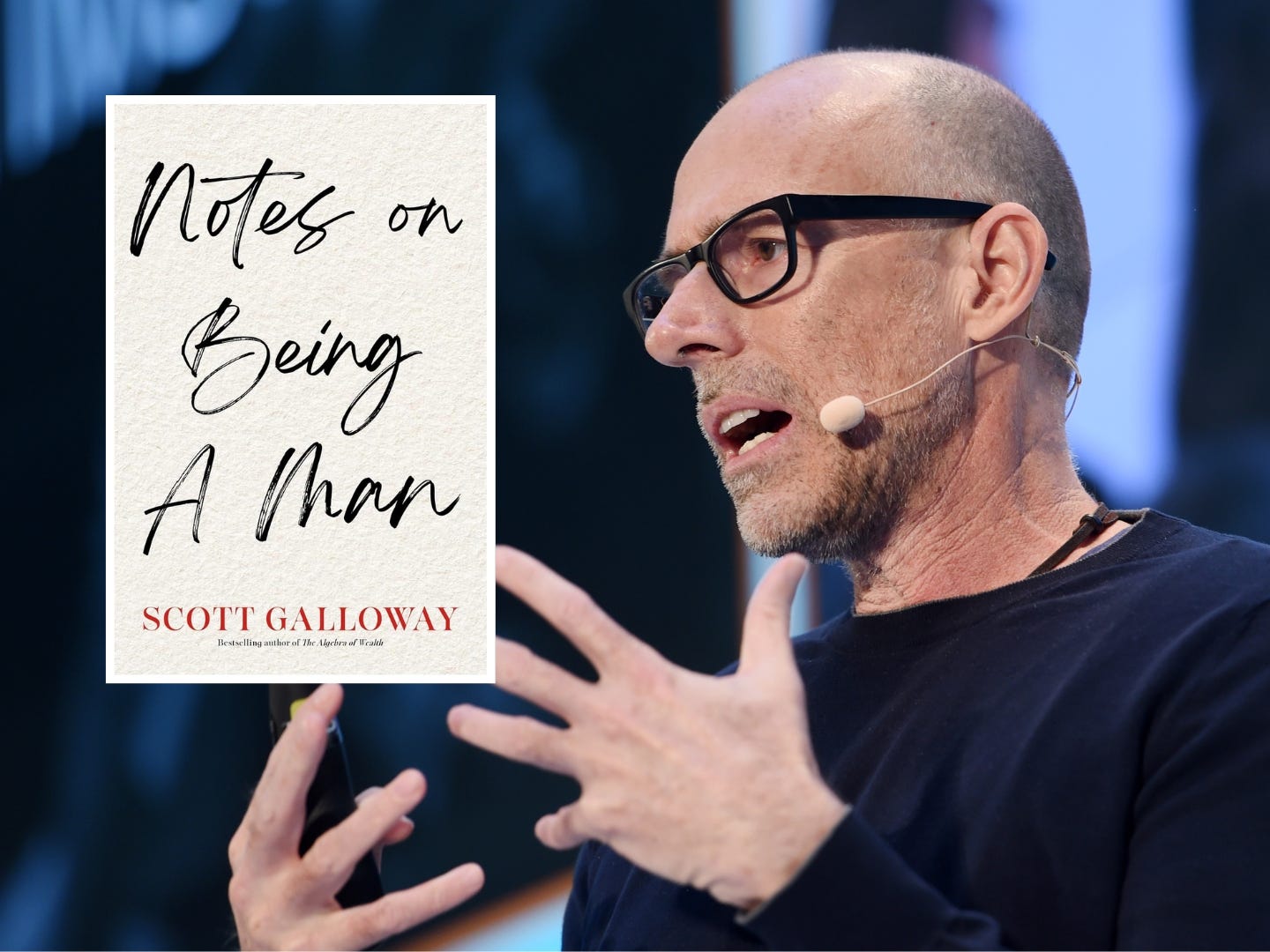
Then, finally, I have laid my hands on New York University Stern School of Business professor Scott Galloway’s latest book, Notes on Being a Man. We will close the week with my review of it.
“The world is a fine place and worth the fighting for, and I hate very much to leave it.”
— For Whom the Bell Tolls by Ernest Hemingway.
Many times I think about this line, and sometimes I burst completely into tears just ruminating on the meaning.
I hope you can spare some time before you go to bed tonight to give it some thought.
Talk soon,
Dennis.
The other day, while trying out the Pages app on my new iPhone, I found myself writing about Ochanya’s case. I remember expressing how disheartening it was, and how issues like this have become a pandemic plaguing our society. All of this bad behavior stems from misogyny, and only by dismantling the patriarchal systems that continue to place women and girls at the mercy of monsters disguised as humans can we ever truly move forward. Looking forward to the rest of the series.