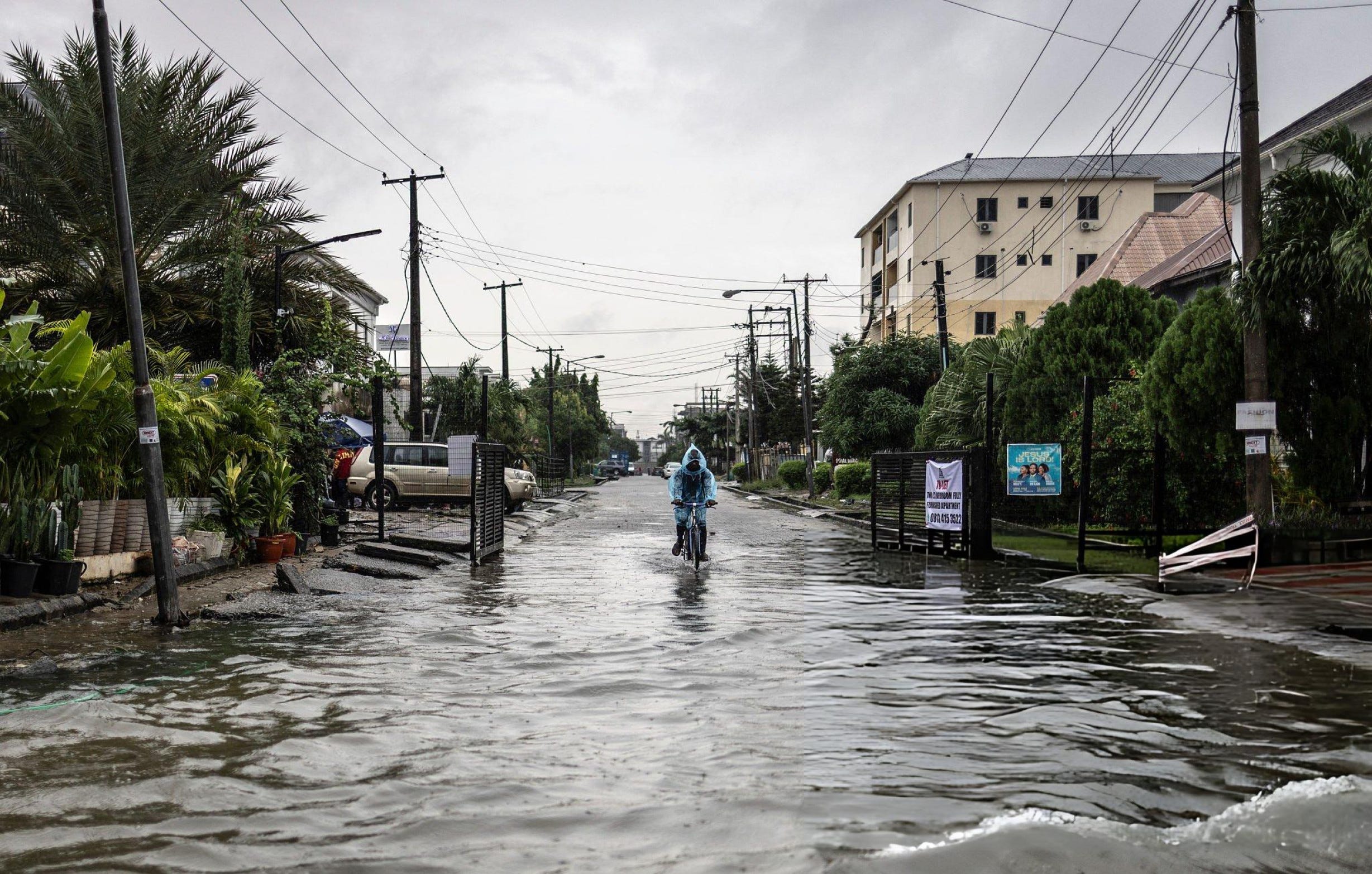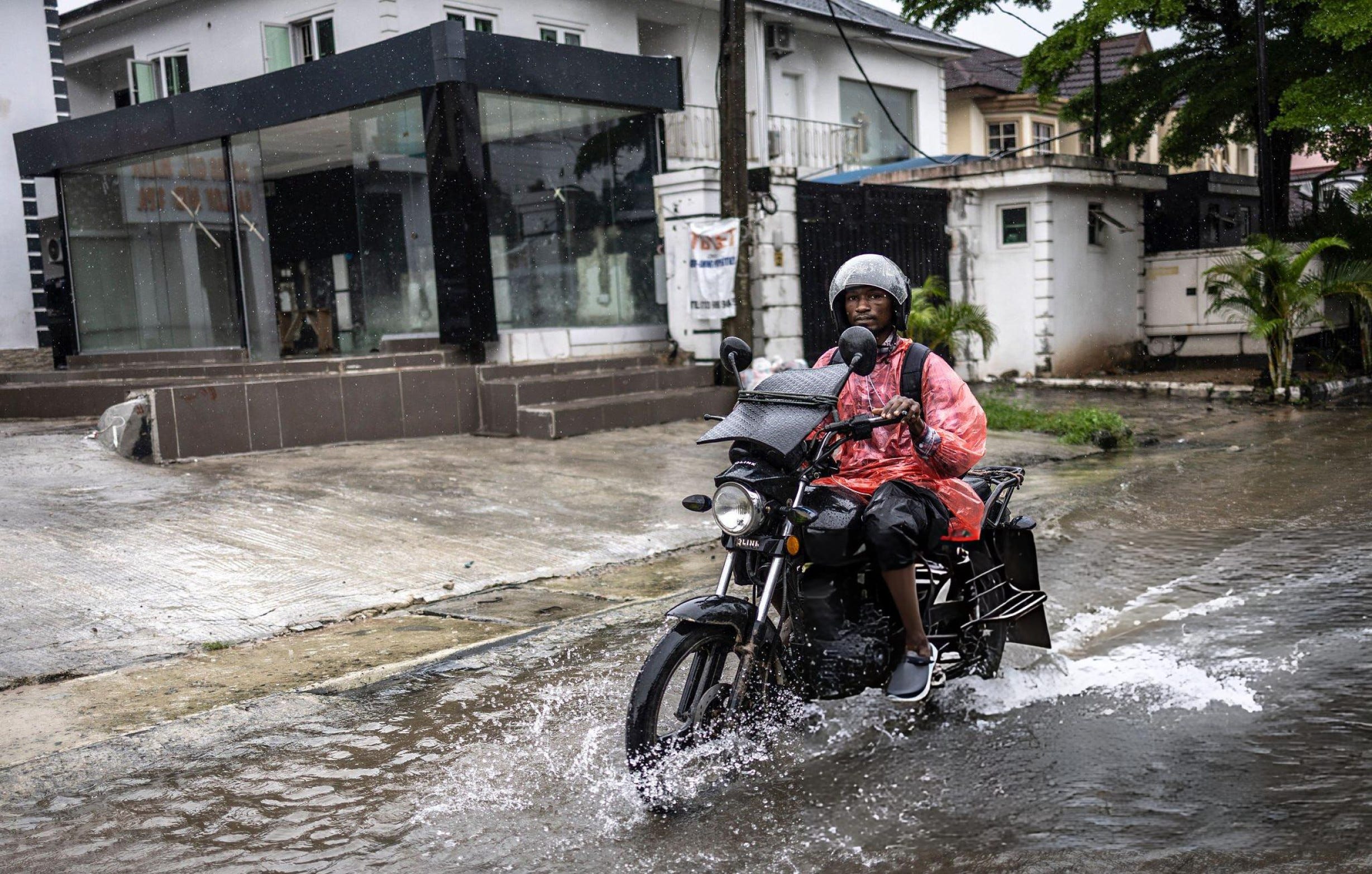
The ancient communities along the Gulf of Guinea, where the Atlantic Ocean meets the West African coast, have long been accustomed to rising sea levels. But for the early dwellers of these regions, which now include parts of Nigeria, Ghana, Benin, Togo, Cameroon, and Equatorial Guinea, this was not a problem. They gave the sea what it wanted: floodplains, extra land to cool off, marshland to sink into, and mangrove forests filled with palm trees to keep it at bay. They built their villages on higher ground so their homes were never flooded. They lived in oneness with their surroundings.
Centuries later, that contract has been all but destroyed. Across the Atlantic coastline, portions of the sea have been carved to build cities. The mangrove forests and the coconut plantations that dotted the shoreline have mostly been felled. On the floodplains are apartment buildings, new communities that wealthy Nigerians now call home. As if in revolt, every year the sea returns to these communities, sinking cars, flooding homes, wreaking havoc, reminding the public that the piece of land never belonged to them and that they have reneged on their contract.
With the glaciers melting and the thermal expansion of seawater, cities that surround the Gulf of Guinea have been battling flooding. This week, parts of Lagos and Accra were submerged in floods from days of unending rain, which triggered a rise in sea level. Poorly developed drainage and waste management systems that inhibit the water from flowing have been blamed for this. But the problem is far steeper, and so is the solution.
“Bodies of water are natural systems, and natural systems have a way of taking back whatever is taken from them,” Esan Oluwasegun, a researcher and landscape architect based in Lagos, told me. He was part of a team commissioned by the Salata Institute for Climate and Sustainability at Harvard University that recently completed a three-year research project on coastal erosion and urban flooding in the Gulf of Guinea.
“We must learn to build in harmony with nature. The more we push back water, the more it fights us back.”
Of course, better working drainage systems and waste management that make sure the drainage is not clogged by garbage will go a long way in solving the flooding problems in the region. But from his research, it would not be a permanent solution. The real problem is that the water does not have anywhere to go. “We are pushing the water, and it is going elsewhere to have a devastating consequence.”
Flood has long been a fixture of human life. As far back as 1,000 AD, rural farmers in what is today the Netherlands, who tilled the soil along the North Sea coast, began to build dikes to create a buffer from the floods that came to destroy their crops. By the late 1920s, they began to build the Afsluitdijk, a 32-kilometre-long and 90-metre-wide dike that would tame the Zuiderzee, a large saltwater inlet of the North Sea.
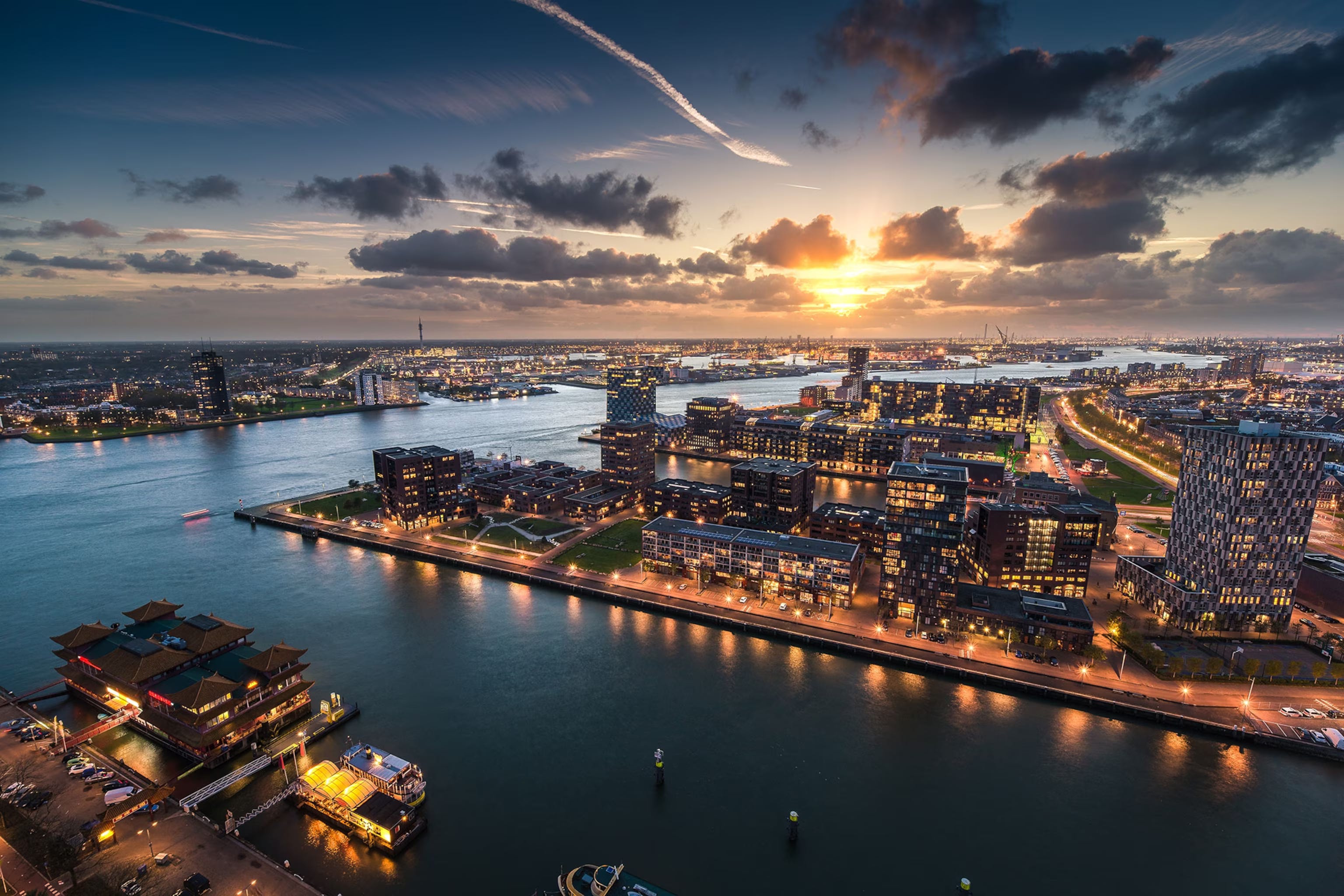

After the devastating 1953 North Sea Flood covered about 200,000 hectares of land and killed over 1,800 people, the Dutch began work on the transformational Delta Works that would make it a shining example of flood management. They built dams, storm surge barriers, sluices, locks, reinforced dikes, and retention ponds that made Rotterdam, the second-largest city in the country, littered with man-made lakes. What they had come to learn was that the water flooded because it was looking for a place to go, so they created multiple options for it.
In the Gulf of Guinea, anthropogenic actions are accelerating the problem. “The deep-sea port is one of the major causes. The siting of Dangote Refinery, as well as the mining, is leading to coastal erosion,” Esan said. “We need to harmonise our human activity with nature to allow it to regenerate when it needs to.”
Esan continues. “There are a lot of engineering fixes to curtail this problem. But we need to go with nature-friendly solutions that the ecosystem will absorb. We must go back to the solutions adopted by our forefathers.”
But Esan’s solution is not to demolish the entire Lekki and give it back to the ocean. However, we will need to spare some land for the water to flow to.
One of his proposals is a hybrid system using modern technology and state-of-the-art drainage systems to lead the water away from residential areas into wetlands. But we first have to build the infrastructure for this, including planting and increasing the number of coconut trees to absorb the water, restoring the mangroves, and building dams and retention ponds across the city. “Today, no land is spared. The retention ponds have been converted into estates. We need planning systems that accommodate nature to regenerate itself,” he said. “We need to observe certain principles as far as water is concerned.”
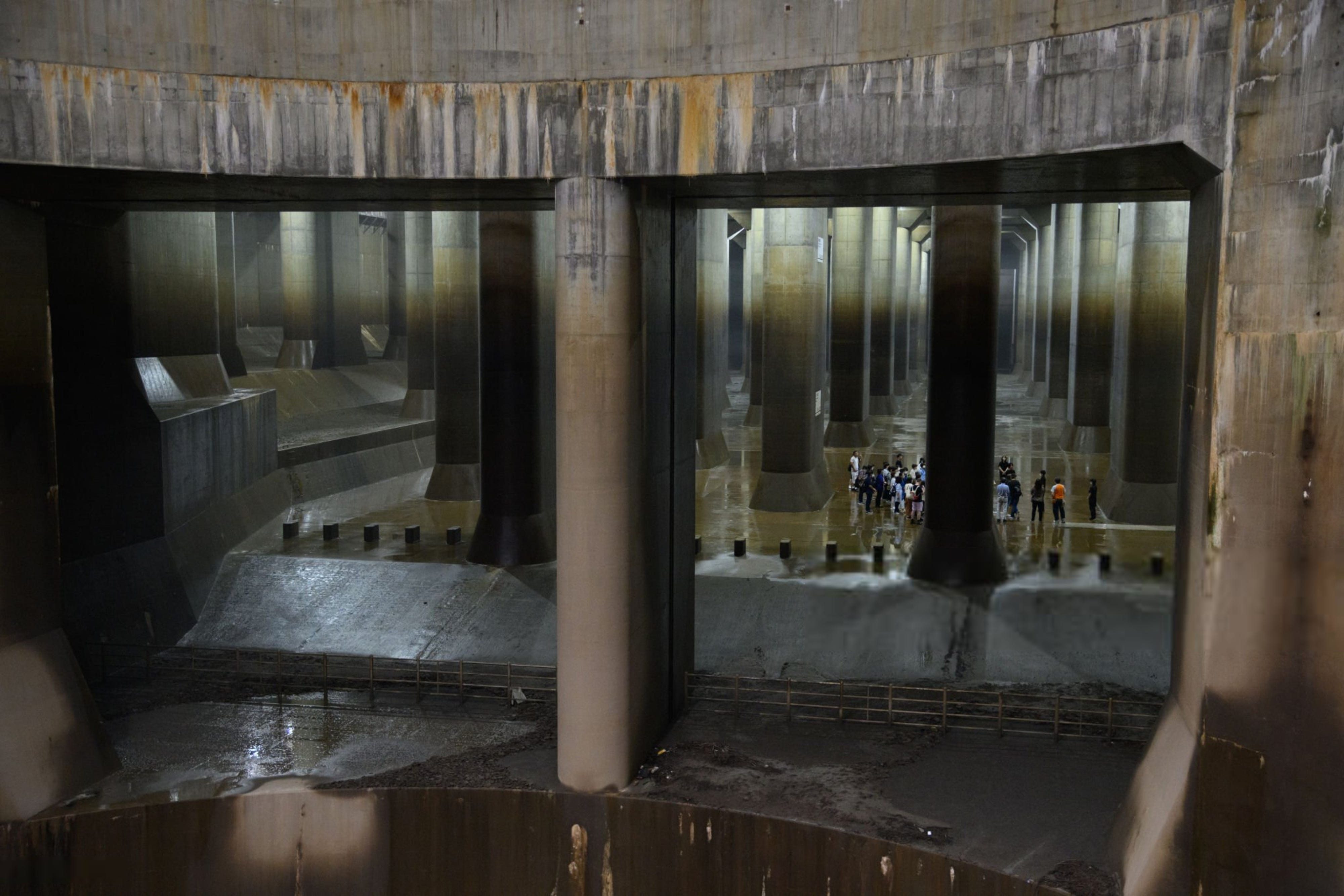
Wrecked for years by typhoons, at the tail end of the last century, the Japanese began work on the Metropolitan Area Outer Underground Discharge Channel, or G-Cans, an underground drainage and storage system. When there is a storm, floodwater flows into the tunnels about 65 metres deep, where it is stored and later discharged with powerful pumps into the Edo River. But like the Netherlands, this is only one of many solutions to manage flooding. The Japanese have also built coastal seawalls and tsunami defences, stormwater drains, river embankments, dikes to control flooding.
“It is great to have a good drainage system,” Esan said. “But also, we need to create retention ponds at the centre of the city. We need to make provisions for wetlands and plant trees that are water-resistant.”
Each city in the Gulf is facing the same problem: rising sea levels. But the vulnerability is different from city to city. A city with a poor waste management system and no interconnected drainage is more vulnerable than a city with better waste management but poor drainage. So the solution that worked for the Netherlands or Japan, or even Accra, might not work for Lagos.
“We need to look inward for strategies,” Esan said. “The Netherlands improved its Delta Works. They created more dams and reinforced their coastline. They also carry out sand nourishment, pouring sand along the beaches. They make provisions for floodplains and have invested in advanced real-time flood monitoring and automated flood warning systems. They do integrated planning, regulating urban development with flood response in mind, which is then incorporated into land use.”
Ultimately, it is a system that we need to build to respond to the flood in a myriad of effective ways and not just one thing, a long, arduous process that would take years. It took the Netherlands almost half a century to build the Delta Works, and today, it is still making upgrades to meet changes in climate.
“There is a drainage problem,” Esan said. “But there is more than that. The sea levels are rising. And the water needs to go somewhere.”