


I am furious about the state of public discourse in Nigeria, and I think in Africa, in large part, because for far too long, no discourse has ever gone anywhere meaningful. You look at the many problems we face and wonder what comprehensive plans are in place to solve them. It was also one of the reasons why Gbadebo Rhodes-Vivour seemed to me like the very best candidate for governor of Lagos, even though his campaign had scary classist “working-class-people-are-lazy” undertones to it. He offered solutions for the housing crisis in the city.
I have been thinking a lot about the solutions to almost anything we talk about, and it seems increasingly that in the mainstream, we have offered no actual solutions to anything. What is the solution, for instance, to end poverty in northern Nigeria, where it has been at its peak for decades? I mean, actual meaningful solutions that empower people to perform optimally and pull themselves up by the bootstraps.
What is the solution to insecurity that has now touched almost every Nigerian family, whether it is a family member being kidnapped or robbed at gunpoint in traffic in Ikoyi, the so-called high-brow part of Lagos? What is the solution to the water crisis in Lekki? Yet we spend all our time talking about the most unimportant things. In so many ways, we have created a culture of silence, and in so doing have silenced the people who would have offered solutions, I suspect.

What is the solution to end gender inequality on the continent? I would tell you for a fact that it is not having more women in office as much as it is making the feminist agenda popular. Look at countries that have achieved great progress on women’s rights — some of them have very few women as lawmakers. However, having women in the room would bring about some progress; it would not, in itself, get us to the finishing line if women’s rights remain this unpopular on the continent.
Even this essay, in so many ways, is the kind of piece that now warrants scoffing at. I know this because a few years ago, I would have scoffed at the madman with an axe chasing me down the road, demanding a solution because I had the temerity to complain about my situation. I once found people who screamed for solutions to be very irritating, even once argued that solutions shouldn’t be something I offered because I was not in elected office or leadership.
But who said I had to be in office to offer comprehensive solutions to things?
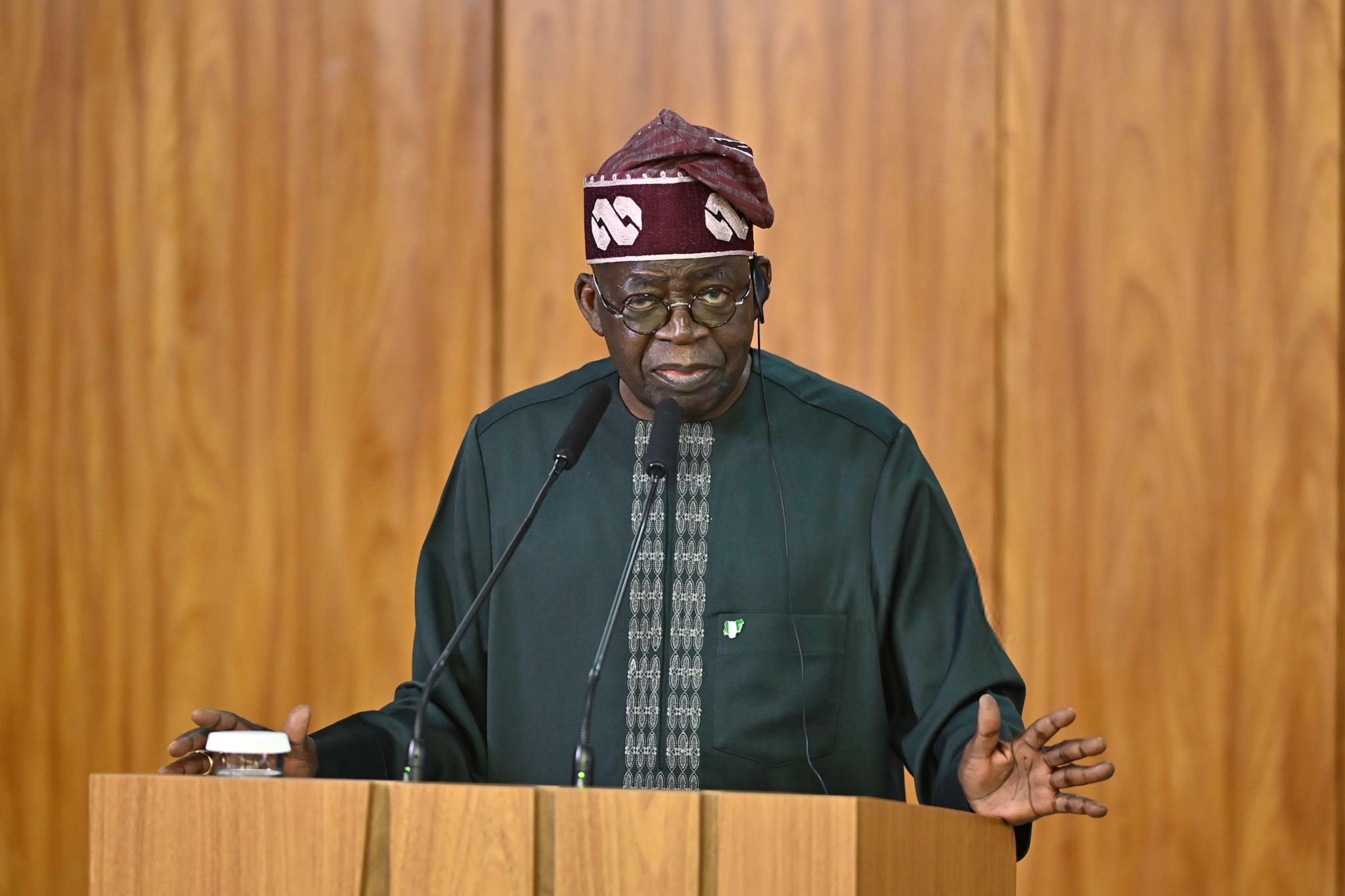
Pick any given problem that has wrecked the continent, and the most common talking point of a way forward, which is not in itself a comprehensive solution package, is for more money from a foreign government. That in itself should be embarrassing, considering our politicians, who we consistently vote for and who then treat us like shit, present themselves globally at almost any event as the richest people in the room, rocking expensive caftans and multiple clothes that make them look more like the tasteless, incompetent buffoons that they are than anything else. Why are you wearing so many expensive clothes and jewellery when your people back at home are starving?
That in itself is a problem, but the reason I think we have no solutions to anything — the reason why, for a people that have suffered and still wallow in suffering — is because the state of public discourse on the continent is in shambles. We do not want to debate anything. On one end, we do not want to debate anything because reading is uncool, in some circles an insult. Countless times have I sent articles to Nigerians that I thought would be useful, but I was accused of being condescending. On the other hand, we do not want to debate anything because debating means someone has disagreed with what we have said publicly, and rather than engage, we strike them out as a hater. What the helly?

Take the case of apartheid in South Africa. It was a huge problem, so they offered a solution, which was ending segregation on a legislative level, even though the country is still rife with segregation and xenophobia towards, you guessed it, Africans. In the years leading towards freedom for Africans in South Africa, however, children on the streets were chanting freedom and Nelson Mandela. The path was clear. Everyone knew the solutions.
What is the solution for the housing crisis in Lagos, and why are children not singing about it on the streets of the city? “The government is bad” is not a productive discussion. What is not working, and how can we kick-start it in a comprehensive, common-sense way? And so subsidies on rents in Lagos, which have been pushed in some circles, would not be a solution. Not only does it not tackle the scarcity young people face in finding decent homes, but it also does nothing to address the current state of homes that are available in Lagos and fails to reduce the congestion in centres like Yaba and Surulere.
The demolition of floating slums in Makoko and elsewhere in Lagos is awful, and many have decried it. But a long-term solution would need the residents living in floating slums to be relocated in one form or the other. We need to be able to say that so we can come up with ethical ways to solve a real health and safety crisis — not to talk about insecurity — rather than stopping at the awfulness of what has happened to the residents of these communities.

There has been a lot of frankly noise-making around Detty December and how it poses a real economic threat to Lagos residents. The traffic is at demonic levels, the cost of living in the city is through the roof. Critics say that Detty December should therefore not be encouraged because somehow it is bad for Lagos. It is the kind of thinking that you get because we have no solutions. We can barely even properly diagnose the problem, which is broadly congestion and the housing crisis, which is the result of scarcity. But for the people who blame Detty December for this problem — it does take balls to deny that Lagosians are not brutalised by the violence of traffic and high cost of living all year round — what is the solution that they offer?
There is a sense, I think, in which saving us and solving all our problems are not things that we should worry about. It is supposed to be someone else’s job, and that messiah is ideally supposed to be a benevolent dictator or at least an authoritarian who would enforce his rules on all of us, and we would all be grateful for it.
As we go into this new year, we need to move ourselves forward, and our thinking forward a bit by demanding solutions from each other, holding ourselves accountable when we complain, and also proffering solutions that are based on common sense at least.
It does not have to be perfect, but by discussing it publicly, who knows — one day children would scream about the solutions to insecurity and poverty and the economy and housing crisis, and we would finally see the buffoons in office for what they truly are.

It is becoming a norm to avoid real issues to face irrelevant matters. However, if we must get things right, all hands must be on deck. Thanks for this beautiful piece.