


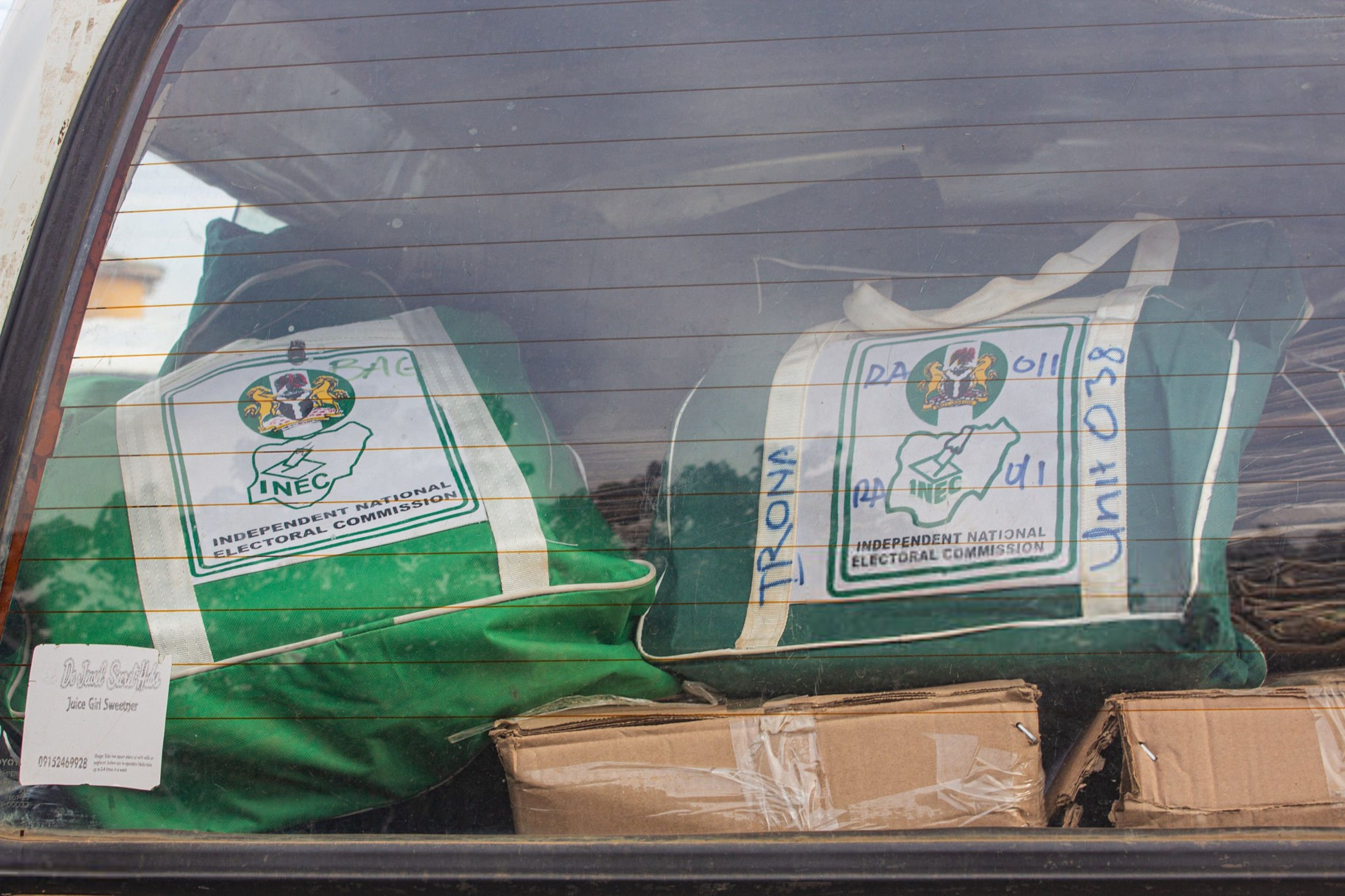
This essay is the third part of a series on my journey to collect my PVC from INEC. Read the first essay here and the second here to catch up. If you like the work that I do, please consider becoming a subscriber.
I was not planning to collect my Permanent Voter’s Card (PVC) on Thursday, 5 November 2026. But it was early, and I was walking along the street where the Independent National Electoral Commission’s (INEC) office is located in my local government area in Lagos. I decided to give it one more try.
INEC said PVC collection would begin on Friday, 9 October 2026. On that Friday morning, I went to its office to collect my PVC. Officials I met at the gate immediately turned me away, claiming my PVC was not ready, even without checking.
I have been a registered voter since before the 2023 election that saw Bola Tinubu ascend to the presidency. After queuing for hours in 2023, an official told me she could not find my PVC, but added that it would be printed after the election. She, too, was very dismissive. When I asked her how she spelt my name in the system, she ignored me and promptly ushered me out of the office. That was why I went to the INEC office earlier this year to collect my PVC. After checking, one of the officials declared that my PVC had not been printed and forced me to apply for a replacement, claiming that my PVC had been lost or damaged.

After I was dismissed from the INEC office on Friday, 9 October, I heard that PVCs were being distributed at a government primary school. I went there, and the official also said my PVC had not been printed. She said they would print it before the 2027 elections and notify the public. While all of this was happening, INEC continued to tell the public that their PVCs had been printed, even though local officials claimed the majority of outstanding PVCs had not been printed.
The official said only the PVCs of those who registered at the tail end of 2025 were printed and refused to check the records of anyone who registered for a replacement or as a first-time voter this year. “When did you register?” she asked anyone who showed up. She waited for them to say “this year” and then dismissed them without checking any of the records. “Only the PVCs of those who registered last year were printed,” she said. “Don’t teach me my job,” she screamed at an elderly man and his wife who insisted their PVCs must have been printed. “We will notify the public when the next batch is ready before the elections.”
That was why I had no intention of going to INEC’s office that morning a few days ago. The public had not been notified. This meant new PVCs had not been printed, but more importantly, that no new PVCs had been sent to the local INEC offices. What happened last Thursday shocked me.
I arrived at the gate past 8 am. A young man who worked at INEC asked me the same question I had been asked on 9 October: “When did you register?” This time, I told him in 2025. He told me to walk with him to the office. Two young men also walked into the gate, but the security guard barked at them, demanding to know where they were heading. The official who had asked me to walk with him turned around and asked them why they thought they could just walk in without his permission. “Did I ask you to follow me?” he said. “What do you want?” They said they had come to collect their PVCs. He asked them the question he had asked me: “When did you register?” They told him in 2026. He told them their PVCs were not ready, and that they should return in December.
The election is going to be held on Saturday, 16 January 2027. By December, they would have only a few weeks before the election. Corrections or replacements for omitted PVCs would not be possible until after the election. The two men left. As the INEC official turned his back, another colleague of his walked in. I immediately recognised the face. It was the official who had very dismissively told me on Friday, October 9, at the INEC office that my PVC had not been printed. “I will not lie to you,” he kept saying.
He told me they resumed at 9 am and that I needed to wait outside the office. At this point, I considered leaving. After all, an official had just told two people in front of me that the PVCs of those who registered this year had not been printed. What was the point of sitting here waiting on a Thursday morning? If the public had not been notified, what PVC was I expecting to see? There had been no news of new PVCs being printed.
Before it was 9, a handful of others had joined me outside. Later, a middle-aged INEC official walked out and wrote our names and registration numbers on a piece of paper. My name was first on the list. I blocked my ears with a loud podcast. A man walked out and seemed to be screaming a name, so I killed the volume of the podcast. He was screaming “Da-Ala.” I thought that was weird, considering that, technically, my PVC was not supposed to be ready.
As I walked into the office, the man who wrote the names told me, “Congratulations.” It still felt like a dream. I followed the official who had called my name into a tiny office. On the table were PVCs in cartons. He pulled out a slip containing the names of registered voters arranged in tiny boxes and pointed to my name. I tried to pull out a biro to sign beside my name. He told me there was no need. Then he gave me an indelible ink pad and gestured for me to press my thumb on it and make a thumbprint beside my name. It made no sense to me why I was thumbprinting and not signing. But it also made perfect sense. A signature can be traced. If people had to sign to collect their PVCs, then anyone can retrieve the slips with signatures should there be an investigation. Verifying a thumbprint would require collecting the print and matching it against an existing record, a technical and expensive procedure.
For the five years since INEC refused to give me my PVC, I have remained a registered voter. In 2023, I went to my polling unit and saw my name on the list of registered voters pasted on the wall. Whether I voted or not, I was still one of the registered voters in Lagos. I didn’t have my PVC because INEC said they had not printed it. After the election, they told me mine was omitted, but I needed to file for a new one, claiming I had actually collected it but it was either lost or damaged. Now, I am being told that all I needed to do to collect my PVC was to thumbprint on a slip.
After I thumbprinted, the man handed me my PVC. It has the picture I had taken during my registration earlier this year. It was the replacement I registered for this year — which INEC officials had told me over and over again had not been printed, which they had told other people like me theirs had not been printed — that I had just collected. I asked the man if that was all. He said yes, unless I wanted to “celebrate it.” I told him he was the one to “celebrate it” for me.

An eye-opening true story. Thank you for sharing, Dennis.🫱🏾🫲🏿