


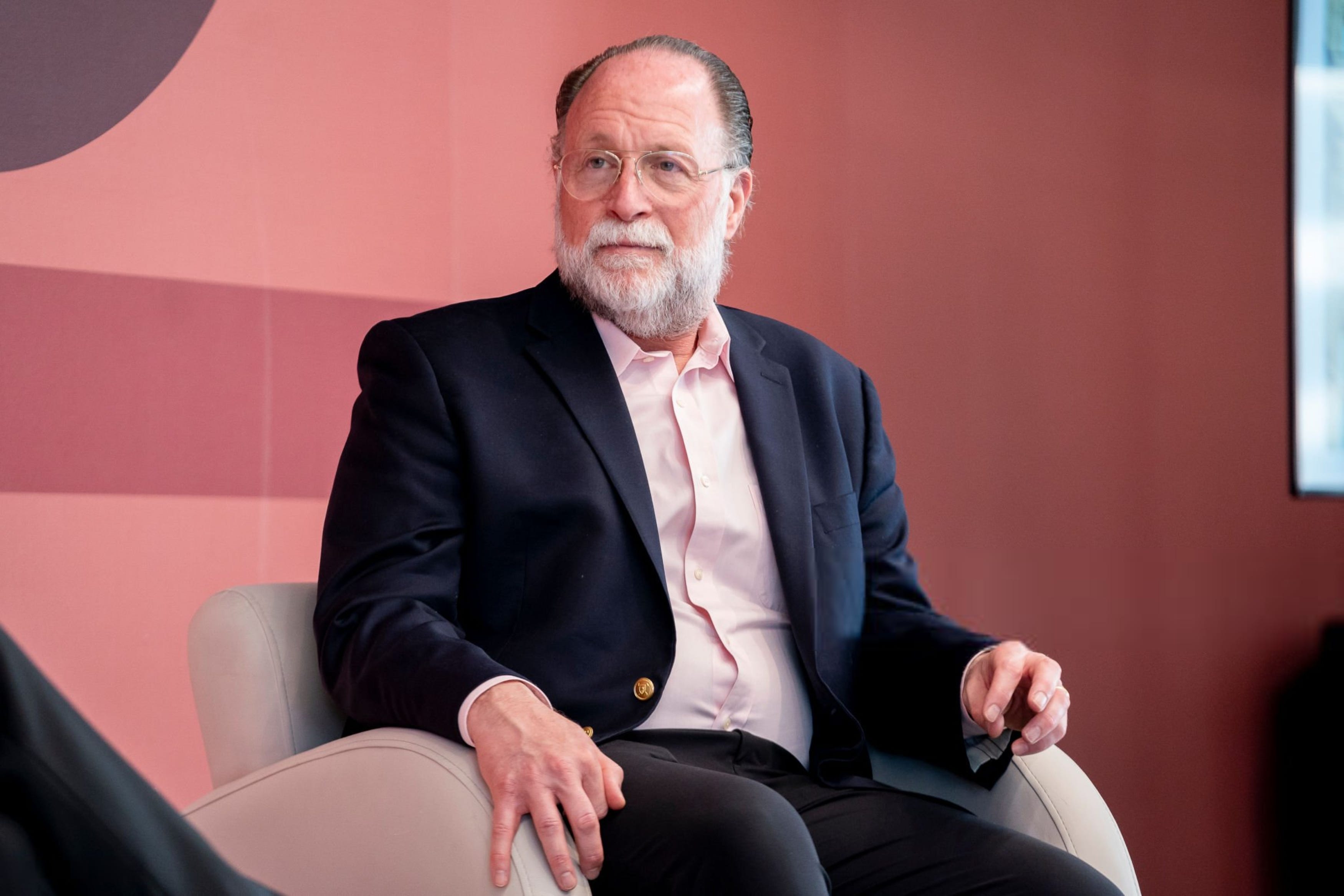
Days after Ricardo Hausmann, a professor at Harvard University’s John F. Kennedy School of Government and director of the Harvard Growth Lab, published an opinion piece in the Financial Times on US President Donald Trump’s tariff policies, claims that the essay was written with AI followed.
“The verdict on the first full year of the largest US tariff increase in almost a century arrived quietly, in the tables of the US Bureau of Economic Analysis. America’s current account deficit in 2025 was $1.18tn — virtually identical to the year before. The most protectionist turn in living memory did not move the number it was meant to shrink,” the piece declares in its opening.
The FT says it “specifically prohibits the use of AI in the writing process.” However, it didn’t deny that AI was used in the creation of the piece. The newspaper has since updated it to reflect how AI was used in its production, claiming it was only used to shorten a longer version of the essay.
“It has come to our attention that AI was used to condense a longer draft of this column prior to submission to the FT and our own editorial involvement. The FT editorial code of conduct specifically prohibits the use of AI in the writing process,” the FT says in the updated version.
I am not sure what to make of the FT statement or what conclusions to draw from it, other than that by the time the AI slop era finally passes, the lies by legacy institutions about blind merit that result in those affiliated with other legacy institutions being elevated will have finally collapsed.
What will happen to the FT editors who worked on this piece? Will they be reprimanded as we have seen with Black writers Jerry Falade and HM Wolfe?
The FT seems intent on passing this off as a one-off, a singular sleight of hand by the writer. But this is anything but that. Another essay by Hausmann that the FT published in January on the state of US-Venezuelan relations similarly didn’t cross the bar, scoring 100% AI on Pangram. Pangram, I should add, is not always accurate. But if it scores a text 100% AI, the chances that the essay was produced with the help of AI are very high.
I tried reading both essays by Hausmann, but even for the purpose of this newsletter, I could barely get through them, as typically happens to me whenever I try reading a work produced with the help of AI. The human imperfections that should pepper human-made works seemed to be missing for me.

In the early days of ChatGPT taking over our lives, there seemed to be, for some reason, a fixation on making it a better writer than working human writers. It seemed to me even then like such a ludicrous approach for a tech that could bring so much innovation in science and tech. In large part, this emanated from the petty beef in the US between the tech world and the blue-tick intellectuals whose stock in trade was writing critically about Silicon Valley “technocrats.” That hyperfocus on devaluing the form, declaring bankruptcy on creatives, might have given too many people hope that they too could become creatives.
I continue to say this to people who have found themselves daydreaming about shiny new careers as writers after refusing for years to take reading seriously and ultimately beginning to write better the way people have learnt to write for centuries. People who have spent decades reading and writing well can mostly tell when a work is produced with AI.
The counterargument that allegations of AI use by writers should not be made without proof, in many corners of this crowd, is in itself an admission of guilt. This is their perspective because they largely couldn’t care less about being accused of using AI to write their work. For them, the thought that they would use AI to write their work is silly. It’s not that they don’t worry about the large-scale AI accusations we now see. They seemingly do not think AI writes as well as they do, and the suggestion that they used AI is evidence of the poor taste of the accuser. Accusations that they used AI are silly because those who know, know.
But aside from a Pangram AI use score, what would proof look like? Are they expected to be a fly on the wall watching every single writer as they work to ensure AI was not used in the writing process? We claim proof, and not taste, should determine when AI has been used in a work, yet we reject and denounce AI detection tools. Like the plagiarism checker Turnitin, Pangram will get better and ultimately be good for many writers. But this can only happen if writers more broadly embrace it and get involved in tweaking it to higher accuracy levels.
Writing can be hard work, especially when it’s not your means of primary income or a daily habit. I’ve spoken to writers who spend days working on 1,000-word essays because that is how long they need to produce the work. In the fast-paced media world that we live in, that turnaround time can be unsustainable and has largely led to the decline that we see. Literary magazines especially struggle to catch up, only publishing stories with no new information months after the news cycle has ended. For writers like this, AI can be a way to accelerate the process.
But there is something that I find lost in the conversation about ethical use of AI. Writing with AI and not clearly stating that AI was used, especially in a publication like the FT that claims to specifically not be a home for AI writing, brands people who do this as cheats. To publish such work and defend their publication is, in that sense, an endorsement of cheating. This is the FT scoffing at meritocracy and gleefully doing so.
I went further down Hausmann’s byline in the FT and stumbled on an essay that was published in 2020 on the IMF lending practices during the pandemic. “Time is at a premium in a pandemic. China’s slow response to the coronavirus in December and January cost the world dearly. So did the slow response in Europe and the US in February and March. But the world may not have learnt the lesson: the mistake appears to be happening once again, this time at the IMF,” Hausmann writes in the opening. I saved this one to read in the morning.
