


When Muhammadu Buhari returned as president of Nigeria in 2015, one of his first lines of action was to release the infamous list of 41 banned items, including rice, cement, frozen/chilled poultry, meat, etc. Of course, the country could not yet, at the time — and still can’t, 10 years after — produce enough locally to meet the needs of its people. So there was scarcity, the black market soared, Nigerians suffered, and by the time he left office in 2023, the naira had plummeted to ₦770 per $1.
Buhari had a plan. He had banned similar commodities before, in 1984, as the military head of state. At the time, the protectionist economic policy crippled the economy, led to scarcity, and public outrage over his leadership. The IMF had a solution and offered it to Buhari.
They told him to devalue the naira, remove import restrictions and allow more open market policies, remove fuel subsidies, deregulate interest rates, privatise some government institutions that were not functioning as they should, and establish a more flexible FX system that would improve dollar availability and attract foreign capital.
Buhari rejected it. Instead, he shut down the border and introduced ration cards, forcing families to stand in long queues for fuel and essential food items like rice, sugar, milk, vegetable oil. Eventually, his policy became so unpopular that in August 1985, he was forced out of office.
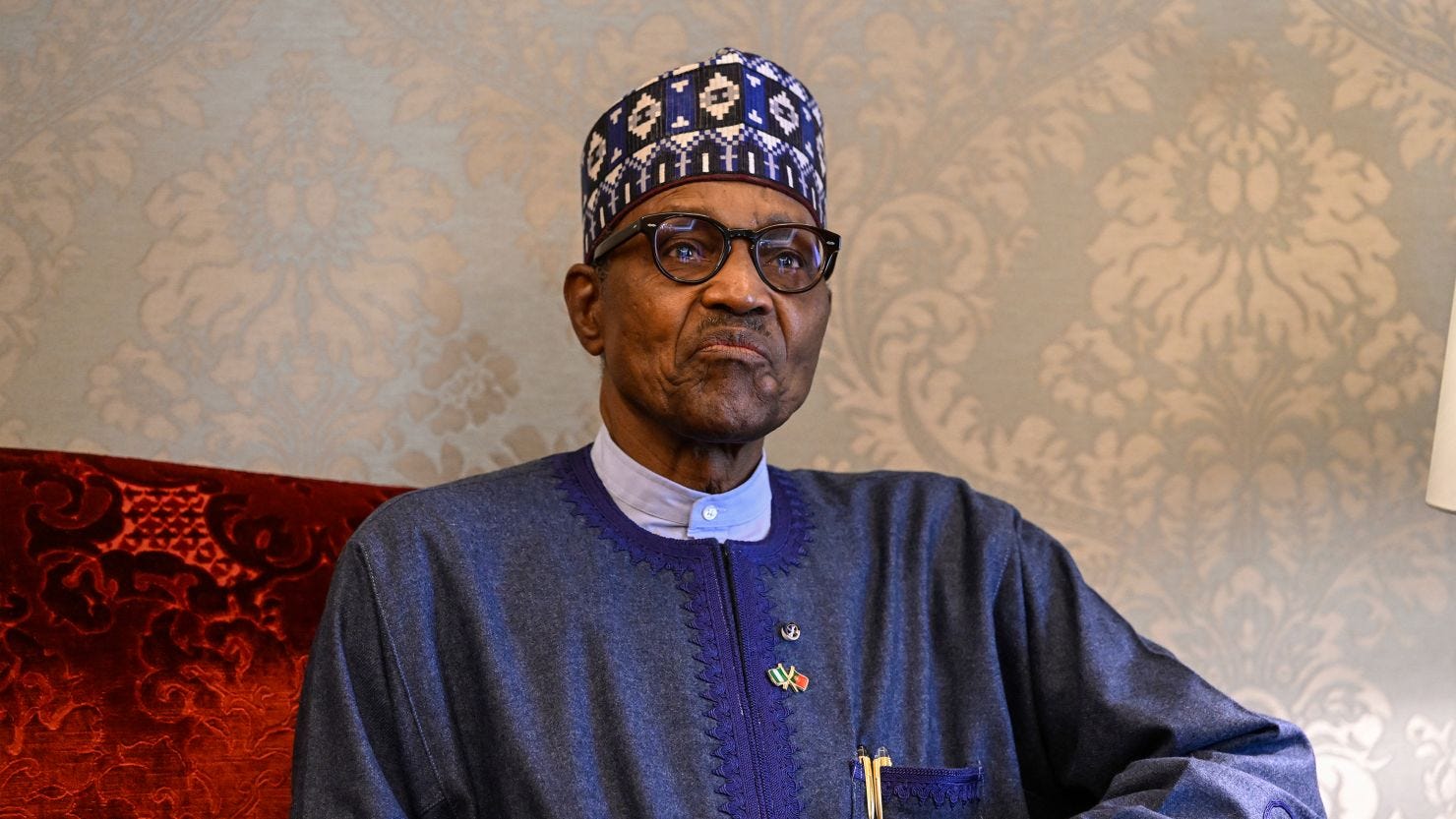
His thinking has always been that if Nigerians only took what they needed and stopped being greedy, there would be enough to go around. And someday, years after the scarcity, the country would emerge — after working on the farm for years and stopped being “lazy Nigerian youths” — as a global power because they would have shut themselves off from the rest of the world enough, and have lived an isolationist life that would some how make the country so self-sufficient citizens woud never need anyone else.
When he returned as a civilian president, he saw it as an opportunity to implement those policies and take them further. He was obsessed with shutting down borders and compelling Nigerians to stay put in the country and suffer from his bad policies.
As civilian president, he shut down the Nigerian border with Benin, Niger, and partially Cameroon. He made multiple trips to European countries to try to force those leaders to deny visas to Nigerians looking to migrate (due to his destructive economic policies). According to him, they must “stay and fix the country.”
The naira decline against the dollar was a language he didn’t understand because the dollar didn’t matter to him. Nigerians didn’t need the dollar because they had the naira, and they would not need to spend forex or leave the country. As a military leader, he placed a $7,000 cap on individual dollar spending. This was about ₦6,230 in 1985. As a civilian president, the cap was $100 per month. He later reduced it to $20 per month in 2022.
But Buhari was never the man of the country. He never practised Made in Nigeria as a religion, the way he preached it. He didn’t support key Nigerian industries; Nollywood, tech, credit, fashion, and he didn’t wear Nigerian.
His eight children all have at least one degree from the UK. As president, he made over 13 trips to the UK for medical-related activities, including a 51-day medical vacation in 2017, another 104-day medical vacation the same year, and an extended stay after King Charles III’s coronation for a dental procedure in May 2023. In total, he spent over 237 days in the UK as president of Nigeria.
He never used Nigerian hospitals — not even the presidential clinic in Aso Rock. Under his leadership, the said presidential clinic suffered equipment shortages regularly.
In 2018, an audit of the State House Clinic revealed that most pharmaceuticals and medical equipment at the hospital were imported from India and Europe, even though some of that equipment had local manufacturers.
He did not wear Nigerian-made fashion brands or shoes or drive Innoson cars. Instead, he preferred his Mercedes. He was spotted wearing Italian leather shoes. It was also rumoured that his kaftans were made in Europe and shipped to Nigeria. Either way, he was never seen wearing any of the Nigerian designers. He loved Rolex and Patek Philippe watches and regularly wore them.
For a politician with isolationist politics, as president, he made over 131 international trips — a record for Nigerian heads of state. When he went on these trips, he regularly flew in private jets from European charter companies rather than Nigerian-owned services. Ultimately, he died on Sunday, July 13, 2025, at age 82 in a hospital in London.
This shift away from locally made products and services was not just unique to Buhari alone. His family was also known to prefer Western-made to Nigerian-made. His wife, Aisha Buhari, came under heavy criticism in 2016 for wearing a Cartier Baignoire Folle 18-carat white gold diamond watch that had an estimated value of $50,000–$52,000 at the time.
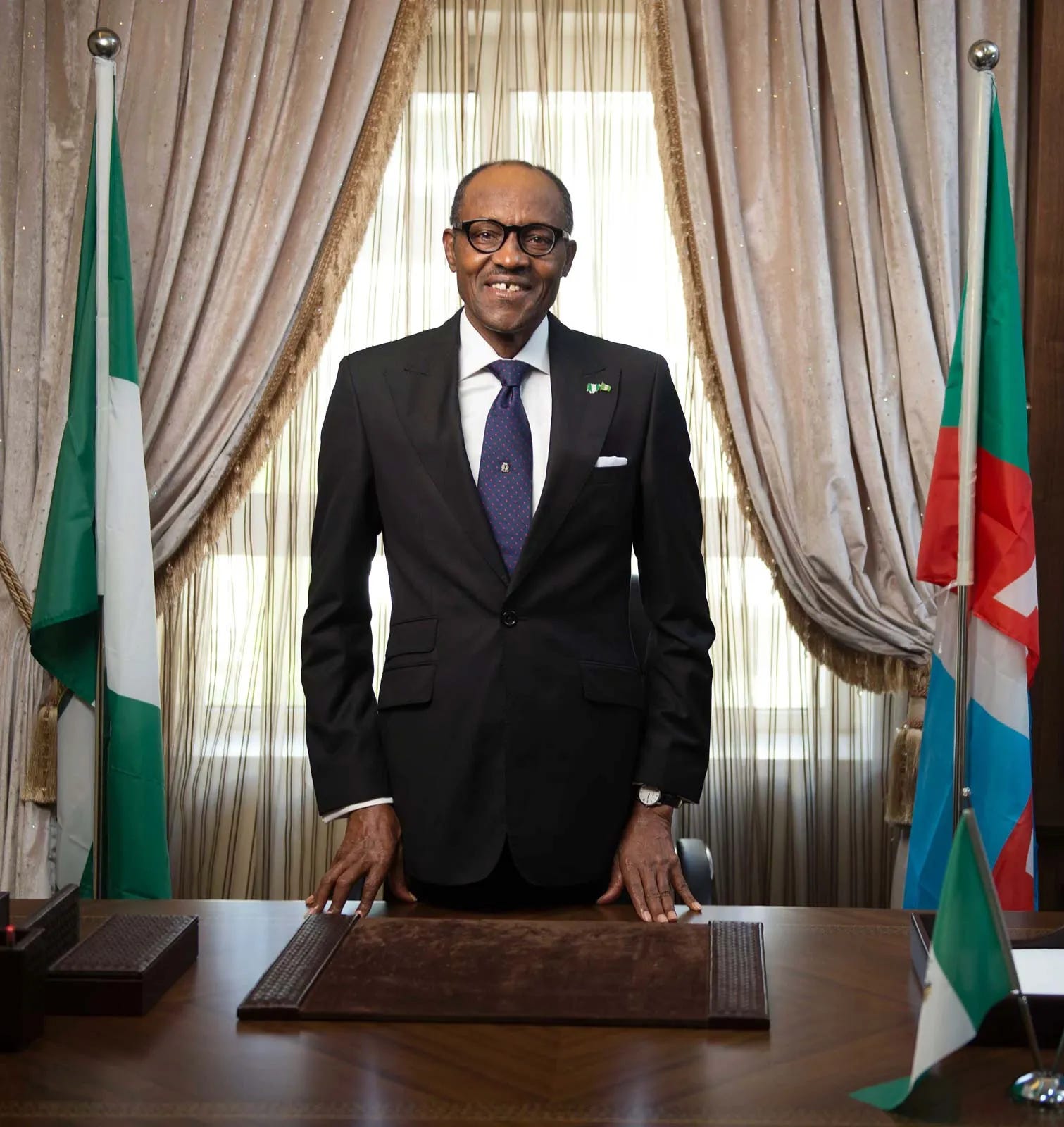
In 2017, his son Yusuf Buhari was flown to Germany for medical attention after his power bike crashed. It was a BMW HP4, and he bought two, worth $157,000. His father was the president and pushing for Nigerians to ration resources.
When I think of Buhari and his legacy, my mind flashes to a line from an essay that Chimamanda Ngozi Adichie wrote about him. “There is the sense that Nigeria could very well burn to the ground while the president remains malevolently aloof,” she wrote in the essay.
It is true.
An actual disgrace of a head of state and president. The majority of his country is cursing him.
Dennis, we don't deserve you!