


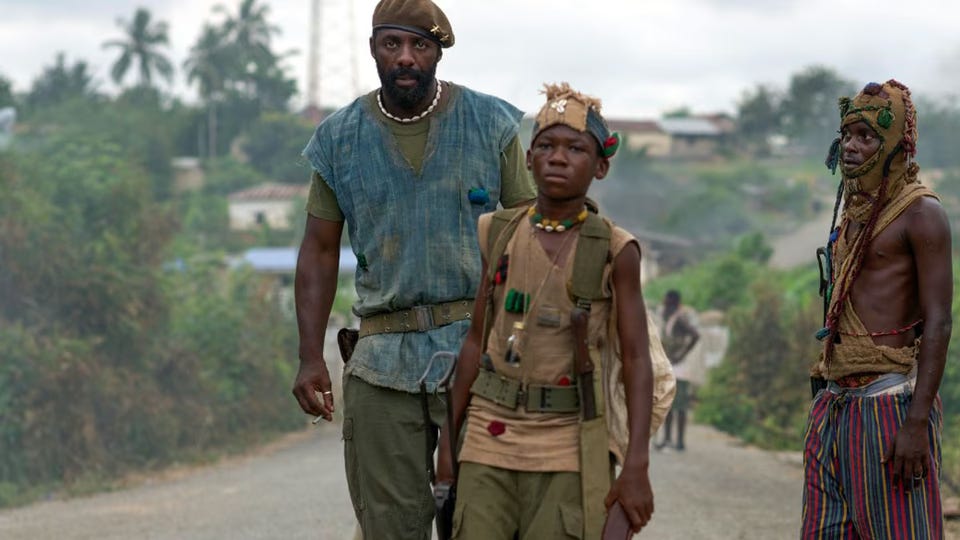
Gender is a performance. But it is more than your average performance. For many African men, the performance of masculinity is laced with emotional, psychological, financial investments. We are completely tethered to it for relevance, sustenance, and survival.
A primordial rule of this performance is the banishing of libidinal rejection. Men are simply not permitted to say no to sex, lest they be denied the embodiment of machismo — the peak of masculinity, the avatar state for most men. It is sacred, it is important, and many men would go to war to defend it.
There have been many jobs I have had in my life that I have hated. A particular one I did in 2020 takes the cake. All of us, bonded in the toxicity that we felt working at this tech startup. It was an awful experience. All of us were men, except the head of operations, who was the de facto head of the office and the enforcer of the toxicity. Once, tired and frustrated on the job, with the head of operations away, someone asked another guy if he would consider having sex with her should the opportunity arise.

We detested her because she raised her voice at us and was mean. She made us clean the office even though it was not our job, and deducted from our salaries if we were a minute late.
When we got to the office, we had to sit outside and wait for her to come in and open the door, including the janitor, who was also a guy. We would never have even considered spitting at her if she were on fire.
“Sure. I am a man, and she is a woman. No man would say no to any woman,” the guy responded.
For millennia, in many Afro communities, the idea of consent didn’t exist. Many old versions of our languages do not even have a linguistic item for rape. If a man slept with a woman or got her pregnant, she moved into his house and joined his harem of wives. The invention of consent came with it, the thought of sexual rejection. Rejection had always happened before consent was invented, but it wasn’t considered sexual assault or rape as we do today. It was just sex. Blame was cast on useless men, smart men, smart women, disobedient women, bad girls, depending on the situation. But in the event that a child was involved, new unions mostly came out of it.
Historians trace the origins of consent to the medieval era. From the 12th to the 17th century, consent became very popular in the West. But the contours of this new idea were not what they are now. Consent was not given by the woman. Rather, it was given by the family because in these societies, marriages were legal contracts between the wife’s family and a man. The woman was then given to her husband. In the marriage, sex was the husband’s right, and so the idea of libidinal rejection as withdrawal of consent was anathema to the union; even when it happened, it meant nothing.
Consent is only possible when a sexual advancement can be rejected, and society agrees that a rejection is possible. The women of those centuries were considered property of their husbands, and so it was the husband who was wounded in the face of society when consent was rejected and ignored. Society concluded that the women of that era were docile and incapable of complex ideas like rejecting sexual advancement. For it to be considered rape in many of those societies, the husband had to agree that his property was violated; otherwise, what we had was a “bad girl.”

As we approached the 18th and 19th centuries, and property laws were being challenged with ideas of individual ownership, women being the property of men became less popular. Society began to rethink consent and rape, expanding its scope on the subject to include any scenario in which a person is taken by force.
As we entered the 20th century and feminist movements began to spring up, the contours of consent began to be reshaped into what we know it as today. We also, for the first time, introduced the idea of marital rape, fully considering that rejection was possible in any and every instance.
These were tools that were baked into feminist discourse. Feminism, being historically a women’s rights movement, didn’t account for the unique sexual experiences of men and so failed to account for the ways consent could be taken from men.
The core of whether or not a person can be raped is that society can agree that sex was rejected, yet it was foisted on the person. In an environment where consent as an idea now exists but the idea of rejection is maligned and laughable, what then happens to the performer who does not understand that rejection is possible, that it is not his duty to acquiesce that every sexual advancement was consensual, as for men and women historically it once was?
Data from UNICEF cites that over 79 million women and girls in sub-Saharan Africa have been subjected to rape or sexual assault as children. This is roughly one in five women and girls. For men, the same data claims it is roughly one in eleven men and boys who have been sexually assaulted or raped. For both men and women, the data is believed to be inaccurate — a fair estimation, but some researchers say the number is way higher.
Both men and women have a hard time opening up about sexual assault and rape. It is in this context that it becomes possible that the ratio is false. I like to believe the ratio is false, that the gap between men and women is closer. Because many men, when they do open up in another context — not about rape this time but about sexual conquest — tell shocking stories of how early their first sexual encounter was, sometimes earlier than eight, most times with way older partners.
When feminist thinkers framed consent to what we know today, it was widely agreed that minors do not have the ability to consent, and so every sexual advancement made toward them was an automatic rejection.
We have given society consent, and this is a step in the right direction. But long before we gave society consent, we took libidinal rejection capabilities from men. We told him that saying yes to every sexual experience is how he performs his masculinity. It is from here that we then claim that the ratio between boys and girls being assaulted or raped is staggeringly unequal.
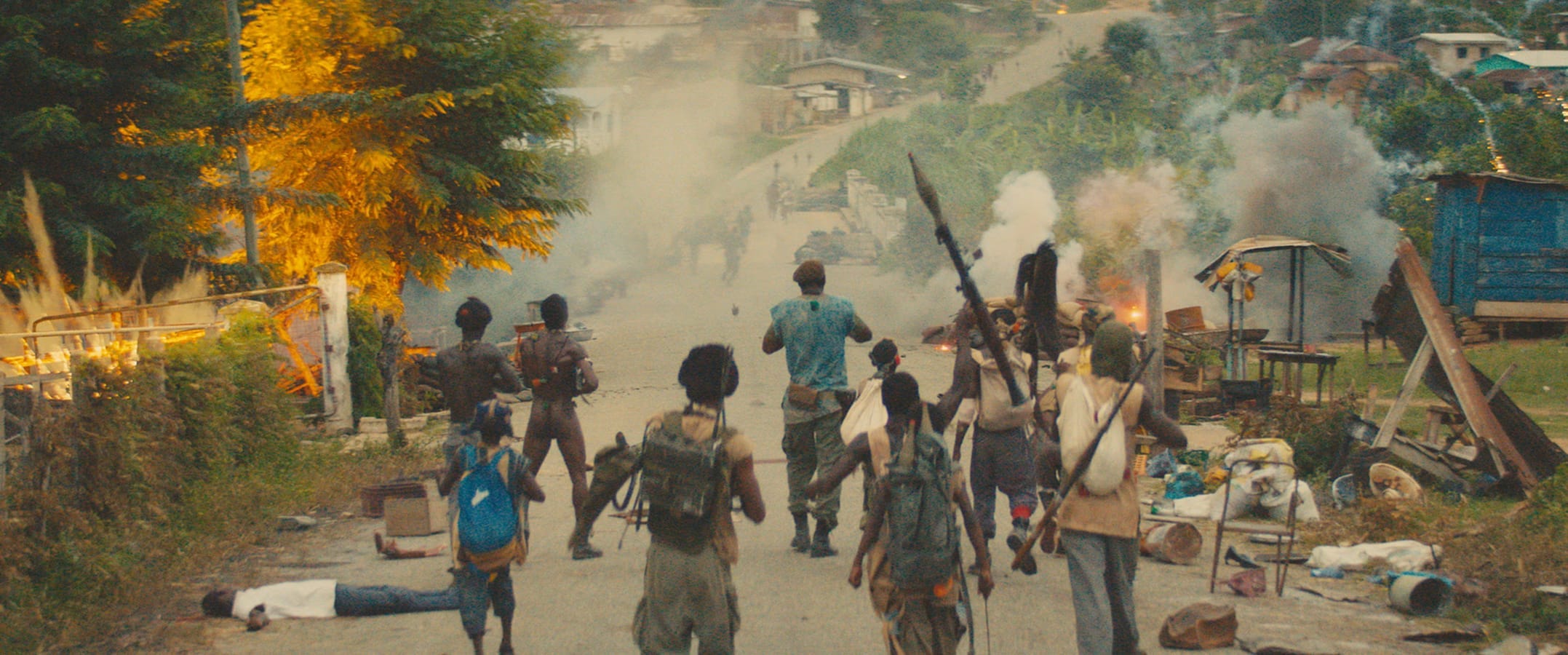
“Power lay in the brown swell of his forearms: authority sat on his shoulder and chattered in his ear like an ape.” When William Golding first told us this, he was referring to young boys stranded on an island, alone. But the core of his argument is not just about young boys as much as it is about how all of us behave. Men and women are capable of acting like this; history has told us this much.
There is a particularly striking scene in Cary Joji Fukunaga’s 2015 film about child soldiers in West Africa, Beasts of No Nation. The boys rampaging through their own communities discover a woman, and they decide that raping her is their due. For them, this would be the ultimate assertion of power. As they proceed, Agu, the leader of the pack, shoots the woman dead, announcing his own power. The boys fall in line.
In so many ways, rape and assault are about asserting power. How powerful is a man who cries wolf that he has been raped in a society where he is not even allowed to reject sex?
It’s not just that many men who do know that they have been violated are not speaking up, that is the problem. That in itself is a major problem. It’s that men do not even understand that they are being sexually assaulted and raped because the rules of masculinity have not been updated to fit modern-day ideas of consent. Like his forefathers, rape is not an idea he understands.

Yet another profound read. Shout to you, Dennis, for these great, insightful pieces.