


In the late 1980s, as second-wave feminists demanded equal rights for men and women, a group of American writers, all of them men, banded together to form the mythopoetic men’s movement. They included Shepherd Bliss, Sam Keen, Michael Meade, Bill Kauth, who went on to start the New Warrior Training Adventure, a men’s initiation retreat.
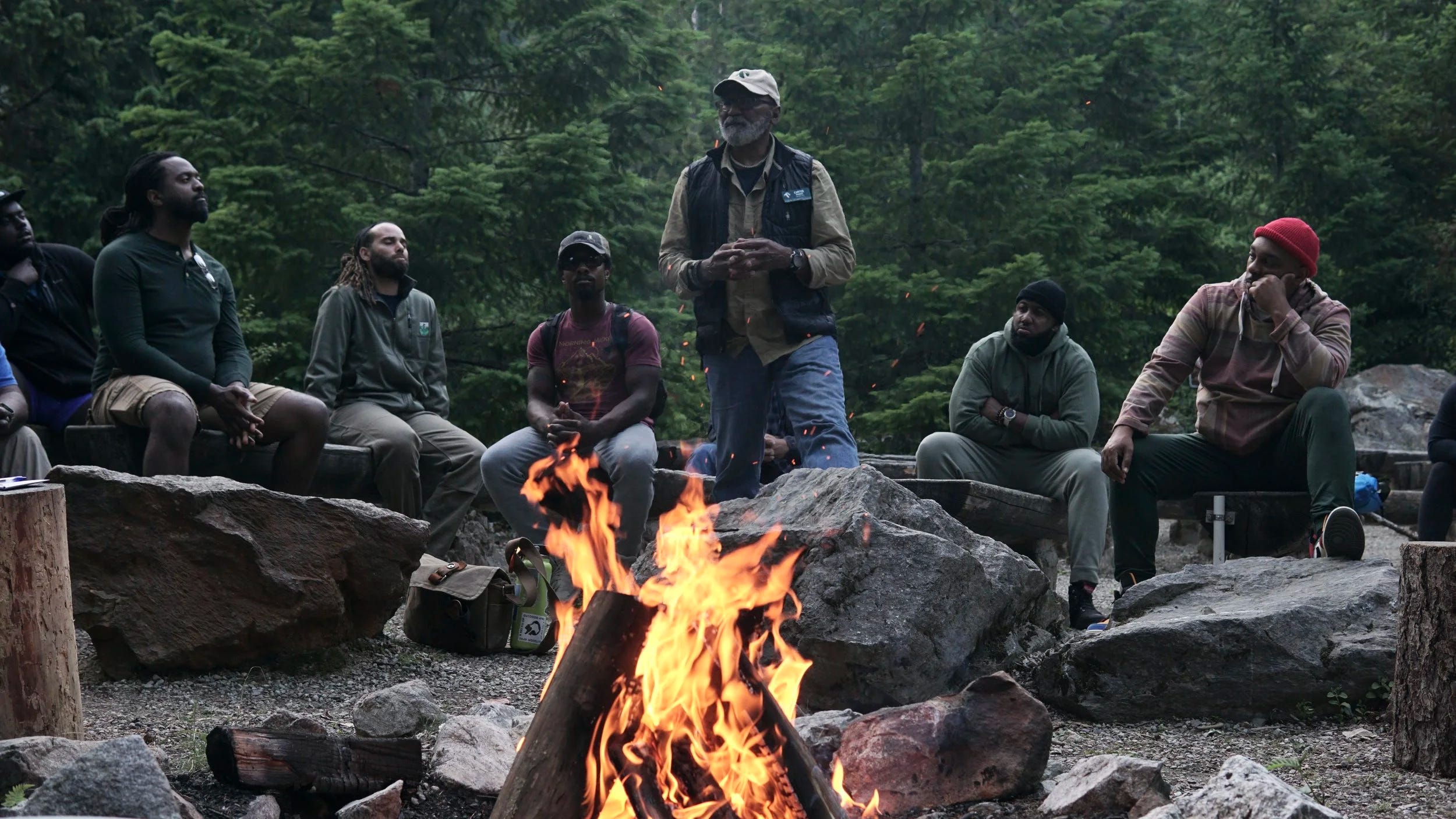
The goal was to shock men back to their roles in society, to remind us that it was our sacred duty to protect and provide for our families, reconnecting us to the ways of our ancestors through various exercises like hunting, solo hikes, cold water immersion. In these retreats, held away from urban cities, the men gathered around campfires and spoke honestly about their fathers, childhood fears, grief, personal loss. They explored ways of expressing anger safely. They were blindfolded and led by a group.
Here, in the safety of other men, these men could be boys again, returning to their inner childhood to find meaning. They could finally let it all out, allowing themselves to confess their mess, everything that was ailing them, every neglect, embraced and cuddled, every emptiness filled.
They did arduous, gratuitous work with the hope that they would return to modern life as better versions of themselves, reunited with their families, having been in harmony with the ancestors.
In an essay that one of the progenitors of the movement, Shepherd Bliss, wrote at the time, he argued that the mythopoetic movement “seeks to learn from ancestors and retrieve wisdom from the past that can be applied to the lives of men today.”
The tenor of gender discourse at the time was not so different from today. Absentee fathers were increasing, domestic violence was rising, and many men struggled with misdirected aggression toward loved ones and emotional repression. This was the early stage of the crisis of masculinity that, in 2025, came to a head.
In the ‘70s and ‘80s, when the mythopoetic men proposed these initiation rituals for men to reconnect sons back to the ancestors, opposition to women’s rights took the fight to the very gates of Themyscira. Old expressions like feminazi, ball busters, and man-haters dominated the news cycles. By the time we got to the 1990s, child custody debates in cases of divorce had enveloped a huge part of the zeitgeist. One famous essay by the writer Daniel Gross in The New Republic called men who advocated for women’s rights “man-haters trapped in men’s bodies.”
Bliss, who grew up in an abusive household with a father that he said had “behaviour that diminishes women, children, other men,” began to “describe that part of the male psyche that is abusive” as “toxic masculinity.” “I used a medical term because I believe that, like every sickness, toxic masculinity has an antidote,” he said.
From the very introduction of the word, it was clear it was not meant to describe a dark side that all men have, but rather to call out individual men who exhibit “behaviour that diminishes women, children, other men.”
Since then, toxic masculinity has been extricated from its original context—a most potent tool meant to reconnect men to the duties that have given them meaning for time immemorial—and turned into the anchor of a new kind of war of the sexes.
Years later, as that gender war waged on, toxic masculinity has become a portmanteau for men, a failing of liberals and women’s rights advocates in an overly theorised fight with anti-feminist advocates.
In this context, toxic masculinity goes on to become more than these attributes that Bliss aimed to condemn, and becomes the strongman that we know today, perfect for all who seek to abandon real advocacy for advancement, to punch down on the opposite sex. By rallying around toxic masculinity as a distinct bad trait in all men, which we should always put in check, as opposed to an explanation for a distinct trait in some men, these advocates in the gender debates effectively declared bankruptcy for masculinity itself.
It is by doing this that modern-day feminists are goaded and ultimately give toxic masculinity the credence anti-feminist advocates needed to show that feminism was, in fact war on men in furtherance of their gender war.
The more these feminists argue that all men are inherently toxic—by extension, rapists, bullies, abusers, and whatnot—anti-feminist advocates found a potent rallying cry to seduce young men: by portraying every woman as the source of their problems, as suspect, as unworthy, and undeserving of being protected and provided for—the initial goals of the mythopoetic movement.
Toxic masculinity has never been a real thing that exists umbilically in every man. At its most granular form, toxic masculinity is a lie, a conspiracy theory. Toxic masculinity is not a thing that exists.
Now that we know this—now that we know those claiming all men are meant to be brutes, to subdue women, are often bullies excusing their behavior of ‘diminishing women, children, and other men,’ as in the 90s—will we finally take up arms to protect our families or would we one more time call for minors to be raped?
FOOTNOTE: This essay is part of the Afro Adulting The Life You Want issue. Also read other essays from the issue below:

Well done and written❤️
It's important to recognize that words like toxic masculinity are fundamentally social constructs. While I don’t think all feminists view men as the enemy, I can understand why the history of actions committed by some men has led to men, as a group, sometimes being viewed as the oppressor. Nice read anyway.