



Uber has exited Nigeria. The American ride-hailing company told customers in an email yesterday that “After a thorough review of our business, we have made the tough decision to wind down our operations in Nigeria, effective 2 September 2026.”
Much of the reporting has focused on competitors in the market—InDrive and Bolt—that offer lax rules and, at times, lower prices. InDrive, in particular, allows riders to negotiate prices before the trip begins. Bolt’s lax rules made it the primary option for many drivers. But Uber’s operations in the country have been on life support since it entered the market.
In 2014, when Uber moved into Nigeria to offer a “classy, safe, secure Uber,” it was led by Travis Kalanick, a bullish Silicon Valley wunderkind who embodied the “break things and move faster” ethos. Kalanick was ultimately pushed out of the company in 2017 over workplace impropriety. In the years that ensued under current CEO Dara Khosrowshahi, Uber set its sights on attaining profitability and, in the last few years, has focused on expanding its profit margins.
In any normal situation, Nigeria is the perfect opportunity for Uber to experiment and grow. It is a country with a poor transport system and a huge population. But the reality on the ground is that the decline of the naira and the economy is a net negative for any global business whose local operation is in naira.
After an event years ago, I was trying to book an Uber back home. I kept getting an error message, so I called HR to inform them. We found out the company had maxed out its prepaid plan for the month. We were still in the first week of the month. After a back-and-forth, I realised there was nothing I could do. The company, even though it proudly professed that team members got access to Uber as part of its perks, could not conveniently afford it.
Uber’s popularity over the years has been fuelled neither by extensive growth nor meaningful integration into the country, but by leaning into Nigeria’s Potemkin village ideology, creating the facade that it was ready for a mainstream e-hailing service, even though it was only, at best, a fraction of the population seeking, and in the context of the region, what is obviously an extreme luxury that could afford it. Many of the businesses and the public that embraced Uber itself were doing so way above their means. Only about 0.4 per cent of Nigerians earn above ₦1 million, @wearegst sharply reminded us.


That company that I worked for had no business offering Uber to employees at a time when it was supposed to focus on making money in an already harsh business environment. Yet it became a status symbol as we got drunk on our own society’s verdict that the realities of living in a poor country must be hidden from public view as opposed to being fixed from their roots.
Uber left the country unceremoniously. Drivers and riders alike have said they received the news mid-trip. It seems like a sudden incident. But there is reason to believe it was not. Moove, the ambitious vehicle financing company and Uber’s primary partner in the region, has been scaling down its operations in the Global South and scaling up in the West. In 2024, it announced a partnership with America’s robotaxi company, Waymo.
Moove was the company that fuelled Uber’s massive adoption with its Suzuki koropes. But it faced problems. The plan was that drivers would pay around ₦9,400 daily for over 4 years and own the car. This doesn’t include Uber’s 25 per cent charge per trip, maintenance of the car, fueling, etc. Many drivers gave it a shot. But most pulled out. The structure, which would have made headway in cultures that promote self-accountability, where most people made decisions with the long term in view, failed woefully in a culture where long-term thinkers are constantly castigated, called foolish or stingy. The failure of the Uber-Moove driver arrangement is in large part a residue of our own dire professionalism. It needed more structure, more micromanagement to succeed. Two global capitalism champions had neither the patience nor the skill for it.
While Nigeria broadly removed itself from the debate raging in the West around the future of e-hailing, the world concluded that driverless cars were the future. Uber and Moove bought into it. In the country, drivers were still struggling to obey traffic rules.
In a sense, Uber’s arrival in the streets of Lagos was ahead of its time. In 2014, the naira was ₦165 per dollar. By 2026, it had become ₦1,400 per dollar. Outside the streets, the people who have led to this decline enjoyed broad support from the public, even as the public denies this. A company looking to abandon the era of Kalanick’s Uber didn’t need any more signs that it was time to park up. It was not that Nigeria’s youthful population was not enticing enough. It’s that the youthful population was not ready to show that it could be trusted to turn things around for itself in the near future.
Word on the street is that Moove is now looking to repossess its fleet of koropes. The company that once proudly called itself Moove Africa has dropped the latter portion of its name and now calls itself a “global mobility company.”

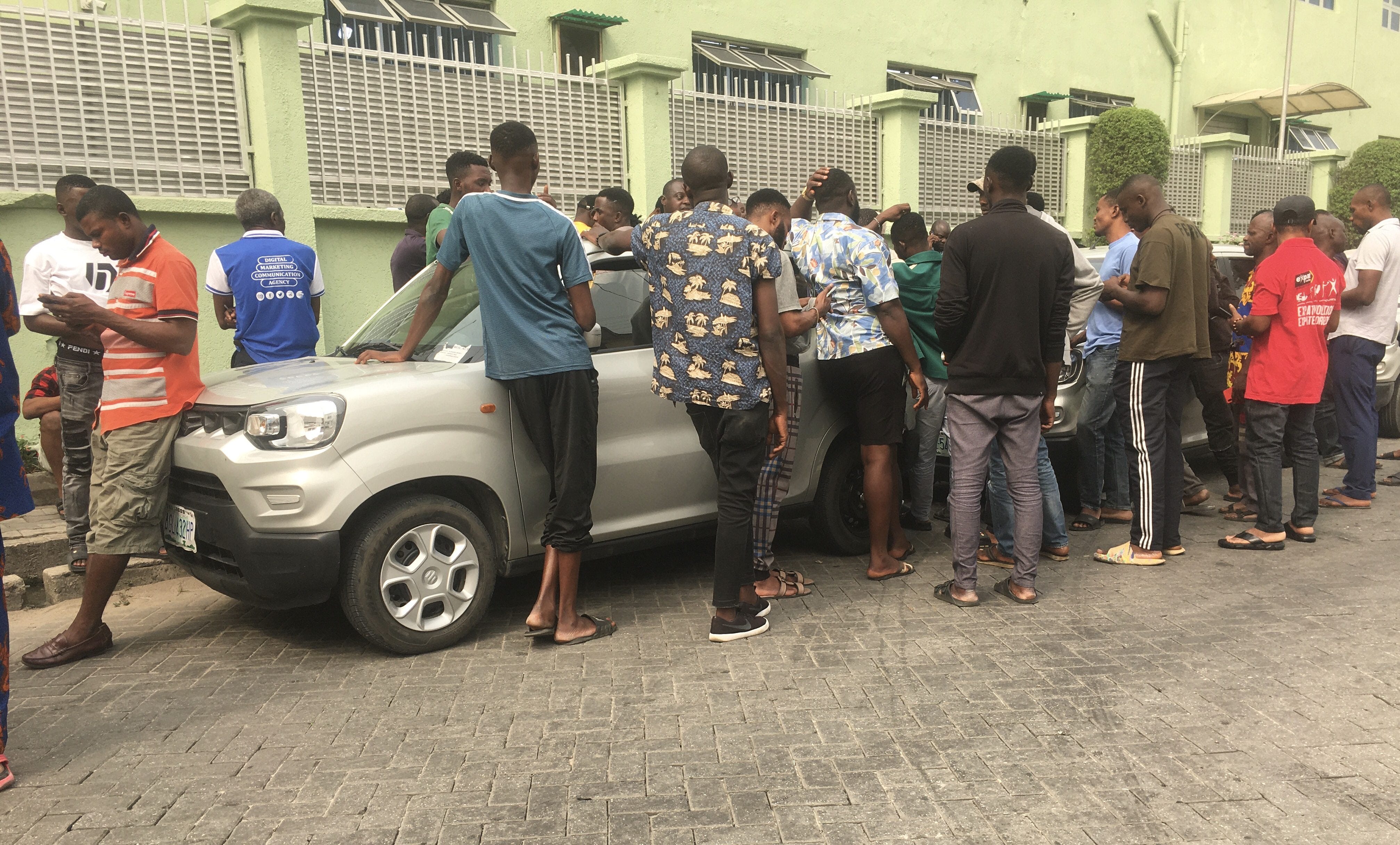
Uber’s exit is yet another watershed moment for us to reckon with how poor the country is and the effects of the economic decline. The nepo babies that go on podcasts to declare that laziness was the cause of poverty in the country have all turned off their ring light, gone on ChatGPT, opened X, and aggressively gone on an AI-sloping bender, spraying the timeline in sackcloth. To them, it feels like the world has come to an end, ignoring the unimaginable bad debt the company must have written off for betting heavily on Nigeria.
Many times we distance ourselves from this economic decline by telling ourselves lullaby stories about how profitable we are and about the growth of our businesses and investments and life. We post pictures in tasteless, overpriced homes and we declare that we have been successful. But this is only because we have pursued so-called profit through unethical, unsustainable means, cutting corners and costs in ways that are sacrilegious. In reality, if many of these standard-bearer businesses stand up to global scrutiny, they will completely collapse.
Many companies, too numerous to count, have exited the country already. Uber is just the latest, but it’s hit close to home because it was a tool for enforcing classism, a status symbol, foolish as even that sounds. Perhaps now that a pillar of our Potemkin village seems to have crumbled, we might dust off that classism conversation.
