


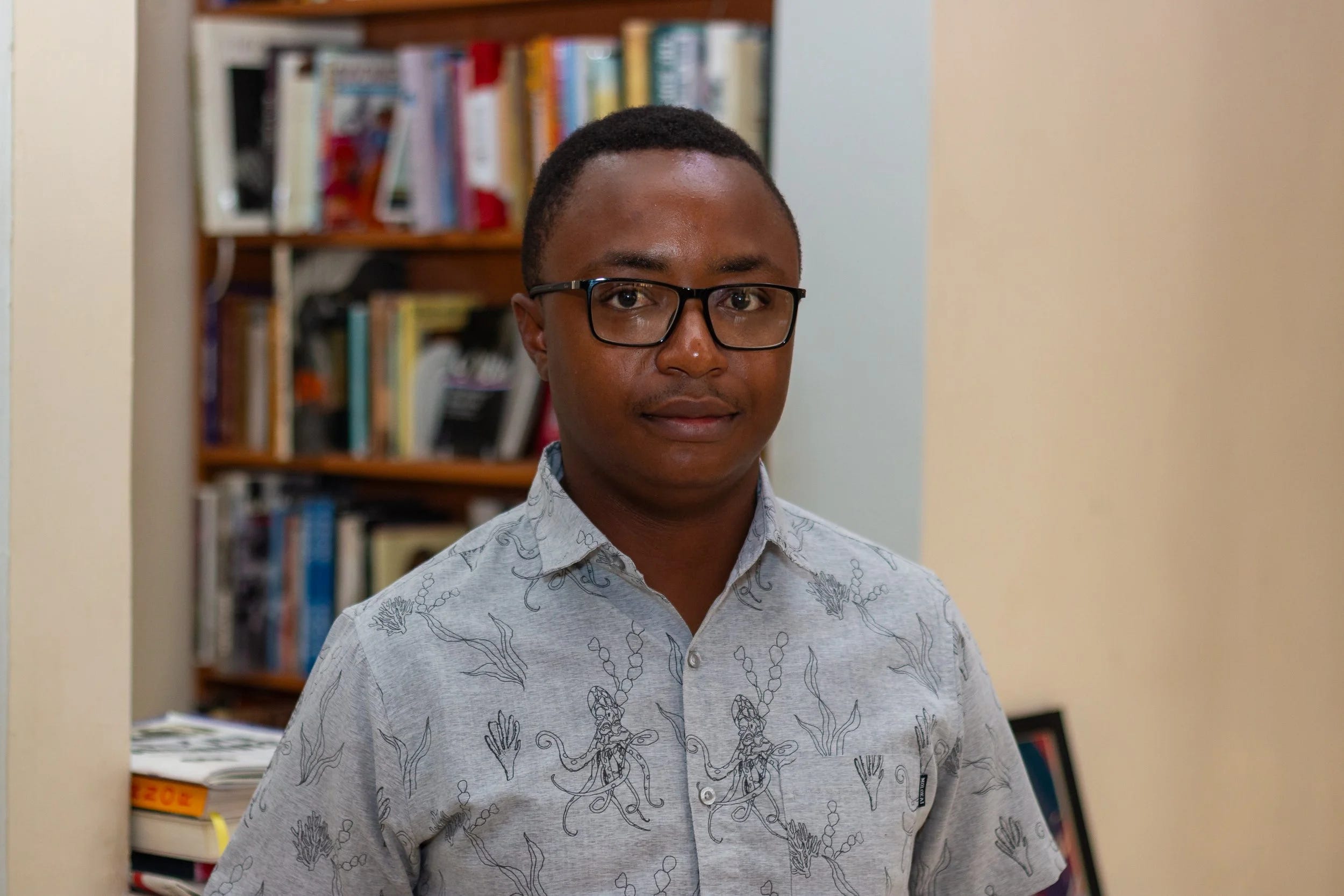
I saw the AI row involving Zimbabwean writer Simbarashe Steyn Kundizeza, whose short story, “The Blue Fighter,” won this year's Caine Prize for African Writing, and decided not to talk about it. But I was triggered by comments made to The Atlantic magazine by the chair of the Caine Prize’s board of trustees and book editor, Ellah Wakatama, about it.
“My stance, as the person who leads the prize, is that if there is such an accusation, I want proof that does not come from a machine,” Wakatama, who is also Zimbabwean, said.
“As an African my first stance is, if I ask you, ‘Are you telling the truth?’ and if you say yes, I am going to believe you—especially because the accusers are not coming from amongst our own people.”
What a way to solve a problem that has become endemic in an industry in which she is one of the leaders. But framing it as a default stance because she is African harks back to old Mr Bones tropes and the rejection of technologia by the Africans who drink their own spittle.
Kundizeza, whose work was flagged by Pangram as largely AI-produced, joins a growing list of people of colour who have faced accusations of using AI to write. The list also includes Commonwealth Short Story Prize winner Jamir Nazir, the Nigerian author Jerry Falade, Canadian-Haitian poet Thélyson Orélien, whose novel, C’était ça ou mourir, was selected for the Prix Goncourt, a French literary prize that dates back to 1903.

On social media, well-meaning anti-racists have been sounding the alarm that a pattern might be afoot in the AI witch-hunt movement (of which I am a card-carrying member). Many of the people who have sprung up to defend the accused themselves are human-written work absolutists.
Is it true that writers of colour have been affected disproportionately by the AI witch hunt? Yes, but it depends on how you look at it. In the prestige publishing circle, writers of colour have increasingly been on the receiving end. It is they who have lost book deals and had their prizes contested. But implying that the AI witch hunters have gone after only writers of colour is rather too simplistic a way to analyse the data. Take, for instance, Falade, who lost a book deal worth over $2 million. It was only a matter of time before his work would have been run through an AI detector, largely because other writers want to know how he got that type of deal. The Commonwealth incident was largely spearheaded by other writers of colour for similar reasons. How does someone win the Commonwealth Short Story Prize in 2026? Someone out there must have done the same to the winners of the Hugo Award, the Booker Prize, and just about every literary award out there. Vauhini Vara, the writer of the Atlantic story on Kundizeza is a woman of colour. This is largely because opportunities for people of colour in publishing are scarce. Anyone who makes it to the top attracts immense scrutiny. People want to know how they did it.
Has it been only writers of colour who have been singled out by the AI witch hunters? This is where the argument falls completely apart. The New York Times announced that it would cut ties with the British writer Alex Preston after he was accused of using AI to produce a book review for the paper. The Financial Times appended a note to an op-ed after it was flagged as AI-generated content. The author, Lena McDonald, apologised after AI responses were found in her book, Darkhollow Academy: Year 2, adding that she was a mom who used AI to edit her work.
“I’ve rewritten the passage to align more with J. Bree’s style, which features more tension, gritty undertones, and raw emotional subtext beneath the supernatural elements,” read a line from the book.
AI has become increasingly common in the writing world. But it has become even more common in sense-making African institutions. I know this because I have worked for years in media on the continent and know the inner workings of many of the top publications. There is barely any Nigerian magazine today that has not turned itself into AI slop and then defended the sloppification internally. I once told a panel that I don’t write with AI, and they flashed me a condescending smile, almost like it was foolish not to.
Vara, the Atlantic journalist who reported the story about the Caine Prize-winning work, presented mounting evidence. It seemed as though she wanted her thesis to be wrong. She checked Kundizeza’s previous work. She ran previous Caine Prize-winning work on Pangram. They all came out as human-written. “The Blue Fighter” came out as AI-generated.
The Caine Prize has reaffirmed that AI-written work is not eligible for the prize. So why will it not create guardrails to make sure AI work not only does not win but cannot even be submitted in the first place?
The anti-AI detector movement is always inadvertently a pro-AI-writing movement taking over the publishing world. But sometimes I wonder if it is not, in fact, a deliberate pro-AI-writing movement masquerading as ethical AI use.
I sympathise with well-meaning people who see the racial disparity in the AI witch hunt and want to claim that this is a new frontier in racist pursuits. If that sticks and, for some reason, people of colour willy-nilly use AI to write and win awards, then we will have succeeded in destroying the very foundations of the literary world and risk turning African writers into pariahs, a new class of untouchables. All the true writers would have been failed by the system and lost hope in it.
